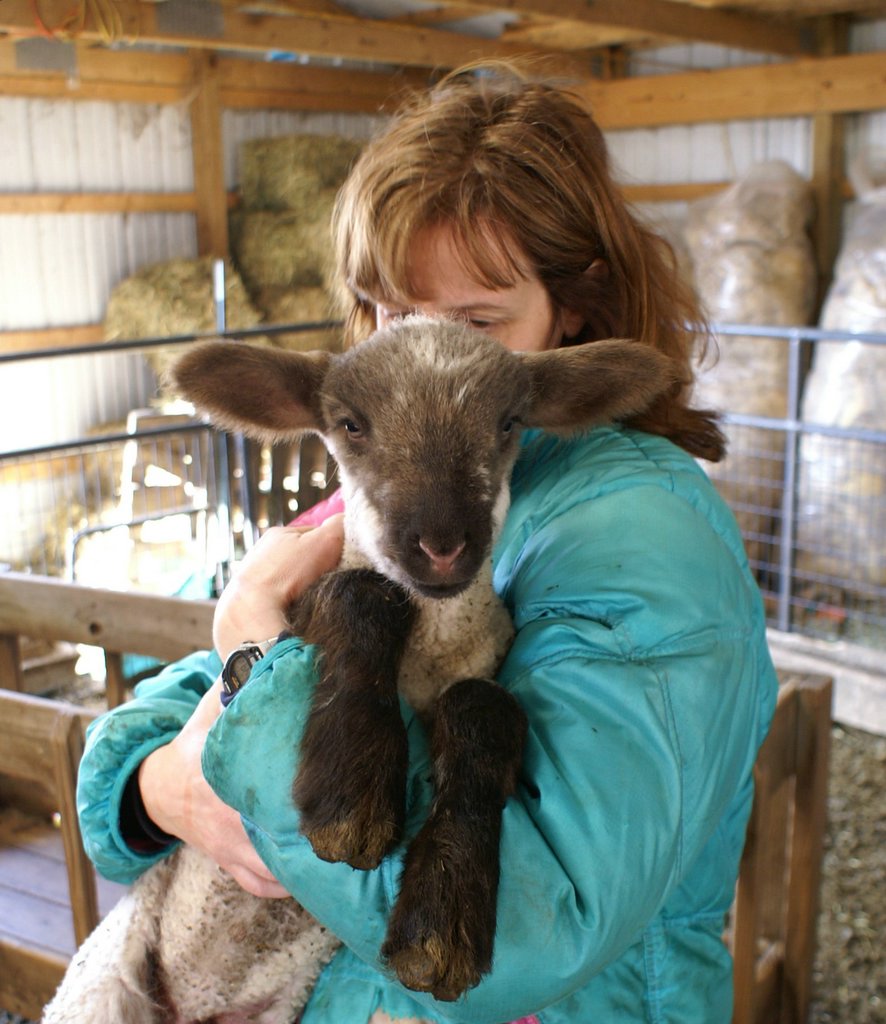
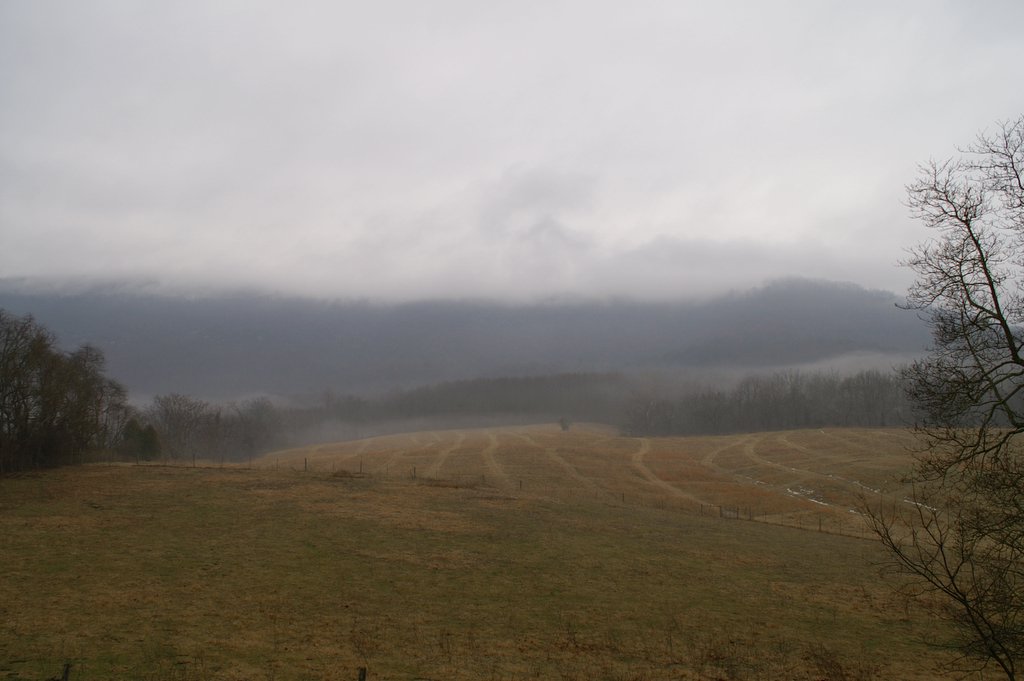
The Labor Day weekend just sailed by and I wake up to find myself well into September, the kids back at school and our late summer drought broken by heavy rains. I'm glad to see the rain for the sake of our parched pastures, but now regret the chores I've put off which will be that much harder in a muddy barnyard.
The beginning of September has seemed like the beginning of the new year ever since I started school circa 1960, much more so than any short, cold day in January. The old Roman/Byzantine Empire started the New Year on September 1st, and the Eastern Orthodox Churches still use that date to measure the start of the Ecclesiastical year. There is no special celebration that I am aware of, but it is customary for Hierarchs to note the date with a message to the flock. Here is meditation on time and new beginnings from Metropolitan Herman of the Orthodox Church in America. Since we spin around the Sun in a sort of ellipse, Nature does not provide any absolute beginning for the year. Even the seasons vary depending on your hemisphere. The carousel keeps moving so fixing any one "start" will always be arbitrary. It can't hurt though to have as many opportunities for a new beginning as possible. So, for those of you who could use an excuse for a new start, a re-start, or just a chance to take stock and try again, Happy New Year!
Really, I had the pictures right there on the card. I clicked the telephoto lens onto the camera, stepped stealthily out on the deck and caught the red fox prowling through the field next to the house. Seventeen pictures downloaded to the computer, then deleted from the compact flash card. When I went to open them up, gone, every last one of them, just like the fox himself when he caught sight of me.
There are a number of "Seraphims" in the Orthodox blogging world. One is a retired missionary bishop, author and saintly eccentric, currently visiting Moscow for the encouragement of small group of open minded Orthodox believers involved in service and evangelism. Another is a fellow attorney who practices and prays at the southern end of the Appalachians a few states down from me. I read both daily, but have a special affection for the second Seraphim whose life experience overlaps with mine in interesting ways. I read this post last Thursday after a Wednesday I would not care to live over. I had spent the previous afternoon fighting a doomed battle in a Court-appointed case where I was representing a mother whose child had been taken away for mostly justifiable reasons. It was a hard case, which I believed I argued well, but ultimately unsuccessfully. My client was broken hearted, I was depressed, and when my assistant found out that Virginia's Court appointment fee wouldn't cover even an hour of my time billed at our standard rate, she got depressed too. I do these cases because somebody needs to, but they do exact a cost, emotionally, spiritually and financially. It did my morale good to hear that sometimes it all works out:
I had intended to link to this when I read it on Monday, but forgot in the press of business, until my assistant printed out the New York Times review of the same show for me today. Why should I care what Terry Teachout or the Times think of a revival of The Fantasticks? Teachout's lovely and wistful account of his connection with the play and the changes it made in his life brought to mind the very great changes it made in my own life.
It was my first, and probably last, appearance on stage as an adult. I have no ambitions to hit the boards again, but on some mornings, if you put your ear to the door and listen closely over the sound of the shower, you may still hear a somewhat worse for the wear baritone telling you about September, grass, grain and the innocence of youth.
If you have any literary pretensions at all, somewhere in the back of your mind is that vision of the perfect little coffee-house; a place to come in from the cold and find books, good company and a cup of something to take the chill away. It appears that someone in Colorado Springs has been rummaging around in the back of my mind and brought a piece of that vision to life. Anyone interested in setting up a Shenandoah Valley franchise?

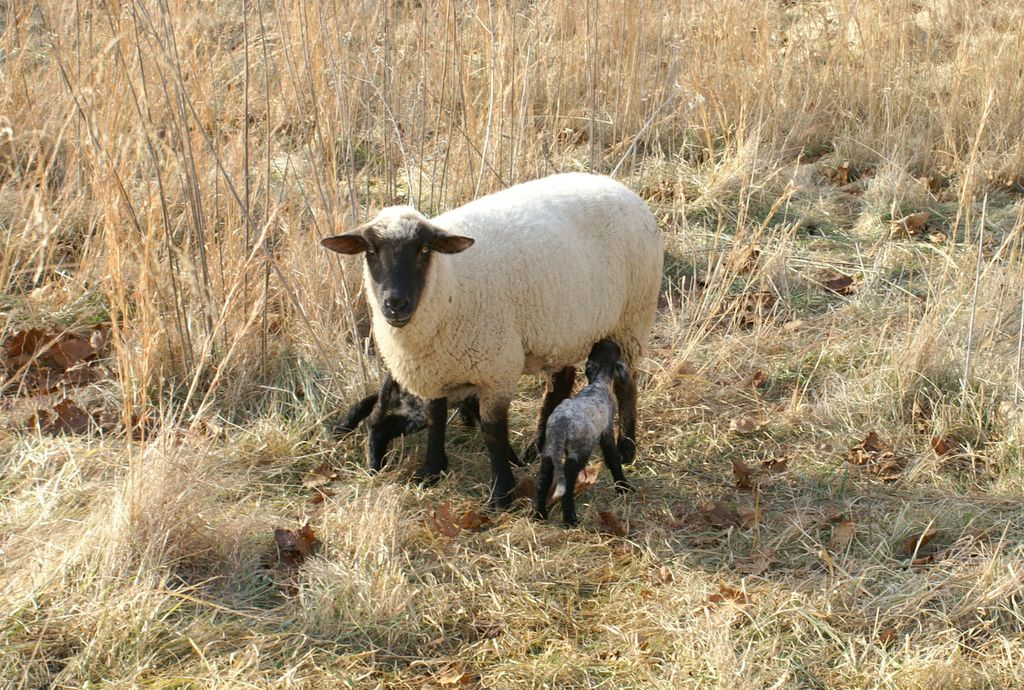
This past weekend I made a stop by Central Coffee Roasters after picking up some tools and placing an order for sheep mineral supplement at the nearby Co-op store. While I realize that no sane person needs Certified Shade Grown Panama Finca Hartman or Yeman Mocca Matari or Sumatra Swiss Water Decaf dripping through the filter paper in the morning, there is just something about the smell of a fresh ground, properly roasted coffee ending it's journey from some exotic location at my breakfast table that drives me to fork over outlandish amounts of cash at least a few times a year for the experience.
I am not sure whether this amounts to a guilty pleasure or not. It perhaps goes into the same category as the Avengers Emma Peel mega-set DVD collection; not necessary, but probably not dangerous to your salvation in the long run. In any event, I will continue to enjoy the scent from the grinder and coffee-maker in the morning and accept it as a kind of earthy incense blessing the beginning of the day.
I have been trying out the Beta of Windows Live Writer, a free Microsoft produced blogging tool. So far I am quite pleased with it. The only oddity I have noticed is that, in the course of downloading your blog settings, it creates a temporary blog post. It is erased from the main blog page on completion of the download, but not before it propagates via RSS and ends up preserved in the archives. If any of you out there are trying to figure out why I have blogged a "Temporary Post Used For Style Detection," blame the Beta.
Every year St. Vladimir's Seminary holds a Summer Institute dedicated to an in depth examination of one particular topic in theology, liturgy or Church life. This year the topic was death. The Seminary has made available audio files in mp3 format of ten lectures through the Seminary Press website. Downloading via their system is, shall we say, a non-intuitive process. Go to this page and click "Buy Now" for the lectures you want and then proceed through the normal checkout process. Since the price is $0.00, you will not be charged, but at the end of the procedure will be given a download link for the selected files. I was lured to the site to listen to my favorite contemporary Orthodox theologian, David Bentley Hart, but have been impressed with all of the speakers I have listened to thus far.
We are still in August, but the first signs of the changing season are here. This afternoon at lunch, the sycamore by the barn was filled with birds, calling and rattling wings, preparing to move south in a swirling black cloud. I have had to brake for a wider variety of creatures on our two lane road lately. This past week it has been raccoons. A few weeks ago it was box turtles. I do not know what inspires the great box turtle migration, but they are especially challenged by asphalt and passing cars. Retreating into one's shell just shy of the double yellow line is not the best way to insure survival of the species. Box turtles are singularly inoffensive and quite attractive in a modest way. I worry about them in a way that would never occur to me to worry about some of their larger cousins. Perhaps I identify with them as they plod along in a world grown too large and confusing, pulling one's head in from time to time when it all become a little too much to bear.
One of my favorite poets, Scott Cairns, has a new collection due out shortly, with excerpts now available on the Paraclete Press website. This one concerns our slow shelled friends, some of whom may actually walk on two legs, or in my own case, wait for me each morning in the shaving mirror.
On Slow Learning
If you have ever owned
a tortoise, you already know
how terribly difficult
paper training can be
for some pets.
Even if you get so far
as to instill in your tortoise
the value of achieving the paper,
there remains one obstacle—
your tortoise’s intrinsic sloth.
Even a well-intentioned tortoise
may find himself, in his journeys,
to be painfully far from the mark.
Failing, your tortoise may shy away
for weeks within his shell, utterly
ashamed, or looking up with tiny,
wet eyes might offer an honest shrug.
Forgive him.
Scott Cairns, from Compass of Affection - New and Selected Poems
 After the slavery of the body, dumbfoundment
 Yes, it has been a long time since anything new was posted here. Between work, farm, and Susan's recovery from her four surgeries (six if you count the biopsy and installation of the iv line) blogging has not seemed a high priority. I usually blog at the end of the day or first thing in the morning, either relaxing before sleep or easing myself into the day. For a long time this summer sleep came too late and morning came too early. Much has happened, most of it not of interest to anyone except a few family and friends. By and large we have kept close to home, except for a quick trip to St. Augustine Florida last weekend where I took the picture above at the chapel of the St. Photius Shrine, a little oasis in the old section of town, just steps away from throngs of shoppers and tourists. The trip itself might be the subject of another post on another day. Let us just say that my experience with United Express was very, very unlike my experience with the peace and tranquility of the Shrine.








But above all the rewards of his early ministry he holds the experience of that Sunday, when, for the encouragement of the truest-hearted gentleman he ever knew, he preached a sermon. This was a man who, in the midst of a losing fight with fortune, fought on with quivering lip from which no plaint ever came; whose gracious courtesies in the home, whose simple services of neighborly helpfulness, and whose hatred of a lie marked him as a man after God's own heart. The sermon was on Isaac, the commonplace man; the man without executive ability, the unprogressive son of a masterful father, but withal a good neighbor, a good husband, and one who found his place in the eleventh chapter of Hebrews, God's own Westminster. When the service was over, and the deacon had just retired to the robing-room, the living Isaac of the parable opened the door, and gowned as he was, the deacon found himself lifted from his feet and held tight in the bear-like hug of his friend, who, after he had set him down, left without a word.
I surpass the publican in transgressions,
but do not even compete in his repentance!
I have not accomplished the good deeds of the Pharisee,
yet I boldly out-do his boasting!
By Your infinite humility, Christ God
through which You laid low the high-minded demons on the Cross,
establish in me the good deeds of the one,
and the humility of mind of the other,
confirming in me the good intentions of each,
and save me, O Savior!
Pilate set up three crosses in the place of the Skull, two for the thieves and one for the Giver of Life. Seeing Him, hell cried to those below: "O my ministers and powers! Who is this that has fixed a nail in my heart? A wooden spear has pierced me suddenly, and I am torn apart. Inwardly I suffer; anguish has seized my belly and my senses. My spirit trembles, and I am constrained to cast out Adam and his posterity. A tree brought them to my realm, but now the Tree of the Cross brings them back again to Paradise."
The parson spent too much time in fishing, perhaps; but his memory at least is unregenerate; for he looks back upon that time spent in fishing as among the golden hours of life. He learned to know the woods and waters. He knew every hole of mink and otter in many miles. He knew the hillside where the first arbutus bloomed. He violated the game laws by shooting muskrats by moonlight, and argued questions of theology with a fine old preacher of another Church, who was such an enthusiastic fisherman that he would put on a small hook and fish in the bait bucket while the bacon was being fried for dinner. The parson still contends that fishing is the one democratic sport. He likes fishing for the same reason that Pat likes a street fight. "I dearly love a street fight," said Patrick, "for in a street fight, one man is just as good as another, and sometimes a blamed sight better." He has prayed for all sorts and conditions of men, and fished with them, too; and he has seen a reprobate, whom no man would trust for quarter, turn the boat, so that the other fellow could get the best fishing. Such a man only lacked training and opportunity to become a hero.
It is a strange fact that everything in the course, being held in memory by the fixed effort of the will, till returned to the professor and receipted for on a sheep-skin, promptly disappeared from his mind never to come back. The things he once knew best, he knows now not at all; and he is conscious that in his brain there are spots, now permanently barren, where the highest-priced knowledge obtainable once flourished for a season. The parson had been a student for thirty odd years. Half that period was spent not in tutelage, but in serfdom. Even now, when he has been out of school almost as long as he was in it, the form which the night-mare most frequently takes is the inquisitorial agony of the examination room.
The parson is persuaded that the ordinary diploma is nothing more or less than an honorable discharge from the ranks of learning on account of permanent disabilities.
Some critic has said that the world is over-rich in the records of life's successes, that everybody knows the psychology of success, but that literature is actually in need of candid autobiographies of mediocrity. Satiated with the glare of bright colours, the reading public is eager for a drab literature. The tired ear longs for the droning monotone of Martin Tupper.
These reminiscences will appeal to tired minds alone. It is a journey through a flat country. There are plenty of resting-places, and the weary reader is not called upon to climb the hill of vision.
[T]he purpose for fasting is to liberate man from the unlawful tyranny of the flesh, of that surrender of the spirit to the body and its appetites which is the tragic result of sin and the original fall of man. It is only by a slow and patient effort that man discovers that he "does not live by bread alone"--that he restores in himself the primacy of the spirit. It is of necessity and by its very nature a long and sustained effort. The time factor is essential for it takes time to uproot and to heal the common and universal disease which men have come to consider as their "normal" state.
From Great Lent by Alexander Schmemann
A Glutton is one who raids the icebox for a cure for spiritual malnutrition.
From Beyond Words: Daily Readings in the ABC's of Faith by Frederick Buechner
Adventures in New Testament Greek:
Metanoia
Repentance, to be sure,
but of a species far
less likely to oblige
sheepish repetition.
Repentance, you'll observe,
glibly bears the bent
of thought revisited,
and mind's familiar stamp
-- a quaint, half-hearted
doubleness that couples
all compunction with a
pledge of recurrent screw-up.
The heart's metanoia,
on the other hand, turns
without regret, turns not
so much away, as toward,
as if the slow pilgrim
has been surprised to find
that sin is not so bad
as it is a waste of time.
I live in the worries of every day
But my heart, beneath their heavy weight,
Lives a life of its own,
Like a miracle of flame.
Hurrying to catch a bus,
Or bending over a book,
I can suddenly hear the murmur of fire
And I close my eyes.
The source of false religion is the inability to rejoice, or, rather, the refusal of joy, whereas joy is absolutely essential because it is without any doubt the fruit of God's presence. One cannot know that God exists and not rejoice. Only in relation to joy are the fear of God and humility correct, genuine, fruitful. Outside of joy, they become demonic, the deepest distortion of any religious experience. A religion of fear. Religion of pseudo-humility. Religion of guilt: They are all temptations, traps--very strong indeed, not only in the world, but inside the Church . . .
The first, the main source of everything is "my soul rejoices in the Lord ..." The fear of sin does not save from sin. Joy in the Lord saves. A feeling of guilt or moralism does not liberate from the world and its temptations. Joy is the foundation of freedom, where we are called to stand. Where, how, when has this tonality of Christianity become distorted, dull---or rather, where, how, why have Christians become deaf to joy? . . .
People continuously come and ask for advice . . ..And some weakness or false shame keeps me from telling each of them, "I don't have any advice to give you. I have only weak, shaky, but, for me, unremitting joy. Do you want it?"
Any time you begin serious work on your spiritual life, two dangers arise. The first is a perception that you are failing; your fasting rule falls apart, prayer is dry or non-existent, the whole enterprise is best abandoned before you embarrass yourself further. The second is the perception that you are succeeding and are only steps away from taking your place alongside the holy and enlightened. At the very least you have pulled away from the common crowd who do not have your discipline and insight. Despair or arrogance, the feeling of failure or the feeling of success; falling into either is a sign that the message of Lent has been missed. What does God require of us? That we come before him honestly in our weakness. There is no room for arrogance, because our poverty means more to God than our strength. There is no room for despair either, because it is in our poverty and weakness that Christ comes to us. Just as our strength will not bring him, neither will our failure drive him away. Our imperfect reality is gift enough for God, if it is given without pretense.Do not require of me fruits worthy of repentance, for my strength is spent in me. Grant me ever a contrite heart and spiritual poverty, that I may offer these gifts to Thee as an acceptable sacrifice, O only savior.
remember that the dullest and most uninteresting person you can talk to may one day be a creature which, if you saw it now, you would be strongly tempted to worship, or else a horror and a corruption such as you now meet, if at all, only in a nightmare. All day long we are, in some degree, helping each other to one or other of these destinations.There are, as NASA would tell you, no minor navigation errors at the beginning of a journey of that length. Sin, over the long haul, is a failure of navigation. The term used for sin in the Greek New Testament, hamartia, means literally to miss the mark, like an archer missing a target. If the spiritual life is a journey, then repentance is not so much a matter of feeling guilty as it is making a course correction. Lent is the time set aside for us to check our navigation, take some sightings and see just how far off course we have drifted throughout the year. During Lent we check our position with God and the created world through the disciplines of prayer, fasting and almsgiving. The purpose of the disciplines is not to punish or to justify ourselves, but to set right the course for our journey. As Lewis goes on to say in the passage we began quoting above
It is in the light of these overwhelming possibilities, it is with the awe and the circumspection proper to them, that we should conduct all our dealings with one another, all friendships, all loves, all play, all politics. There are no ordinary people. You have never talked to a mere mortal. Nations, cultures, arts, civilizations--these are mortal, and their life is to ours as the life of a gnat. But it is with immortals whom we joke with, work with, marry, snub and exploit--immortal horrors or everlasting splendors.
Atlantis
Being set on the idea
Of getting to Atlantis,
You have discovered of course
Only the Ship of Fools is
Making the voyage this year,
As gales of abnormal force
Are predicted, and that you
Must therefore be ready to
Behave absurdly enough
To pass for one of The Boys,
At least appearing to love
Hard liquor, horseplay and noise.
Should storms, as may well happen,
Drive you to anchor a week
In some old harbour-city
Of Ionia, then speak
With her witty sholars, men
Who have proved there cannot be
Such a place as Atlantis:
Learn their logic, but notice
How its subtlety betrays
Their enormous simple grief;
Thus they shall teach you the ways
To doubt that you may believe.
If, later, you run aground
Among the headlands of Thrace,
Where with torches all night long
A naked barbaric race
Leaps frenziedly to the sound
Of conch and dissonant gong:
On that stony savage shore
Strip off your clothes and dance, for
Unless you are capable
Of forgetting completely
About Atlantis, you will
Never finish your journey.
Again, should you come to gay
Carthage or Corinth, take part
In their endless gaiety;
And if in some bar a tart,
As she strokes your hair, should say
"This is Atlantis, dearie,"
Listen with attentiveness
To her life-story: unless
You become acquainted now
With each refuge that tries to
Counterfeit Atlantis, how
Will you recognise the true?
Assuming you beach at last
Near Atlantis, and begin
That terrible trek inland
Through squalid woods and frozen
Thundras where all are soon lost;
If, forsaken then, you stand,
Dismissal everywhere,
Stone and now, silence and air,
O remember the great dead
And honour the fate you are,
Travelling and tormented,
Dialectic and bizarre.
Stagger onward rejoicing;
And even then if, perhaps
Having actually got
To the last col, you collapse
With all Atlantis shining
Below you yet you cannot
Descend, you should still be proud
Even to have been allowed
Just to peep at Atlantis
In a poetic vision:
Give thanks and lie down in peace,
Having seen your salvation.
All the little household gods
Have started crying, but say
Good-bye now, and put to sea.
Farewell, my dear, farewell: may
Hermes, master of the roads,
And the four dwarf Kabiri,
Protect and serve you always;
And may the Ancient of Days
Provide for all you must do
His invisible guidance,
Lifting up, dear, upon you
The light of His countenance.

 .
.