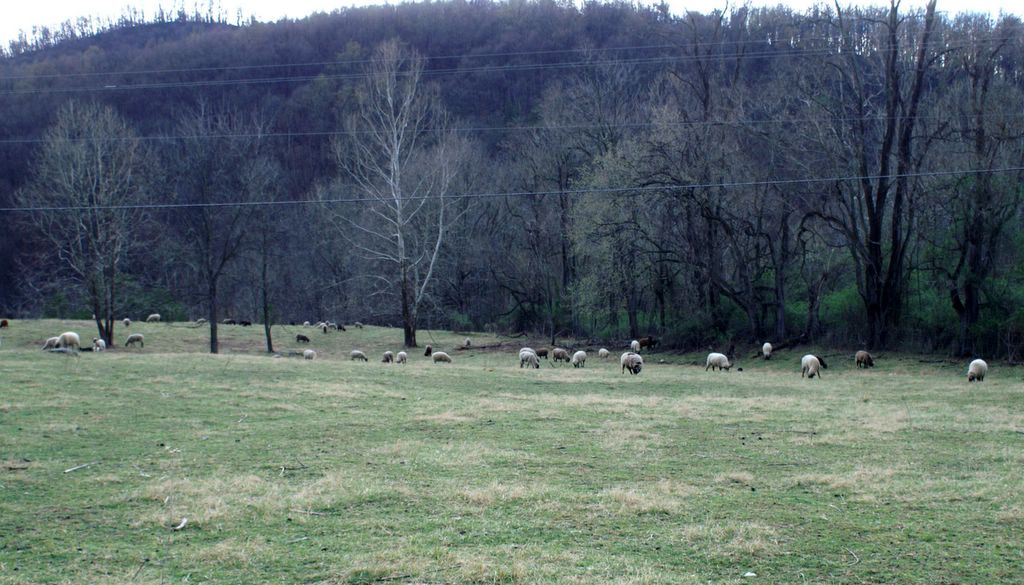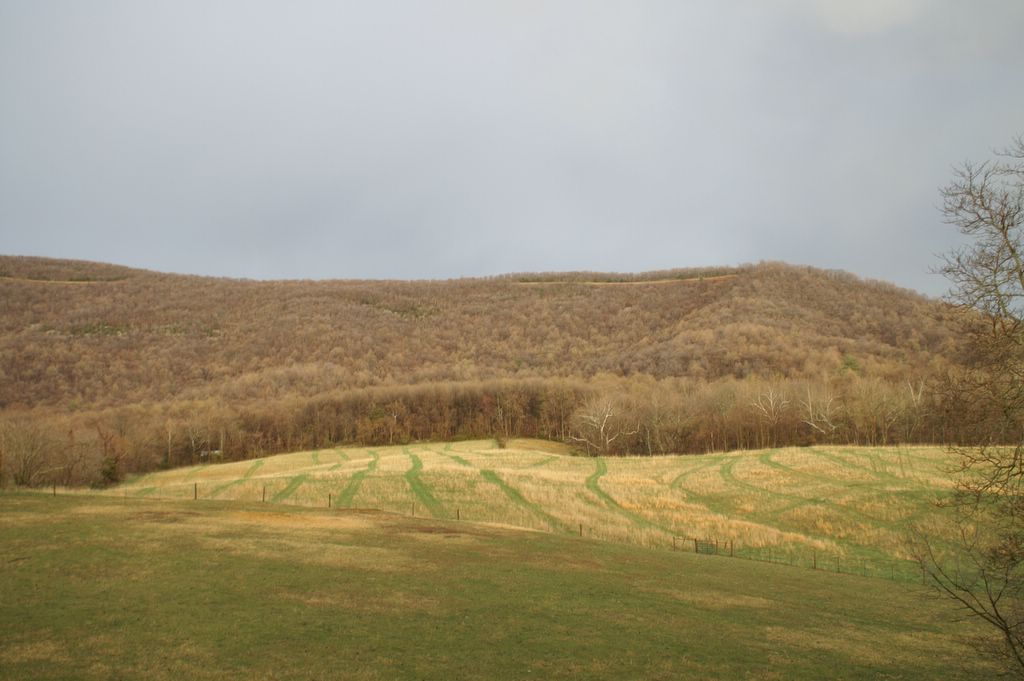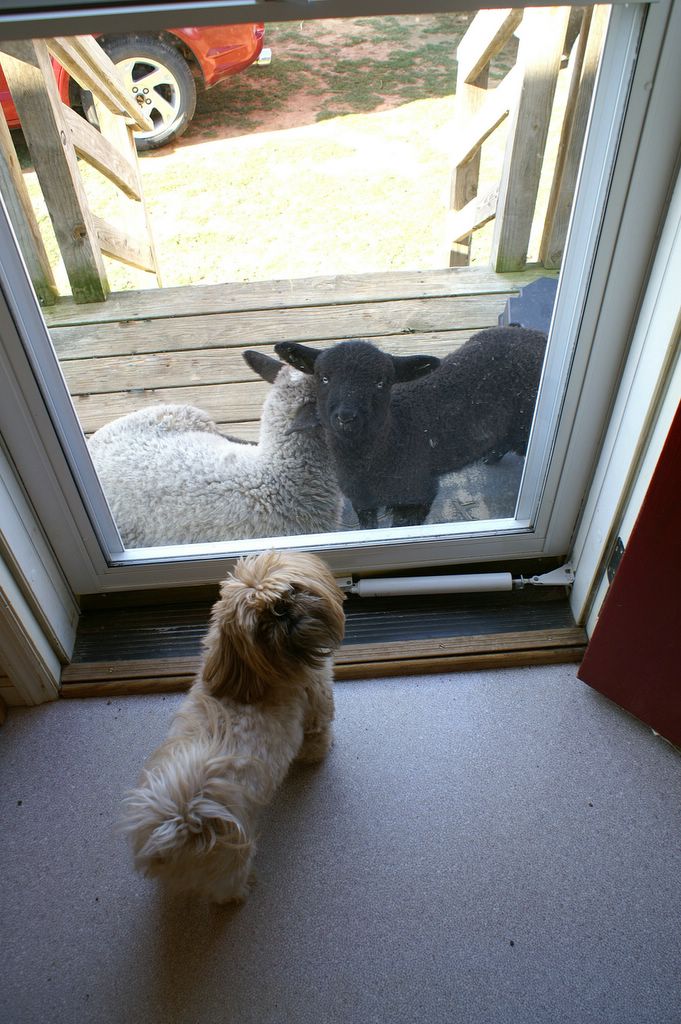
The view from my library today
But above all the rewards of his early ministry he holds the experience of that Sunday, when, for the encouragement of the truest-hearted gentleman he ever knew, he preached a sermon. This was a man who, in the midst of a losing fight with fortune, fought on with quivering lip from which no plaint ever came; whose gracious courtesies in the home, whose simple services of neighborly helpfulness, and whose hatred of a lie marked him as a man after God's own heart. The sermon was on Isaac, the commonplace man; the man without executive ability, the unprogressive son of a masterful father, but withal a good neighbor, a good husband, and one who found his place in the eleventh chapter of Hebrews, God's own Westminster. When the service was over, and the deacon had just retired to the robing-room, the living Isaac of the parable opened the door, and gowned as he was, the deacon found himself lifted from his feet and held tight in the bear-like hug of his friend, who, after he had set him down, left without a word.
I surpass the publican in transgressions,
but do not even compete in his repentance!
I have not accomplished the good deeds of the Pharisee,
yet I boldly out-do his boasting!
By Your infinite humility, Christ God
through which You laid low the high-minded demons on the Cross,
establish in me the good deeds of the one,
and the humility of mind of the other,
confirming in me the good intentions of each,
and save me, O Savior!
Pilate set up three crosses in the place of the Skull, two for the thieves and one for the Giver of Life. Seeing Him, hell cried to those below: "O my ministers and powers! Who is this that has fixed a nail in my heart? A wooden spear has pierced me suddenly, and I am torn apart. Inwardly I suffer; anguish has seized my belly and my senses. My spirit trembles, and I am constrained to cast out Adam and his posterity. A tree brought them to my realm, but now the Tree of the Cross brings them back again to Paradise."
The parson spent too much time in fishing, perhaps; but his memory at least is unregenerate; for he looks back upon that time spent in fishing as among the golden hours of life. He learned to know the woods and waters. He knew every hole of mink and otter in many miles. He knew the hillside where the first arbutus bloomed. He violated the game laws by shooting muskrats by moonlight, and argued questions of theology with a fine old preacher of another Church, who was such an enthusiastic fisherman that he would put on a small hook and fish in the bait bucket while the bacon was being fried for dinner. The parson still contends that fishing is the one democratic sport. He likes fishing for the same reason that Pat likes a street fight. "I dearly love a street fight," said Patrick, "for in a street fight, one man is just as good as another, and sometimes a blamed sight better." He has prayed for all sorts and conditions of men, and fished with them, too; and he has seen a reprobate, whom no man would trust for quarter, turn the boat, so that the other fellow could get the best fishing. Such a man only lacked training and opportunity to become a hero.
It is a strange fact that everything in the course, being held in memory by the fixed effort of the will, till returned to the professor and receipted for on a sheep-skin, promptly disappeared from his mind never to come back. The things he once knew best, he knows now not at all; and he is conscious that in his brain there are spots, now permanently barren, where the highest-priced knowledge obtainable once flourished for a season. The parson had been a student for thirty odd years. Half that period was spent not in tutelage, but in serfdom. Even now, when he has been out of school almost as long as he was in it, the form which the night-mare most frequently takes is the inquisitorial agony of the examination room.
The parson is persuaded that the ordinary diploma is nothing more or less than an honorable discharge from the ranks of learning on account of permanent disabilities.
Some critic has said that the world is over-rich in the records of life's successes, that everybody knows the psychology of success, but that literature is actually in need of candid autobiographies of mediocrity. Satiated with the glare of bright colours, the reading public is eager for a drab literature. The tired ear longs for the droning monotone of Martin Tupper.
These reminiscences will appeal to tired minds alone. It is a journey through a flat country. There are plenty of resting-places, and the weary reader is not called upon to climb the hill of vision.
[T]he purpose for fasting is to liberate man from the unlawful tyranny of the flesh, of that surrender of the spirit to the body and its appetites which is the tragic result of sin and the original fall of man. It is only by a slow and patient effort that man discovers that he "does not live by bread alone"--that he restores in himself the primacy of the spirit. It is of necessity and by its very nature a long and sustained effort. The time factor is essential for it takes time to uproot and to heal the common and universal disease which men have come to consider as their "normal" state.
From Great Lent by Alexander Schmemann
A Glutton is one who raids the icebox for a cure for spiritual malnutrition.
From Beyond Words: Daily Readings in the ABC's of Faith by Frederick Buechner