It is a strange fact that everything in the course, being held in memory by the fixed effort of the will, till returned to the professor and receipted for on a sheep-skin, promptly disappeared from his mind never to come back. The things he once knew best, he knows now not at all; and he is conscious that in his brain there are spots, now permanently barren, where the highest-priced knowledge obtainable once flourished for a season. The parson had been a student for thirty odd years. Half that period was spent not in tutelage, but in serfdom. Even now, when he has been out of school almost as long as he was in it, the form which the night-mare most frequently takes is the inquisitorial agony of the examination room.
The parson is persuaded that the ordinary diploma is nothing more or less than an honorable discharge from the ranks of learning on account of permanent disabilities.
Thursday, March 23, 2006
A long day today, so I turn again to In The Service of the King: A Parson's Story by Joseph B. Dunn. Tonight's excerpt shows that in spite of all the changes in education in the last hundred years, the student of the late nineteenth century is not that different from the student of the early twenty-first:


Wednesday, March 22, 2006
Having re-read my great-grandfather's book, I may post portions of it here. This evening I give you the his opening lines which explain in short why I blog:
Some critic has said that the world is over-rich in the records of life's successes, that everybody knows the psychology of success, but that literature is actually in need of candid autobiographies of mediocrity. Satiated with the glare of bright colours, the reading public is eager for a drab literature. The tired ear longs for the droning monotone of Martin Tupper.
These reminiscences will appeal to tired minds alone. It is a journey through a flat country. There are plenty of resting-places, and the weary reader is not called upon to climb the hill of vision.
Tuesday, March 21, 2006
I had ordered a copy of a book by one of my great-grandfathers, the Rev. Joseph B. Dunn. It is a memoir of his life as an Episcopal minister in rural and small town Virginia at the turn of the century found on-line from a used book seller. It was waiting for me when I got home, a little battered from its travels from G. P. Putnam's Sons press where it was printed in 1915 until its arrival here this afternoon. So this evening will be spent with pen knife in hand opening the uncut pages and journeying in the company of my grandfather's father.
Monday, March 20, 2006
Our place here is on the edge of metro area sprawl. It makes for an odd mixture of rural and suburban. The surrounding mountains cut off most tv and cell phone reception. There are no water or sewer connections and we are our own trash service. At the same time, I am writing this on a high-speed cable cable modem courtesy of our cable tv company whose connections are strung below the power lines on the poles that march across the fields outside my window. It is, as I said, an odd mix that I tend to take for granted. After the evening feeding at the barn I find it as easy as anyone to escape into cyber-space or watch time tick by while gazing slack-jawed at a tv screen.
Nonetheless, the lack of certain services inevitably brings the real world crashing back in. A power failure means, not just lights out for a while, but no working well pump and soon thereafter no working indoor plumbing. Even if the grid stays up pretty reliably, dealing with your own trash on a regular basis keeps you grounded. We had a problem with the farm truck, our normal hauler to the county dump, and things had piled up a bit. When younger son and I got everything loaded and off on Saturday, the bags, boxes and other detritus of modern living from our own and my in-law's households filled the truck up over the bed and piled high until it was barely contained by the hay rack. If Sarah Cynthia Sylvia Stout had been an extra in the Grapes of Wrath it would have looked like our old Dodge truck heading down the back roads. Makes it hard to pretend that you don't know exactly what you are consuming, how much and how it is packaged. It is good to haul your own trash out if, for no other reason, it reminds you of just who you are and how you live. It can be a sobering discovery.
Those of us who are semi-regular Church-goers can get used to treating the Church like one more public utility. We get a little spiritual nourishment, lay down some worries, and head on without really much thought or effort. After all, that's what we pay priests and preachers to take care of for us. The disciplines of Great Lent break us out of that kind of complacency. We might think of it as the Church telling us that, for at least part of year, we need to haul out our own "spiritual" trash. We soon find that we have let a few things pile up and that they are getting a little ripe. The process shows in another sense just who we are and how we live. And this too can be a sobering discovery.
Sunday, March 19, 2006
This has been a slow weekend. A few farm chores, the weekly trash run to the county dump, some reading and a little late sleeping on Saturday morning. I have nothing new of my own to offer, so I pass on the following two excerpts from my reading for your own meditations on Lenten fasting.
[T]he purpose for fasting is to liberate man from the unlawful tyranny of the flesh, of that surrender of the spirit to the body and its appetites which is the tragic result of sin and the original fall of man. It is only by a slow and patient effort that man discovers that he "does not live by bread alone"--that he restores in himself the primacy of the spirit. It is of necessity and by its very nature a long and sustained effort. The time factor is essential for it takes time to uproot and to heal the common and universal disease which men have come to consider as their "normal" state.
From Great Lent by Alexander Schmemann
A Glutton is one who raids the icebox for a cure for spiritual malnutrition.
From Beyond Words: Daily Readings in the ABC's of Faith by Frederick Buechner
Saturday, March 18, 2006

Friday, March 17, 2006
Today is the commemoration of St. Patrick of Ireland. While we Orthodox do not have a dispensation to eat corned beef for the occasion, I can honor the life of Patrick by offering the following prayer, "The Deer's Cry," also known as "St. Patrick's Breastplate."
I arise today
Through a mighty strength, the invocation of the Trinity
Through belief in the threeness
Through confession of the Oneness
Towards the creator.
I arise today
Through the strength of Christ with his baptism,
Through the strength of his crucifixion with his burial,
Through the strength of his resurrection with his ascension
Through the strength of his decent for the Judgement of doom.
I arise today
Through the strength of the love of Cherubim
In obedience to the Angels,
In the service of the Archangels,
In hope of resurrection to meet with reward,
In prayers of patriarchs,
In predictions of prophets,
In preaching of Apostles,
In faiths of confessors,
In innocence of Holy Virgins,
In deeds of righteous men.
I arise today
Through the strength of heaven:
Light of sun
Brilliance of moon
Splendor of fire
Speed of lightning
Swiftness of wind
Depth of sea
Stability of earth
Firmness of rock.
I arise today
Through God's strength to pilot me:
God's might to uphold me,
God's wisdom to guide me
God's eye to look before me,
God's ear to hear me,
God's word to speak for me,
God's hand to guard me,
God's way to lie before me,
God's host to secure me
against snares of devils
against temptations of vices
against inclinations of nature
against everyone who shall wish me ill,
afar and anear,
alone and in a crowd.
A summon today all these powers between me and these evils
Against every cruel and merciless power that may oppose my body and my soul,
Against incantations of false prophets,
Against black laws of heathenry,
Against false laws of heretics,
Against craft of idolatry,
Against spells of women and smiths and wizards,
Against every knowledge that endangers manÂ?s body and soul.
Christ to protect me today
against poison, against burning,
against drowning, against wounding,
so that there may come abundance of reward.
Christ with me, Christ before me, Christ behind me,
Christ in me, Christ beneath me, Christ above me,
Christ on my right, Christ on my left
Christ where I lie, Christ where I sit, Christ where I arise
Christ in the heart of every man who thinks of me,
Christ in the mouth of every man who speaks of me,
Christ in every eye that sees me,
Christ in every ear that hears me.
I arise today
Through a mighty strength, the invocation of the Trinity,
Through belief in the Thrones,
Through confession of the Oneness
Towards the Creator.
Salvation is of the Lord
Salvation is of the Lord
Salvation is of Christ
May thy salvation, O Lord, be ever with us.
I arise today
Through a mighty strength, the invocation of the Trinity
Through belief in the threeness
Through confession of the Oneness
Towards the creator.
I arise today
Through the strength of Christ with his baptism,
Through the strength of his crucifixion with his burial,
Through the strength of his resurrection with his ascension
Through the strength of his decent for the Judgement of doom.
I arise today
Through the strength of the love of Cherubim
In obedience to the Angels,
In the service of the Archangels,
In hope of resurrection to meet with reward,
In prayers of patriarchs,
In predictions of prophets,
In preaching of Apostles,
In faiths of confessors,
In innocence of Holy Virgins,
In deeds of righteous men.
I arise today
Through the strength of heaven:
Light of sun
Brilliance of moon
Splendor of fire
Speed of lightning
Swiftness of wind
Depth of sea
Stability of earth
Firmness of rock.
I arise today
Through God's strength to pilot me:
God's might to uphold me,
God's wisdom to guide me
God's eye to look before me,
God's ear to hear me,
God's word to speak for me,
God's hand to guard me,
God's way to lie before me,
God's host to secure me
against snares of devils
against temptations of vices
against inclinations of nature
against everyone who shall wish me ill,
afar and anear,
alone and in a crowd.
A summon today all these powers between me and these evils
Against every cruel and merciless power that may oppose my body and my soul,
Against incantations of false prophets,
Against black laws of heathenry,
Against false laws of heretics,
Against craft of idolatry,
Against spells of women and smiths and wizards,
Against every knowledge that endangers manÂ?s body and soul.
Christ to protect me today
against poison, against burning,
against drowning, against wounding,
so that there may come abundance of reward.
Christ with me, Christ before me, Christ behind me,
Christ in me, Christ beneath me, Christ above me,
Christ on my right, Christ on my left
Christ where I lie, Christ where I sit, Christ where I arise
Christ in the heart of every man who thinks of me,
Christ in the mouth of every man who speaks of me,
Christ in every eye that sees me,
Christ in every ear that hears me.
I arise today
Through a mighty strength, the invocation of the Trinity,
Through belief in the Thrones,
Through confession of the Oneness
Towards the Creator.
Salvation is of the Lord
Salvation is of the Lord
Salvation is of Christ
May thy salvation, O Lord, be ever with us.
Thursday, March 16, 2006

Wednesday, March 15, 2006
The poet Scott Cairns book Philokalia collects older and more recent poems, including his series of meditations on New Testament Greek words. In the poem below, he takes on the term "metanoia," normally translated as "repentance." I commend it to you for your own Lenten meditations.
Adventures in New Testament Greek:
Metanoia
Repentance, to be sure,
but of a species far
less likely to oblige
sheepish repetition.
Repentance, you'll observe,
glibly bears the bent
of thought revisited,
and mind's familiar stamp
-- a quaint, half-hearted
doubleness that couples
all compunction with a
pledge of recurrent screw-up.
The heart's metanoia,
on the other hand, turns
without regret, turns not
so much away, as toward,
as if the slow pilgrim
has been surprised to find
that sin is not so bad
as it is a waste of time.
Tuesday, March 14, 2006

One of the books I am re-reading this Lent is Light in the Darkness, a collection of anecdotes, memories and reflections by Sergei Fudel. Fudel, a Russian Christian born at the turn of the last century, spent the better part of his life in Soviet prisons, labor camps or in exile as a consequence of his faith. Here is the passage that struck me tonight:
Prayer needs a certain quiet within us and around us. This is why it is so difficult to pray in our loud and arrogant days.
I remember a poem given me by G Chulkov, who later became a disciple of Father Alexei Mechev, and who was a friend of Alexander Blok:
Perhaps in our days, prayer does live "under a heavy weight."
Prayer needs a certain quiet within us and around us. This is why it is so difficult to pray in our loud and arrogant days.
I remember a poem given me by G Chulkov, who later became a disciple of Father Alexei Mechev, and who was a friend of Alexander Blok:
I live in the worries of every day
But my heart, beneath their heavy weight,
Lives a life of its own,
Like a miracle of flame.
Hurrying to catch a bus,
Or bending over a book,
I can suddenly hear the murmur of fire
And I close my eyes.
Perhaps in our days, prayer does live "under a heavy weight."
Monday, March 13, 2006
Just as we secular folk do not pray as naturally as our forebearers did, so also our curses and complaints are pale and flacid imitations of their talent for full blooded poetic invective. I don't know that the following is at all edifying for Lent, as the wish for vengeance is one of those things we should really try to overcome in this season, but I give it to you anyhow. Perhaps the early Gaels prayed with such intensity because they lived the rest of their lives, for better or worse, with the same passion. Strange to us, but not so different from the world of the Psalms or the Prophets. It may be that we who are content with our small lives and small sins and petty grievences are further from real holiness than those who live (and sin) largely. It is a truism that great sinners, having learned the meaning of repentence, make great saints. If that is so, a blessing from the author of the following curse would be a great thing indeed.
THE wicked who would do me harm
May he take the throat disease,
Globularly, spirally, circularly,
Fluxy, pellety, horny-grim.
Be it harder than the stone,
Be it blacker than the coal,
Be it swifter than the duck,
Be it heavier than the lead.
Be it fiercer, fiercer, sharper, harsher, more malignant,
Than the hard, wound-quivering holly,
Be it sourer than the sained, lustrous, bitter, salt salt,
Seven seven times.
Oscillating thither,
Undulating hither,
Staggering downwards,
Floundering upwards.
Drivelling outwards,
Snivelling inwards,
Oft hurrying out,
Seldom coming in.
A wisp the portion of each hand,
A foot in the base of each pillar,
A leg the prop of each jamb,
A flux driving and dragging him.
A dysentery of blood from heart, from form, from bones,
From the liver, from the lobe, from the lungs,
And a searching of veins, of throat, and of kidneys,
To my contemners and traducers.
In name of the God of might,
Who warded from me every evil,
And who shielded me in strength,
From the net of my breakers
And destroyers.
(From the Carmina Gadelica)
Sunday, March 12, 2006
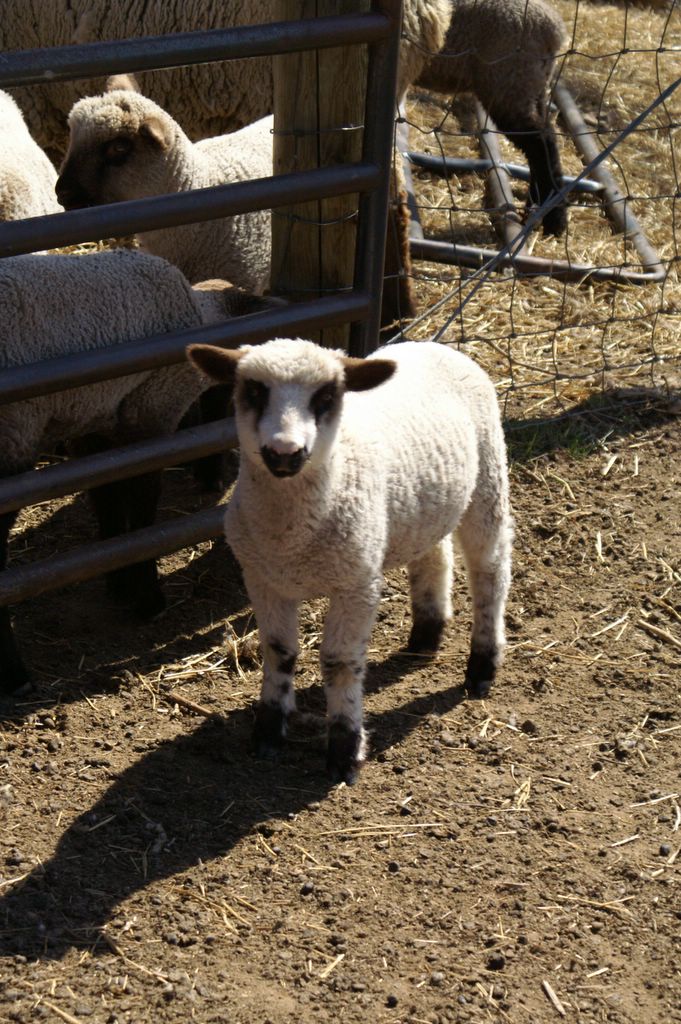
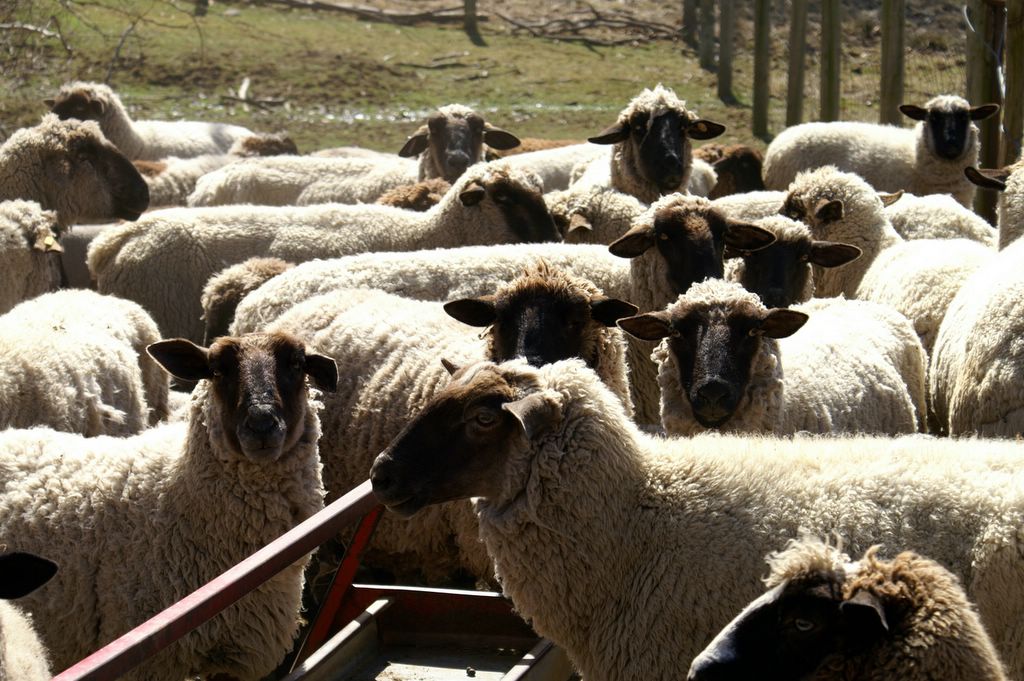
I found a new lamb in the flock this evening. He was easy to overlook, being nearly identical to one of the other late arrivals; all black except for a patch of white at the tip of his tail. It was a mild evening last night and a warm day today. Usually ewes find the foulest weather possible to give birth. In addition to other blessings I add today a thanks for unseasonably good weather and a healthy lamb. All in all a fine day in the barnyard. We do our best, and pray and hope for the best, but farming is never a sure proposition. At times I envy those of earlier ages who warded their fears and expressed their hopes unselfconsciously in song and prayer. The following is from Alexander Carmichael's Carmina Gadelica, a collection and translation of traditional Highland prayers, hymns, blessings and incantations preserved at the end of the nineteenth century:
GUARDING THE FLOCKS
May Mary the mild keep the sheep,
May Bride the calm keep the sheep,
May Columba keep the sheep,
May Maolruba keep the sheep,
May Carmac keep the sheep,
From the fox and the wolf.
May Oran keep the kine,
May Modan keep the kine,
May Donnan keep the kine,
May Moluag keep the kine,
May Maolruan keep the kine,
On soft land and hard land.
May the Spirit of peace preserve the flocks,
May the Son of Mary Virgin preserve the flocks,
May the God of glory preserve the flocks,
May the Three preserve the flocks,
From wounding and from death-loss,
From wounding and from death-loss.
Saturday, March 11, 2006
Friday, March 10, 2006
As I noted below, my personal theme for this Lent is "Stagger onward rejoicing." To expand on this theme, I include below the following excerpt from The Journals of Father Alexander Schmemann, which has now joined First Fruits as part of my Lenten reading.
The source of false religion is the inability to rejoice, or, rather, the refusal of joy, whereas joy is absolutely essential because it is without any doubt the fruit of God's presence. One cannot know that God exists and not rejoice. Only in relation to joy are the fear of God and humility correct, genuine, fruitful. Outside of joy, they become demonic, the deepest distortion of any religious experience. A religion of fear. Religion of pseudo-humility. Religion of guilt: They are all temptations, traps--very strong indeed, not only in the world, but inside the Church . . .
The first, the main source of everything is "my soul rejoices in the Lord ..." The fear of sin does not save from sin. Joy in the Lord saves. A feeling of guilt or moralism does not liberate from the world and its temptations. Joy is the foundation of freedom, where we are called to stand. Where, how, when has this tonality of Christianity become distorted, dull---or rather, where, how, why have Christians become deaf to joy? . . .
People continuously come and ask for advice . . ..And some weakness or false shame keeps me from telling each of them, "I don't have any advice to give you. I have only weak, shaky, but, for me, unremitting joy. Do you want it?"
Thursday, March 09, 2006
From the Thursday segment of the Great Canon:
Any time you begin serious work on your spiritual life, two dangers arise. The first is a perception that you are failing; your fasting rule falls apart, prayer is dry or non-existent, the whole enterprise is best abandoned before you embarrass yourself further. The second is the perception that you are succeeding and are only steps away from taking your place alongside the holy and enlightened. At the very least you have pulled away from the common crowd who do not have your discipline and insight. Despair or arrogance, the feeling of failure or the feeling of success; falling into either is a sign that the message of Lent has been missed. What does God require of us? That we come before him honestly in our weakness. There is no room for arrogance, because our poverty means more to God than our strength. There is no room for despair either, because it is in our poverty and weakness that Christ comes to us. Just as our strength will not bring him, neither will our failure drive him away. Our imperfect reality is gift enough for God, if it is given without pretense.Do not require of me fruits worthy of repentance, for my strength is spent in me. Grant me ever a contrite heart and spiritual poverty, that I may offer these gifts to Thee as an acceptable sacrifice, O only savior.
Wednesday, March 08, 2006
My copy of First Fruits of Prayer arrived yesterday and I have begun using it as part of my daily Lenten reading. A friend pointed out that, in addition to the written interview I linked below, one can listen to an interview with the author on "Come Receive the Light" an Orthodox radio ministry accessible through their web site or downloadable as a podcast via iTunes.
Tuesday, March 07, 2006

Monday, March 06, 2006
Now that we have begun Lent in both East and West, the question arises, why do we do it? Why do we have a season for repentance when we are called to repent regardless of the season? I guess it has to do with how you think of sin. Let us go back to the image of the spiritual life as a journey. We are, all of us, traveling into eternity. When NASA sends a probe out to Jupiter or beyond, the journey of that small piece of machinery is only a fraction of the journey that each of us takes. It is the belief of the Church that this life opens up into something so immeasurably larger that "eye has not seen nor ear heard" what it holds in store. As C. S. Lewis put it in his essay, "The Weight of Glory," we must
remember that the dullest and most uninteresting person you can talk to may one day be a creature which, if you saw it now, you would be strongly tempted to worship, or else a horror and a corruption such as you now meet, if at all, only in a nightmare. All day long we are, in some degree, helping each other to one or other of these destinations.There are, as NASA would tell you, no minor navigation errors at the beginning of a journey of that length. Sin, over the long haul, is a failure of navigation. The term used for sin in the Greek New Testament, hamartia, means literally to miss the mark, like an archer missing a target. If the spiritual life is a journey, then repentance is not so much a matter of feeling guilty as it is making a course correction. Lent is the time set aside for us to check our navigation, take some sightings and see just how far off course we have drifted throughout the year. During Lent we check our position with God and the created world through the disciplines of prayer, fasting and almsgiving. The purpose of the disciplines is not to punish or to justify ourselves, but to set right the course for our journey. As Lewis goes on to say in the passage we began quoting above
It is in the light of these overwhelming possibilities, it is with the awe and the circumspection proper to them, that we should conduct all our dealings with one another, all friendships, all loves, all play, all politics. There are no ordinary people. You have never talked to a mere mortal. Nations, cultures, arts, civilizations--these are mortal, and their life is to ours as the life of a gnat. But it is with immortals whom we joke with, work with, marry, snub and exploit--immortal horrors or everlasting splendors.
Subscribe to:
Posts (Atom)