Saturday, March 18, 2006


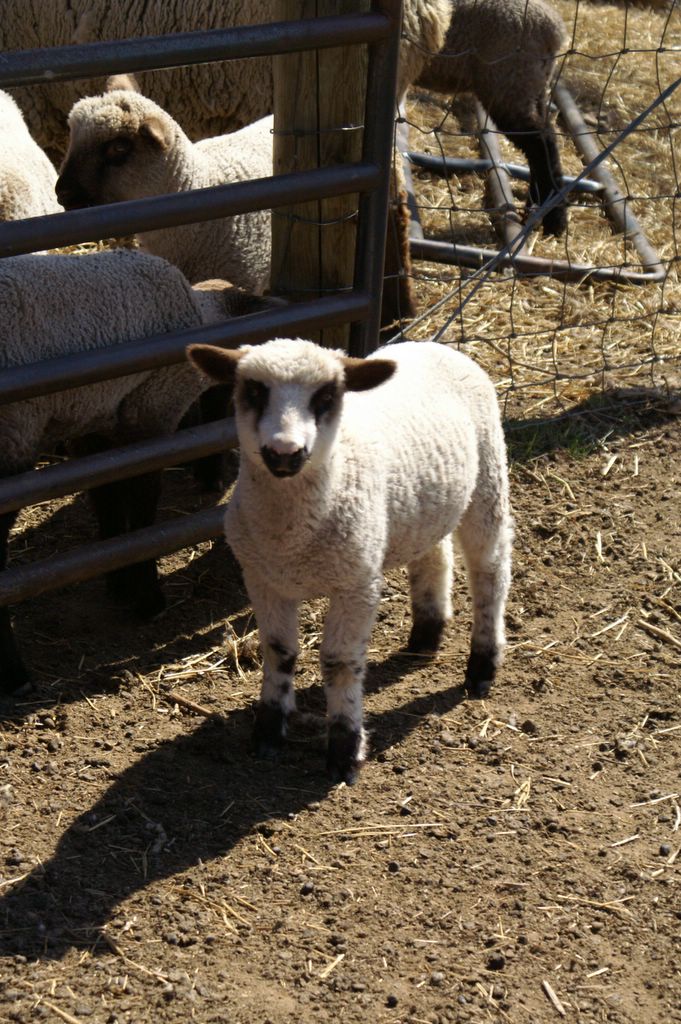
What's that your'e holding? Is it food? Is it for me?

Friday, March 17, 2006

Today is the commemoration of St. Patrick of Ireland. While we Orthodox do not have a dispensation to eat corned beef for the occasion, I can honor the life of Patrick by offering the following prayer, "The Deer's Cry," also known as "St. Patrick's Breastplate."


I arise today
Through a mighty strength, the invocation of the Trinity
Through belief in the threeness
Through confession of the Oneness
Towards the creator.


I arise today
Through the strength of Christ with his baptism,
Through the strength of his crucifixion with his burial,
Through the strength of his resurrection with his ascension
Through the strength of his decent for the Judgement of doom.

I arise today
Through the strength of the love of Cherubim
In obedience to the Angels,
In the service of the Archangels,
In hope of resurrection to meet with reward,
In prayers of patriarchs,
In predictions of prophets,
In preaching of Apostles,
In faiths of confessors,
In innocence of Holy Virgins,
In deeds of righteous men.


I arise today
Through the strength of heaven:
Light of sun
Brilliance of moon
Splendor of fire
Speed of lightning
Swiftness of wind
Depth of sea
Stability of earth
Firmness of rock.

I arise today
Through God's strength to pilot me:
God's might to uphold me,
God's wisdom to guide me
God's eye to look before me,
God's ear to hear me,
God's word to speak for me,
God's hand to guard me,
God's way to lie before me,
God's host to secure me
against snares of devils
against temptations of vices
against inclinations of nature
against everyone who shall wish me ill,
afar and anear,
alone and in a crowd.

A summon today all these powers between me and these evils
Against every cruel and merciless power that may oppose my body and my soul,
Against incantations of false prophets,
Against black laws of heathenry,
Against false laws of heretics,
Against craft of idolatry,
Against spells of women and smiths and wizards,
Against every knowledge that endangers manÂ?s body and soul.

Christ to protect me today
against poison, against burning,
against drowning, against wounding,
so that there may come abundance of reward.
Christ with me, Christ before me, Christ behind me,
Christ in me, Christ beneath me, Christ above me,
Christ on my right, Christ on my left
Christ where I lie, Christ where I sit, Christ where I arise
Christ in the heart of every man who thinks of me,
Christ in the mouth of every man who speaks of me,
Christ in every eye that sees me,
Christ in every ear that hears me.

I arise today
Through a mighty strength, the invocation of the Trinity,
Through belief in the Thrones,
Through confession of the Oneness
Towards the Creator.

Salvation is of the Lord
Salvation is of Christ
May thy salvation, O Lord, be ever with us
.

Thursday, March 16, 2006


Another photo from the archives: Lamb in flight!

Wednesday, March 15, 2006

The poet Scott Cairns book Philokalia collects older and more recent poems, including his series of meditations on New Testament Greek words. In the poem below, he takes on the term "metanoia," normally translated as "repentance." I commend it to you for your own Lenten meditations.
Adventures in New Testament Greek:
Metanoia

Repentance, to be sure,
but of a species far
less likely to oblige
sheepish repetition.

Repentance, you'll observe,
glibly bears the bent
of thought revisited,
and mind's familiar stamp

-- a quaint, half-hearted
doubleness that couples
all compunction with a
pledge of recurrent screw-up.

The heart's metanoia,
on the other hand, turns
without regret, turns not
so much away, as toward,

as if the slow pilgrim
has been surprised to find
that sin is not so bad
as it is a waste of time.

Tuesday, March 14, 2006


From the photo archives, taken at the end of December.
One of the books I am re-reading this Lent is Light in the Darkness, a collection of anecdotes, memories and reflections by Sergei Fudel. Fudel, a Russian Christian born at the turn of the last century, spent the better part of his life in Soviet prisons, labor camps or in exile as a consequence of his faith. Here is the passage that struck me tonight:

Prayer needs a certain quiet within us and around us. This is why it is so difficult to pray in our loud and arrogant days.

I remember a poem given me by G Chulkov, who later became a disciple of Father Alexei Mechev, and who was a friend of Alexander Blok:

I live in the worries of every day
But my heart, beneath their heavy weight,
Lives a life of its own,
Like a miracle of flame.

Hurrying to catch a bus,
Or bending over a book,
I can suddenly hear the murmur of fire
And I close my eyes.

Perhaps in our days, prayer does live "under a heavy weight."

Monday, March 13, 2006

Just as we secular folk do not pray as naturally as our forebearers did, so also our curses and complaints are pale and flacid imitations of their talent for full blooded poetic invective. I don't know that the following is at all edifying for Lent, as the wish for vengeance is one of those things we should really try to overcome in this season, but I give it to you anyhow. Perhaps the early Gaels prayed with such intensity because they lived the rest of their lives, for better or worse, with the same passion. Strange to us, but not so different from the world of the Psalms or the Prophets. It may be that we who are content with our small lives and small sins and petty grievences are further from real holiness than those who live (and sin) largely. It is a truism that great sinners, having learned the meaning of repentence, make great saints. If that is so, a blessing from the author of the following curse would be a great thing indeed.

THE wicked who would do me harm
May he take the throat disease,
Globularly, spirally, circularly,
Fluxy, pellety, horny-grim.

Be it harder than the stone,
Be it blacker than the coal,
Be it swifter than the duck,
Be it heavier than the lead.

Be it fiercer, fiercer, sharper, harsher, more malignant,
Than the hard, wound-quivering holly,
Be it sourer than the sained, lustrous, bitter, salt salt,
Seven seven times.

Oscillating thither,
Undulating hither,
Staggering downwards,
Floundering upwards.

Drivelling outwards,
Snivelling inwards,
Oft hurrying out,
Seldom coming in.

A wisp the portion of each hand,
A foot in the base of each pillar,
A leg the prop of each jamb,
A flux driving and dragging him.

A dysentery of blood from heart, from form, from bones,
From the liver, from the lobe, from the lungs,
And a searching of veins, of throat, and of kidneys,
To my contemners and traducers.

In name of the God of might,
Who warded from me every evil,
And who shielded me in strength,
From the net of my breakers
And destroyers.


(From the Carmina Gadelica)

Sunday, March 12, 2006

I found a new lamb in the flock this evening. He was easy to overlook, being nearly identical to one of the other late arrivals; all black except for a patch of white at the tip of his tail. It was a mild evening last night and a warm day today. Usually ewes find the foulest weather possible to give birth. In addition to other blessings I add today a thanks for unseasonably good weather and a healthy lamb. All in all a fine day in the barnyard. We do our best, and pray and hope for the best, but farming is never a sure proposition. At times I envy those of earlier ages who warded their fears and expressed their hopes unselfconsciously in song and prayer. The following is from Alexander Carmichael's Carmina Gadelica, a collection and translation of traditional Highland prayers, hymns, blessings and incantations preserved at the end of the nineteenth century:

GUARDING THE FLOCKS

May Mary the mild keep the sheep,
May Bride the calm keep the sheep,
May Columba keep the sheep,
May Maolruba keep the sheep,
May Carmac keep the sheep,
From the fox and the wolf.

May Oran keep the kine,
May Modan keep the kine,
May Donnan keep the kine,
May Moluag keep the kine,
May Maolruan keep the kine,
On soft land and hard land.

May the Spirit of peace preserve the flocks,
May the Son of Mary Virgin preserve the flocks,
May the God of glory preserve the flocks,
May the Three preserve the flocks,
From wounding and from death-loss,
From wounding and from death-loss.

Saturday, March 11, 2006


Waiting for breakfast

Saturday Morning with the flock

Friday, March 10, 2006

As I noted below, my personal theme for this Lent is "Stagger onward rejoicing." To expand on this theme, I include below the following excerpt from The Journals of Father Alexander Schmemann, which has now joined First Fruits as part of my Lenten reading.

The source of false religion is the inability to rejoice, or, rather, the refusal of joy, whereas joy is absolutely essential because it is without any doubt the fruit of God's presence. One cannot know that God exists and not rejoice. Only in relation to joy are the fear of God and humility correct, genuine, fruitful. Outside of joy, they become demonic, the deepest distortion of any religious experience. A religion of fear. Religion of pseudo-humility. Religion of guilt: They are all temptations, traps--very strong indeed, not only in the world, but inside the Church . . .

The first, the main source of everything is "my soul rejoices in the Lord ..." The fear of sin does not save from sin. Joy in the Lord saves. A feeling of guilt or moralism does not liberate from the world and its temptations. Joy is the foundation of freedom, where we are called to stand. Where, how, when has this tonality of Christianity become distorted, dull---or rather, where, how, why have Christians become deaf to joy? . . .

People continuously come and ask for advice . . ..And some weakness or false shame keeps me from telling each of them, "I don't have any advice to give you. I have only weak, shaky, but, for me, unremitting joy. Do you want it?"

Thursday, March 09, 2006

From the Thursday segment of the Great Canon:

Do not require of me fruits worthy of repentance, for my strength is spent in me. Grant me ever a contrite heart and spiritual poverty, that I may offer these gifts to Thee as an acceptable sacrifice, O only savior.

Any time you begin serious work on your spiritual life, two dangers arise. The first is a perception that you are failing; your fasting rule falls apart, prayer is dry or non-existent, the whole enterprise is best abandoned before you embarrass yourself further. The second is the perception that you are succeeding and are only steps away from taking your place alongside the holy and enlightened. At the very least you have pulled away from the common crowd who do not have your discipline and insight. Despair or arrogance, the feeling of failure or the feeling of success; falling into either is a sign that the message of Lent has been missed. What does God require of us? That we come before him honestly in our weakness. There is no room for arrogance, because our poverty means more to God than our strength. There is no room for despair either, because it is in our poverty and weakness that Christ comes to us. Just as our strength will not bring him, neither will our failure drive him away. Our imperfect reality is gift enough for God, if it is given without pretense.

Wednesday, March 08, 2006

My copy of First Fruits of Prayer arrived yesterday and I have begun using it as part of my daily Lenten reading. A friend pointed out that, in addition to the written interview I linked below, one can listen to an interview with the author on "Come Receive the Light" an Orthodox radio ministry accessible through their web site or downloadable as a podcast via iTunes.

Tuesday, March 07, 2006


Tuesday morning at the barnyard

Monday, March 06, 2006

Now that we have begun Lent in both East and West, the question arises, why do we do it? Why do we have a season for repentance when we are called to repent regardless of the season? I guess it has to do with how you think of sin. Let us go back to the image of the spiritual life as a journey. We are, all of us, traveling into eternity. When NASA sends a probe out to Jupiter or beyond, the journey of that small piece of machinery is only a fraction of the journey that each of us takes. It is the belief of the Church that this life opens up into something so immeasurably larger that "eye has not seen nor ear heard" what it holds in store. As C. S. Lewis put it in his essay, "The Weight of Glory," we must
remember that the dullest and most uninteresting person you can talk to may one day be a creature which, if you saw it now, you would be strongly tempted to worship, or else a horror and a corruption such as you now meet, if at all, only in a nightmare. All day long we are, in some degree, helping each other to one or other of these destinations.
There are, as NASA would tell you, no minor navigation errors at the beginning of a journey of that length. Sin, over the long haul, is a failure of navigation. The term used for sin in the Greek New Testament, hamartia, means literally to miss the mark, like an archer missing a target. If the spiritual life is a journey, then repentance is not so much a matter of feeling guilty as it is making a course correction. Lent is the time set aside for us to check our navigation, take some sightings and see just how far off course we have drifted throughout the year. During Lent we check our position with God and the created world through the disciplines of prayer, fasting and almsgiving. The purpose of the disciplines is not to punish or to justify ourselves, but to set right the course for our journey. As Lewis goes on to say in the passage we began quoting above
It is in the light of these overwhelming possibilities, it is with the awe and the circumspection proper to them, that we should conduct all our dealings with one another, all friendships, all loves, all play, all politics. There are no ordinary people. You have never talked to a mere mortal. Nations, cultures, arts, civilizations--these are mortal, and their life is to ours as the life of a gnat. But it is with immortals whom we joke with, work with, marry, snub and exploit--immortal horrors or everlasting splendors.

Sunday, March 05, 2006

Tomorrow is Clean Monday, the beginning of Orthodox Lent. It is traditional to sing the Great Canon of St. Andrew of Crete during Compline services over the next four days. The Great Canon can be found conveniently divided into four portions for Monday through Thursday on the Monachos web site for printing or viewing on-line. The prolific and always readable Frederica Mathewes-Green has written a guide to the Canon, First Fruits of Prayer: A Forty-Day Journey Through the Canon of St. Andrew . My copy should arrive shortly and I will pass on any thoughts about it when I can. In the meantime, an interview with the author can be found here.

Saturday, March 04, 2006

Tomorrow is the Sunday of Forgiveness, the last day before the beginning of Orthodox Lent. It is a commonplace in the literature to describe the spiritual life as a journey and this metaphor is often used for our passage through Lent. In ages past the archetypical traveler was the pilgrim. Today it is the tourist. Both the pilgrim and the tourist travel towards an experience. The pilgrim is seeking something larger than himself and the journey is an act of self-denial. The tourist is seeking to indulge and enhance his self by an act of consumption. Is there still a place for pilgrims in a world where travel is an industry? Self-denial in an age of consumption is a kind of foolishness and any pilgrimage, particularly a pilgimage in place where the journey is within oneself and the destination is always beyond ones grasp, is little understood in our secular age. The following poem on the topic by W. H. Auden has one of my favorite lines which I take as my theme for the coming Lenten journey; "Stagger onward rejoicing." We will fail, it will be hard at times, but underneath it all, this is a joyful journey.

Atlantis

Being set on the idea
Of getting to Atlantis,
You have discovered of course
Only the Ship of Fools is
Making the voyage this year,
As gales of abnormal force
Are predicted, and that you
Must therefore be ready to
Behave absurdly enough
To pass for one of The Boys,
At least appearing to love
Hard liquor, horseplay and noise.

Should storms, as may well happen,
Drive you to anchor a week
In some old harbour-city
Of Ionia, then speak
With her witty sholars, men
Who have proved there cannot be
Such a place as Atlantis:
Learn their logic, but notice
How its subtlety betrays
Their enormous simple grief;
Thus they shall teach you the ways
To doubt that you may believe.

If, later, you run aground
Among the headlands of Thrace,
Where with torches all night long
A naked barbaric race
Leaps frenziedly to the sound
Of conch and dissonant gong:
On that stony savage shore
Strip off your clothes and dance, for
Unless you are capable
Of forgetting completely
About Atlantis, you will
Never finish your journey.

Again, should you come to gay
Carthage or Corinth, take part
In their endless gaiety;
And if in some bar a tart,
As she strokes your hair, should say
"This is Atlantis, dearie,"
Listen with attentiveness
To her life-story: unless
You become acquainted now
With each refuge that tries to
Counterfeit Atlantis, how
Will you recognise the true?

Assuming you beach at last
Near Atlantis, and begin
That terrible trek inland
Through squalid woods and frozen
Thundras where all are soon lost;
If, forsaken then, you stand,
Dismissal everywhere,
Stone and now, silence and air,
O remember the great dead
And honour the fate you are,
Travelling and tormented,
Dialectic and bizarre.

Stagger onward rejoicing;
And even then if, perhaps
Having actually got
To the last col, you collapse
With all Atlantis shining
Below you yet you cannot
Descend, you should still be proud
Even to have been allowed
Just to peep at Atlantis
In a poetic vision:
Give thanks and lie down in peace,
Having seen your salvation.

All the little household gods
Have started crying, but say
Good-bye now, and put to sea.
Farewell, my dear, farewell: may
Hermes, master of the roads,
And the four dwarf Kabiri,
Protect and serve you always;
And may the Ancient of Days
Provide for all you must do
His invisible guidance,
Lifting up, dear, upon you
The light of His countenance.

Friday, March 03, 2006


Friday morning sunrise.

Thursday, March 02, 2006

Even those of us who start our days walking through barnyards in rubber boots sometimes daydream about living the high life. I've been thinking about this lately, partly because I have been taking stock with the approach of Lent, but mostly because I have been watching a DVD collection of the William Powell and Myrna Loy "Thin Man" films from the thirties and forties. Now that was style. Even the low-lives in those movies wore better suits than I do. And I am sure that William Powell never had to worry about what might be on his shoes after a walk across the yard. I watch with a little bit of envy, but have to admit that, while it would be fun for a while, black tie for dinner would get awfully confining as a regular event. And, as far as I have been able to observe, livestock are not terribly impressed by formal wear.

Nonetheless, we have our daydreams. My mother-in-law, who trained as a classical pianist before becoming a teacher, has been redecorating her home on the other side of the farm now that she and my father-in-law are retired. For the first time in her married life she can have light colored carpets without fear of what he might track in from the barn. She is trying to bring a little elegance back into the household, but it is, I fear, an uphill battle. Not through any fault of her own but because the realities of rural life keep intruding. Lately, when I drive over after dark, I see along with the peacocks and farm cats, one or more opossums trundling across the driveway heading for the small gap under her kitchen porch. She has made great progress with the house, but I'm afraid that having porch possums may be a sign that we are still not quite ready for high society.

Wednesday, March 01, 2006


Don't let the clown suit fool you buddy, I'm one tough sheep.