Notes from a Hillside Farm; being Musings and Observations on Life, Letters, and our Most Holy Faith, by a Lawyer, Sheep- farmer, and Communicant of the Orthodox Church
Sunday, October 23, 2005
My apologies to those faithful few readers who have been stopping by this past month in the expectation of seeing new material.
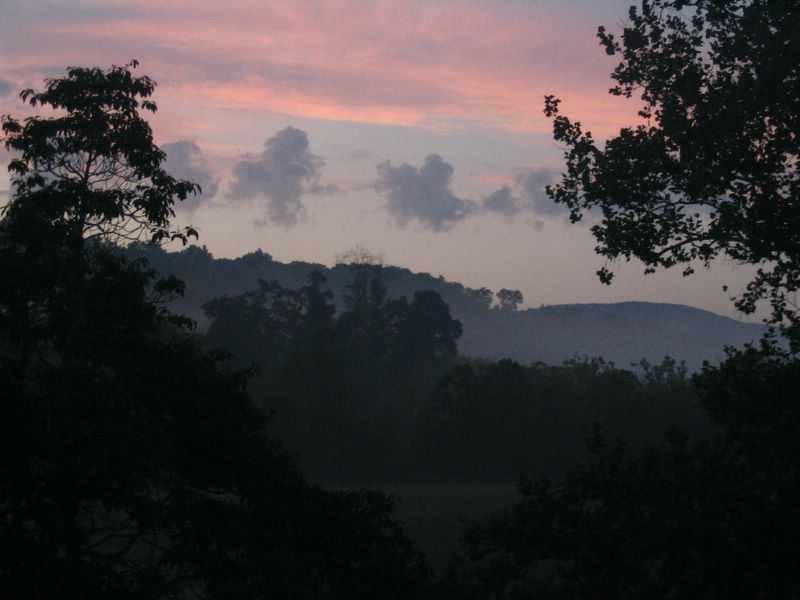
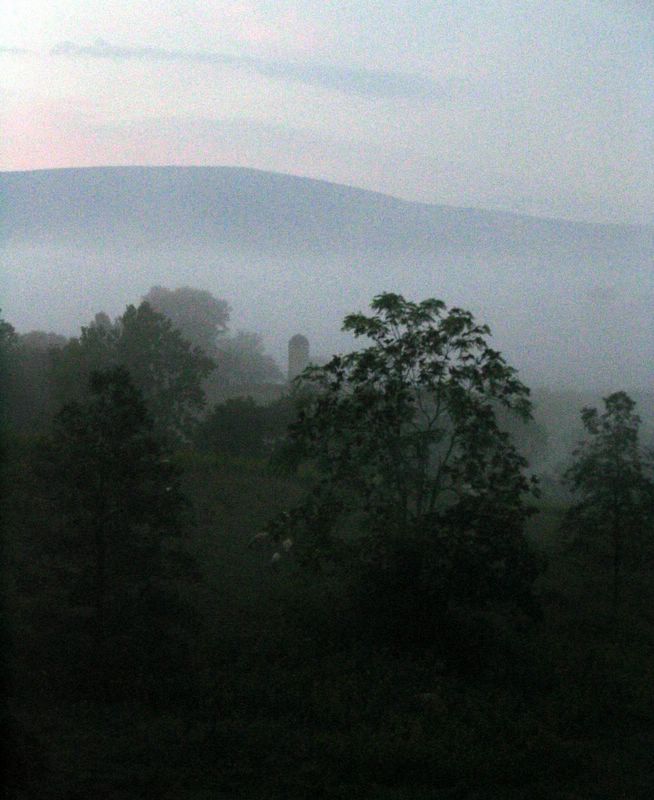
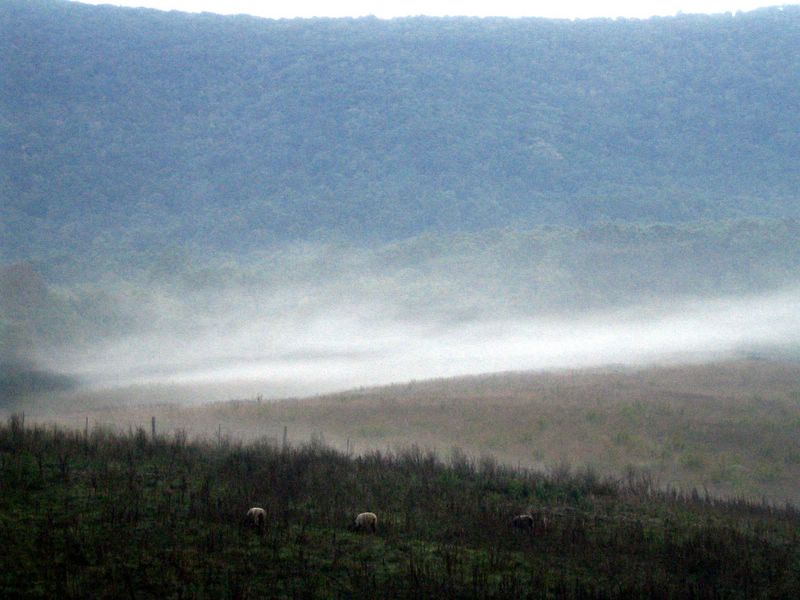
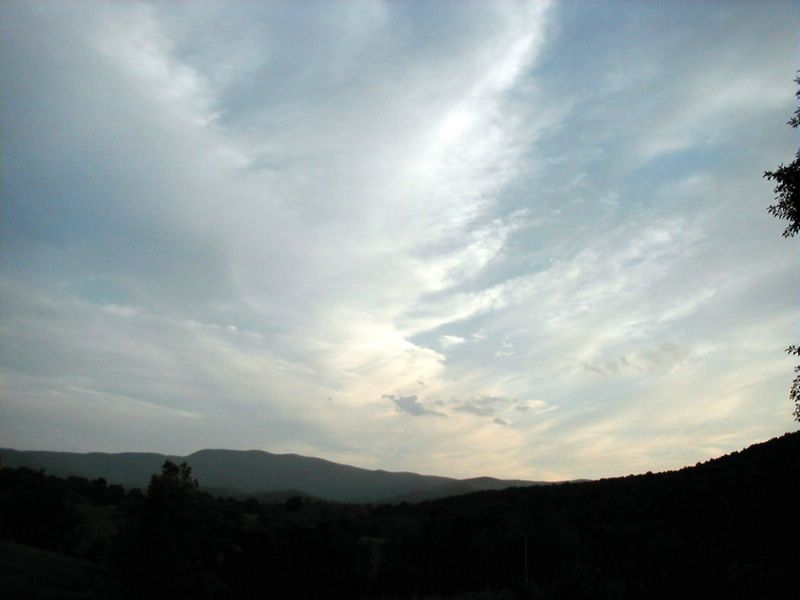
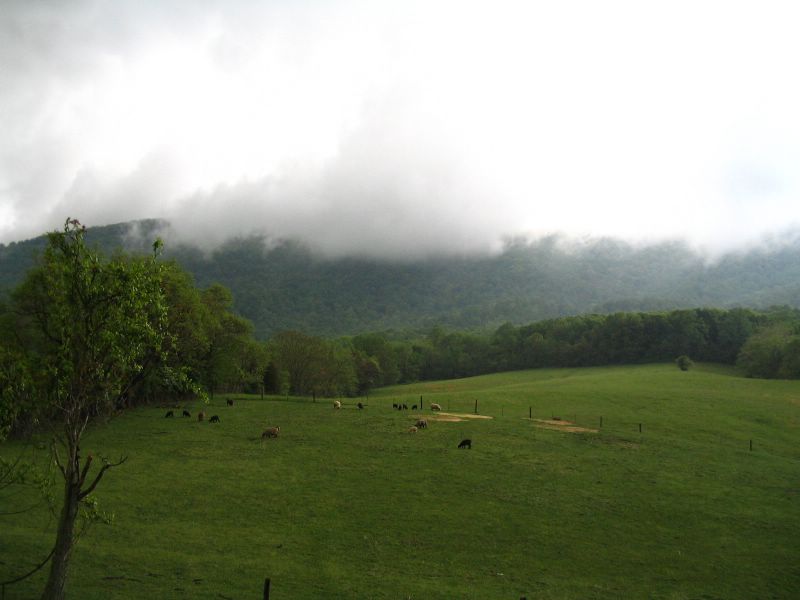
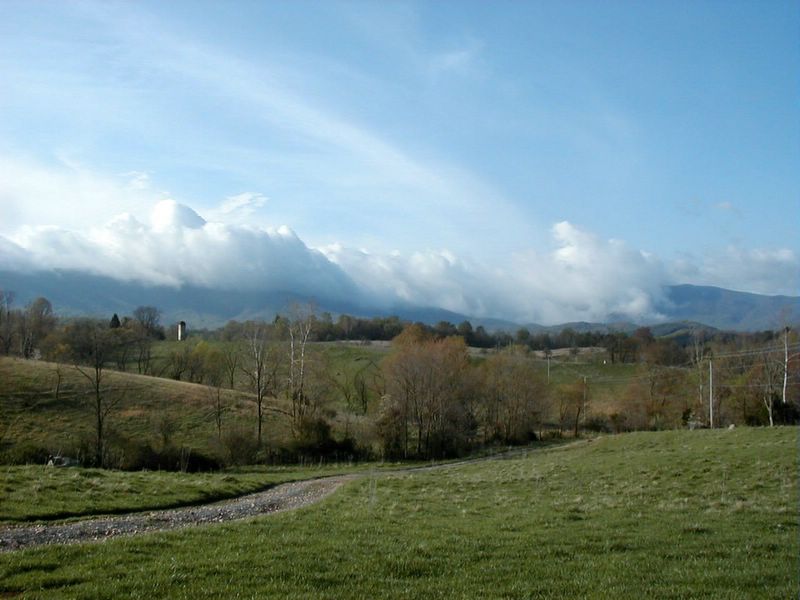
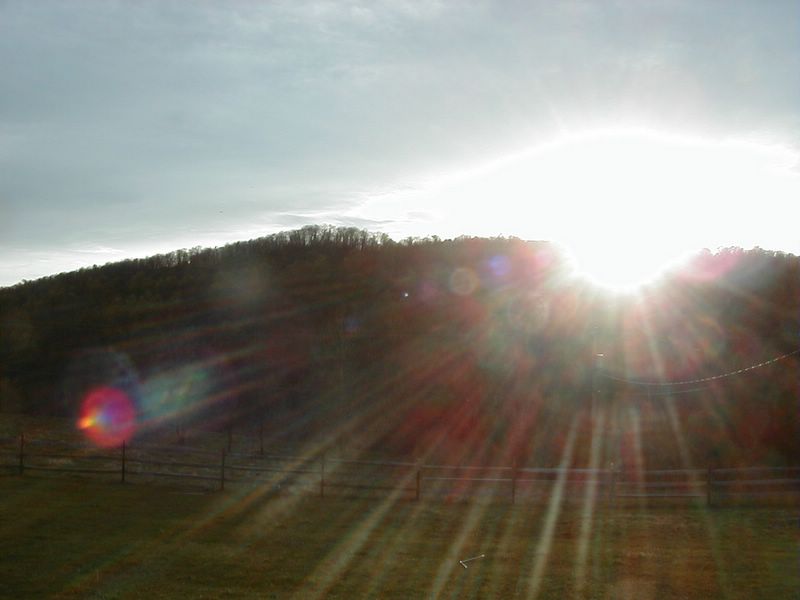
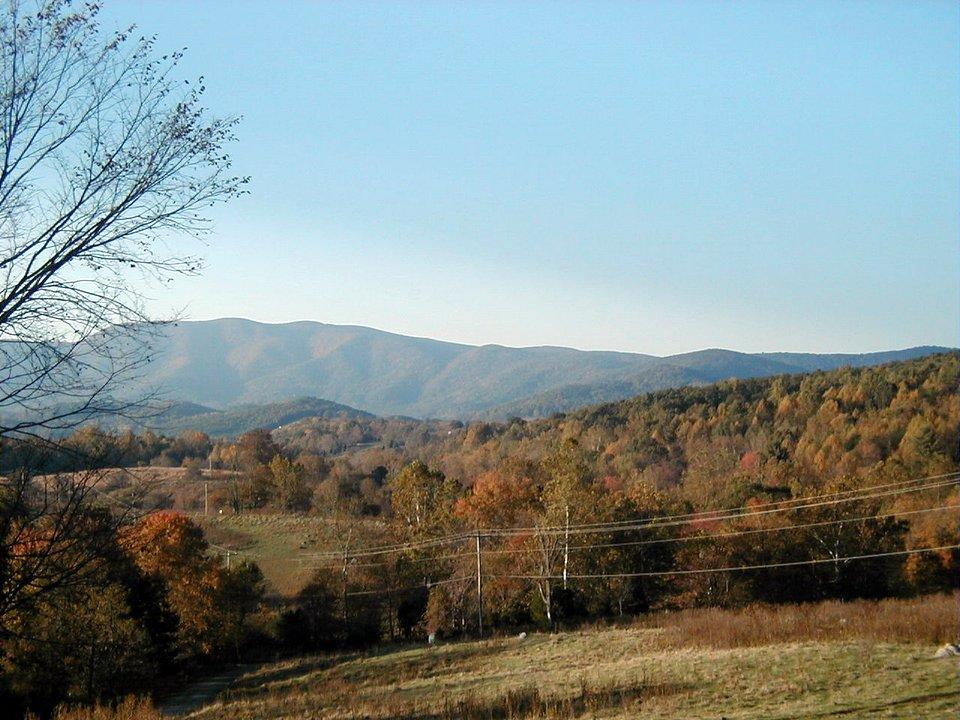
When I wrote last it was the end of Summer. We are now well into Autumn; leaves beginning to turn and a noticible chill in the morning air. With the change in season, perhaps I can have a change in habit and return to daily updates. In the meantime, here is the view from our hillside farm on an October Sunday morning.
Tuesday, September 20, 2005
Tuesday, September 13, 2005
Crossing Lines
Up sleepless a few nights back, I pulled a book by my friend Jonathan Chaves out of the bedside stack and read this translation of a poem by the Sung Dynasty poet Yang Wan-Li:
Crossing Jun-p'o Bridge
I started to walk over Jun-p'o Bridge,
wondering when I will reach Chiang-tung.
Suddenly I notice a marker in the middle of the bridge
and realize that half my foot is already there.
I have always loved boundaries and that odd feeling of accomplishment that comes from crossing a state or even a county line. It is a kind of game we humans play with ourselves: Draw an imaginary line across a piece of the world and live as if it were as real as the landscape. But nonetheless, I never tire of the idea that, with the first step you are one place, with the second you are someplace else entirely. In the poem cited above, a twelfth-century Chinese scholar-bureaucrat amuses himself with the same thought, showing that my observation is neither new nor original.
It brings to mind an old joke about a man in his late 90's who has lived all his life on what he thought was the Canadian side of the U.S./Canadian border. As the joke goes, a survey crew stops by and tells him that, with their new instruments, they have determined that he is actually an American citizen and ask how he feels about it all. The old man considers it for a moment and says he is greatly relieved, because he really didn't think he could survive another Canadian winter. I know; it is not that funny, but it's always been a favorite of mine and seems to capture exactly the oddness of our habit of drawing lines on maps.
A friend told me that once, at Four Corners New Mexico, starting at the point where the map lines came together, she danced through Colorado, New Mexico, Utah, Arizona and back.
Crossing Jun-p'o Bridge
I started to walk over Jun-p'o Bridge,
wondering when I will reach Chiang-tung.
Suddenly I notice a marker in the middle of the bridge
and realize that half my foot is already there.
I have always loved boundaries and that odd feeling of accomplishment that comes from crossing a state or even a county line. It is a kind of game we humans play with ourselves: Draw an imaginary line across a piece of the world and live as if it were as real as the landscape. But nonetheless, I never tire of the idea that, with the first step you are one place, with the second you are someplace else entirely. In the poem cited above, a twelfth-century Chinese scholar-bureaucrat amuses himself with the same thought, showing that my observation is neither new nor original.
It brings to mind an old joke about a man in his late 90's who has lived all his life on what he thought was the Canadian side of the U.S./Canadian border. As the joke goes, a survey crew stops by and tells him that, with their new instruments, they have determined that he is actually an American citizen and ask how he feels about it all. The old man considers it for a moment and says he is greatly relieved, because he really didn't think he could survive another Canadian winter. I know; it is not that funny, but it's always been a favorite of mine and seems to capture exactly the oddness of our habit of drawing lines on maps.
A friend told me that once, at Four Corners New Mexico, starting at the point where the map lines came together, she danced through Colorado, New Mexico, Utah, Arizona and back.
Friday, September 02, 2005
It seems that I am not quite back to daily updates yet. The lawyer part of my life has been demanding more time lately, and like everyone else, I have been glued to computer and tv screens following the events in Louisiana, Mississippi and Alabama. The hierarchs of the different Orthodox jurisdictions in America have called for the faithful to give sacrificially to the relief effort. You can donate on-line to the Greek Archdiocese Hurricane Relief Fund by going here. The Orthodox Church in America is requesting that money be funneled through International Orthodox Christian Charities. Online donations to the IOCC are being accepted here. The Antiochian Archdiocese is taking special collections the next two Sundays in all their parishes for Katrina relief.
The appeal from Metropolitan Philip of the Antiochian Archdiocese can be read here. Metropolitan Herman of the Orthodox Church in America writes here and the encyclical sent to his parishes by Archbishop Demetrios of the Greek Archdiocese can be read here.
Update: Metropolitan Nicholas of the Carpatho-Russian Orthodox Diocese has called for a collection from his parishes. The text of his appeal can be found here.
The appeal from Metropolitan Philip of the Antiochian Archdiocese can be read here. Metropolitan Herman of the Orthodox Church in America writes here and the encyclical sent to his parishes by Archbishop Demetrios of the Greek Archdiocese can be read here.
Update: Metropolitan Nicholas of the Carpatho-Russian Orthodox Diocese has called for a collection from his parishes. The text of his appeal can be found here.
Monday, August 29, 2005
Tuesday, August 23, 2005
Things I have braked for this month
Doe
Fawn
Buck
Box Turtle
Bear
Buzzard
Rabbit
Fox
Possum
Sheep (many, many Sheep)
Fawn
Buck
Box Turtle
Bear
Buzzard
Rabbit
Fox
Possum
Sheep (many, many Sheep)
Sunday, August 21, 2005

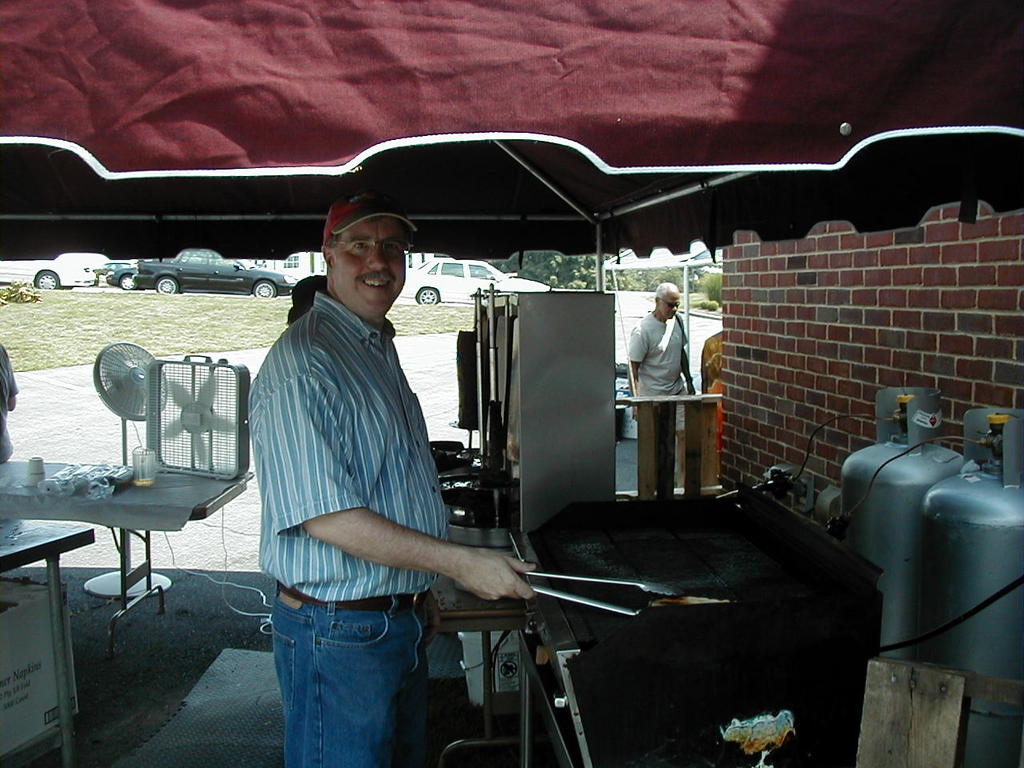
No, we have not opened a gyro stand here on the farm. The picture above is from the Greek Festival this weekend at the Orthodox Church in Winchester, Virginia I attend as an alternative to the long drive down into the city. For those of you who check in regularly, my apologies for the lack of updates this past month and a half. The press of work, a bit of travel and the odd bout of illness have all contributed to my blog holiday. Nonetheless, I am back, and regular farm blogging will resume shortly.
Thursday, July 07, 2005
Monday, July 04, 2005
Sunday, June 26, 2005
Monday, June 06, 2005

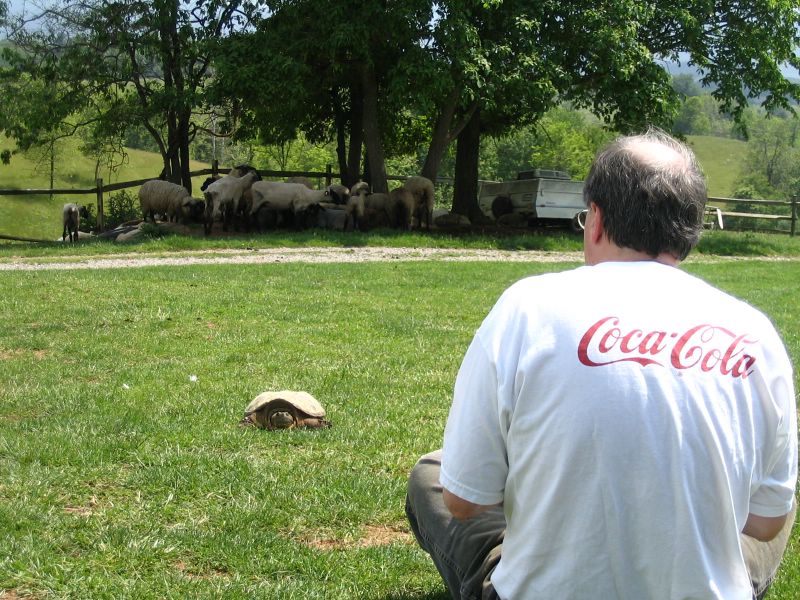
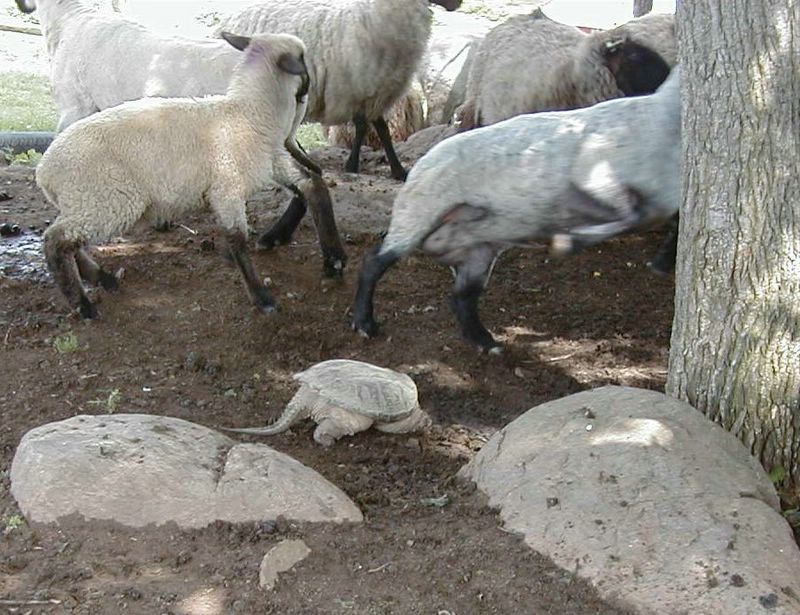
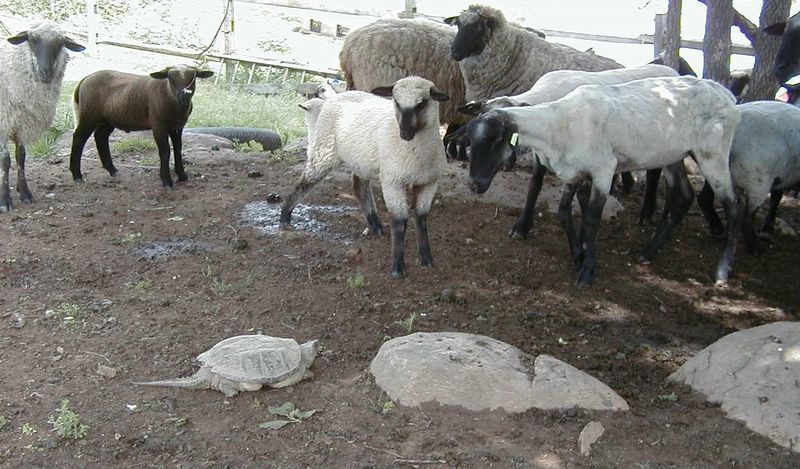
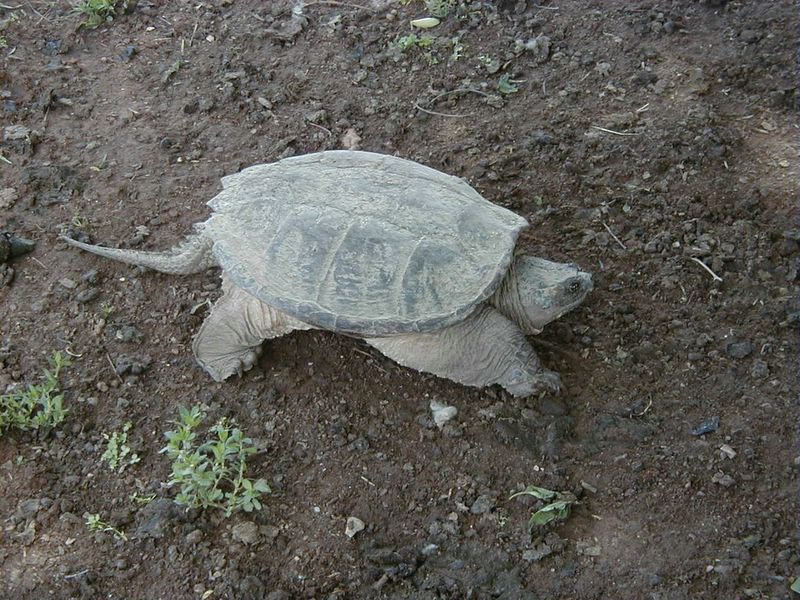
I downloaded some pictures from my wife's camera and found this one of your blogger communing with our visiting snapping turtle. (By the way, the t-shirt was a radio station freebee from last year's County Fair. If I had to hand out an endorsement, it would be Dr. Pepper or maybe the cheap diet ginger ale from Giant.)
Sunday, June 05, 2005

Today would have been my father's 73rd birthday. I went down to the city for Church, and after teaching my high school sunday school class, went on to Arlington Cemetery, where he is buried together with his mother and father. Through a quirk of fate, Arlington is his family's graveyard. His father, my grandfather, died at age 48 when Arlington was just one of a number of government cemeteries and not yet our national shrine. My grandmother, left a widow with a son to support, found out that her husband's brief service at the end of the first world war qualified him for a funeral beyond what she could otherwise afford and provided a grave site only a few miles away from her home. Thirty two years later she was buried in the plot she had reserved next to him. At my father's death, his own time in military service allowed him to be buried together with his father. It is a beautiful spot with the finest company imaginable. I believe he would be pleased.
Saturday, June 04, 2005
Thursday, June 02, 2005
Wednesday, June 01, 2005
Tuesday, May 31, 2005
Monday, May 30, 2005
Another day down at the barn shearing sheep. It still amazes me to see them step on the stand looking like ragged clouds and step off sleek as a greyhounds. Tonight I plan to soothe aching muscles and settle down with a copy of Theodore Dalrymple's Life at the Bottom, a collection of bleak but wonderfully written essays on the life of the self-perpetuating underclass in contemporary England. After almost twenty years of the practice of criminal law on both the prosecution and defense side, I experience the shock of recognition on almost every page. The pathologies he describes may be more acute in urban Britain, but they are progressing nicely even here in rural/suburban small town Virginia. I would recommend the book, but if you want to sample Dalrymple's writing on-line, try here.
Sunday, May 29, 2005
Saturday, May 28, 2005
Busy day on the farm. We rounded up the sheep from the various pastures in which they were hiding and ran them down to the barn in preparation for drenching and shearing. Matters were delayed by a mid-morning thunderstorm, but enough sheep were under roof and dry so we were able to shear ten after lunch time once the drenching was done. (Yes, a professional shearer would do that many in an hour with time left over for a stretch and a cigarette, but it is an afternoon's work for us.) Many thanks to Lynn, Eleni, and Robin who came by to help out .
Friday, May 27, 2005

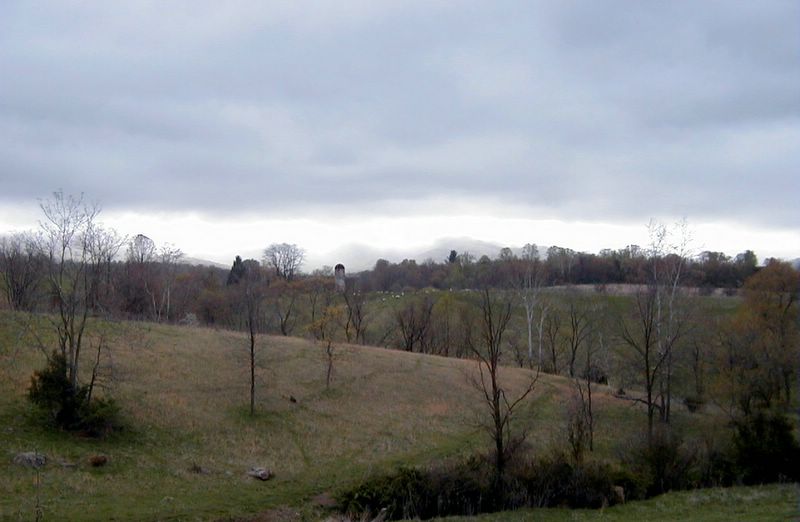
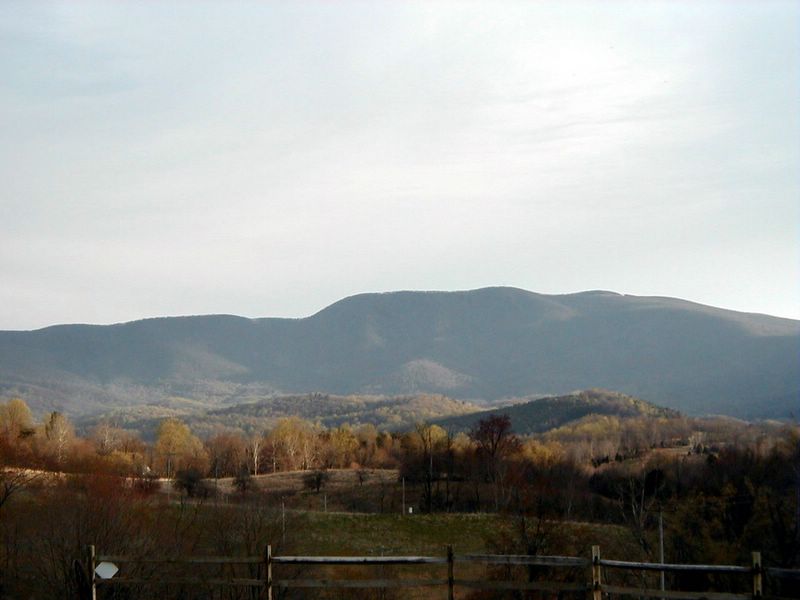
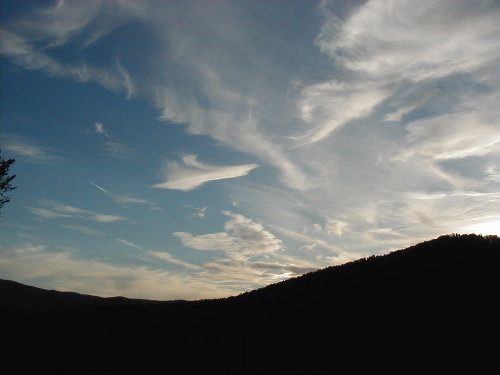
We have had several days of rain, with sun finally breaking through yesterday. Here is the view from the house looking east towards Skyline drive. An almost perfect afternoon, with one small dark cloud to keep us from getting too carried away.
For those who check regularly, my apologies for the lack of posts. Busy schedules in court and farm, as well as some new books by the bedside have cut into blogging time. I promise to do better in the coming weeks.
Tuesday, May 17, 2005
Orthodoxy has a rich tradition of choral music. Our services are chanted and sung rather than spoken, with the human voice as the only instrument. Each national church has its own musical traditions, but underlying all of them are the eight modes or "tones" of Byzantine Chant. The traditional tones can be quite a shock to someone who has only encountered Orthodox music in its lush, more westernized Russian incarnation. It is emphatically not western sounding, with a modal scale that strikes the uninitiated as sounding positively middle-eastern. Nonetheless, once you get your ears adjusted, there is a delicate and somber beauty that is hard to reproduce in Western notation. I have made a few attempts at the traditional tones over the years. The result was disheartening, rather like listening to the Lawrence Welk Orchestra working its way through the B. B. King songbook. Nonetheless, I still have hopes. The Greek Archdiocese has a resource for the do-it-yourself student at its On-Line Chapel; a whole page of links to introduce the novice to Byzantine Chant.
Monday, May 16, 2005
Today Huw links to a site on apocalyptic ideas in Old English literature. It brought back fond memories of staring bleary-eyed at my copy of Beowulf back in 1977 trying to turn the oddly familiar yet foreign phrases of Anglo-Saxon into something I could understand. Besides the links to the apocalyptic material (no, it did not start with the "Left Behind" books) there is a wonderful set of links to materials on Old English life and literature, including language lessons. The site contains my own favorite Old English poem, The Dream of the Rood, a uniquely Anglo-Saxon poetic meditation on the Cross.
Sunday, May 15, 2005
It has been a while since I have put up a post linking back to one of the bloggers who show up regularly in my referrer logs. Todays link is Ever So Humble, a blog from the New Hampshire Seacoast. She has become a favorite stop for information on everything from seasonal changes to high school lacrosse to the Weekly World News.
Saturday, May 14, 2005

We had planned on shearing the first of the flock this afternoon. A thunderstorm had plans of its own, so we spent the afternoon inside watching rain blowing down sideways instead. With each lightning flash, the portable phone in the kitchen would ring once before the thunderclap. Mother Nature calling!

For those who check regularly, my apologies for the lack of posts. I took some time off and went down to Florida to visit family. The picture above is the view from Caspersen Beach last Saturday, looking out over the Gulf of Mexico. I have been back since Tuesday night, but caught up in the press of work since then. After a short burst of vacation pictures, regular farm blogging will resume.
Monday, May 02, 2005
This week after Pascha is "Bright Week" in the Orthodox Church. The customary Wednesday/Friday fasts are lifted and we greet one another with "Christ is Risen!", to which one responds, "Indeed, he is risen!" The website of the Orthodox Church in America has a special page with the Paschal Greeting in languages ranging from Aleut to Coptic to Latvian to Romanian to Zulu. My current favorite is Hawaiian:
Ua ala hou 'o Kristo!
Ua ala 'I 'o no 'oia!
Ua ala hou 'o Kristo!
Ua ala 'I 'o no 'oia!
Update: Father Steven Bigham has a new site where you can read (and hear!) the Paschal Greeting in 250 different languages. (Link via Orthodoxy Today)
Sunday, May 01, 2005
The BBC has a wonderful audio portrait of Orthodox Easter here, narrated by Canon Michael Bourdeaux, an Anglican priest who was a great friend of the suffering Church in Russia under the Communists. He also interviews Irina Ratushinskaya, whom I have written about before.
Saturday, April 30, 2005
Friday, April 29, 2005
The wounded surgeon plies the steel
That questions the distempered part;
Beneath the bleeding hands we feel
The sharp compassion of the healer's art
Resolving the enigma of the fever chart.
Our only health is the disease
If we obey the dying nurse
Whose constant care is not to please
But to remind of our, and Adam's curse,
And that, to be restored, our sickness must grow worse.
The whole earth is our hospital
Endowed by the ruined millionaire,
Wherein, if we do well, we shall
Die of the absolute paternal care
That will not leave us, but prevents us everywhere.
The chill ascends from feet to knees,
The fever sings in mental wires.
If to be warmed, then I must freeze
And quake in frigid purgatorial fires
Of which the flame is roses, and the smoke is briars.
The dripping blood our only drink,
The bloody flesh our only food:
In spite of which we like to think
That we are sound, substantial flesh and blood—
Again, in spite of that, we call this Friday good.
From "East Coker"; The Four Quartets
That questions the distempered part;
Beneath the bleeding hands we feel
The sharp compassion of the healer's art
Resolving the enigma of the fever chart.
Our only health is the disease
If we obey the dying nurse
Whose constant care is not to please
But to remind of our, and Adam's curse,
And that, to be restored, our sickness must grow worse.
The whole earth is our hospital
Endowed by the ruined millionaire,
Wherein, if we do well, we shall
Die of the absolute paternal care
That will not leave us, but prevents us everywhere.
The chill ascends from feet to knees,
The fever sings in mental wires.
If to be warmed, then I must freeze
And quake in frigid purgatorial fires
Of which the flame is roses, and the smoke is briars.
The dripping blood our only drink,
The bloody flesh our only food:
In spite of which we like to think
That we are sound, substantial flesh and blood—
Again, in spite of that, we call this Friday good.
From "East Coker"; The Four Quartets
Thursday, April 28, 2005
Holy Thursday commemorates the Last Supper, the washing of the disciples feet, and the betrayal by Judas.
Of your mystical Supper, Son of God, receive me today as a communicant; for I will not tell of the Mystery to your enemies; I will not give you a kiss, like Judas; but like the Thief I confess you: Remember me, Lord, in your Kingdom.
Wednesday, April 27, 2005
Father Joseph at Orthodixie has posted a useful tour of Orthodox Holy Week for those who are curious.
Tuesday, April 26, 2005
We are now well into Holy Week, only days left before Good Friday and Pascha. As always, words fail. I commend to you the services for the week, which can be found at Archimandrite Ephraim's indispensable site. For myself, I turn again to Eliot:
So here I am, in the middle way, having had twenty years--
Twenty years largely wasted, the years of l'entre deux guerres
Trying to use words, and every attempt
Is a wholly new start, and a different kind of failure
Because one has only learnt to get the better of words
For the thing one no longer has to say, or the way in which
One is no longer disposed to say it. And so each venture
Is a new beginning, a raid on the inarticulate
With shabby equipment always deteriorating
In the general mess of imprecision of feeling,
Undisciplined squads of emotion. And what there is to conquer
By strength and submission, has already been discovered
Once or twice, or several times, by men whom one cannot hope
To emulate--but there is no competition--
There is only the fight to recover what has been lost
And found and lost again and again: and now, under conditions
That seem unpropitious. But perhaps neither gain nor loss.
For us, there is only the trying. The rest is not our business.
From "East Coker"; The Four Quartets
So here I am, in the middle way, having had twenty years--
Twenty years largely wasted, the years of l'entre deux guerres
Trying to use words, and every attempt
Is a wholly new start, and a different kind of failure
Because one has only learnt to get the better of words
For the thing one no longer has to say, or the way in which
One is no longer disposed to say it. And so each venture
Is a new beginning, a raid on the inarticulate
With shabby equipment always deteriorating
In the general mess of imprecision of feeling,
Undisciplined squads of emotion. And what there is to conquer
By strength and submission, has already been discovered
Once or twice, or several times, by men whom one cannot hope
To emulate--but there is no competition--
There is only the fight to recover what has been lost
And found and lost again and again: and now, under conditions
That seem unpropitious. But perhaps neither gain nor loss.
For us, there is only the trying. The rest is not our business.
From "East Coker"; The Four Quartets
Monday, April 25, 2005

No, we did not have a sudden spring snow here. If you look over to the right, you will recognize this as the picture from my profile, seen full size for a change. My laptop is off for service, so I resurrected the old computer in my library and spent the evening browsing through and indexing images on the hard drive. I may put up a few other archive images over the next couple of weeks. If you have a favorite scene or subject, let me know and I will try and find the appropriate picture.
Sunday, April 24, 2005
With Palm Sunday we move from Lent into Holy Week. As usual, as I look back on Lent I find that my customary sins and failings have made it past the last few weeks of fasting and introspection and now go with me to Pascha. What then is the value of Lent? Perhaps for those of us struggling far from sainthood it is that we do not grow too comfortable with our faults. It is far too easy to cease from trying and settle down with our favorite sins, thinking that, after all, we are only human and our failings are not so bad now, are they? Why bother with all the drama of repentance when life is short and comfort precious? This is perhaps the kind of "wisdom" T. S. Eliot had in mind when he wrote:
. . . . Do not let me hear
Of the wisdom of old men, but rather of their folly,
Their fear of fear and frenzy, their fear of possession,
Of belonging to another, or to others, or to God.
The only wisdom we can hope to acquire
Is the wisdom of humility: humility is endless.
From "East Coker"; The Four Quartets
. . . . Do not let me hear
Of the wisdom of old men, but rather of their folly,
Their fear of fear and frenzy, their fear of possession,
Of belonging to another, or to others, or to God.
The only wisdom we can hope to acquire
Is the wisdom of humility: humility is endless.
From "East Coker"; The Four Quartets
Saturday, April 23, 2005
Friday, April 22, 2005
Thursday, April 21, 2005
Wednesday, April 20, 2005
Tuesday, April 19, 2005
I checked my site log today in a break between clients and court hearings and was pleasantly surprised by the deluge (by my standards) of visitors from Mere Comments, a weblog from the editors of Touchstone, a journal which describes itself as "a Christian journal, conservative in doctrine and eclectic in content, with editors and readers from each of the three great divisions of Christendom — Protestant, Catholic, and Orthodox." As you may imagine, they have been watching the news about the papal election with great interest and are very enthusiastic about Benedict the XVI, until yesterday know as Cardinal Joseph Ratzinger. I have two observations on the new Pope, one frivolous, the other more serious. First, has anyone else noticed how much he looks like an older Joe Pesci or is it just me?


The second, more serious observation is that commentators on the "left" and the "right" seem to be identifying Ratzinger almost entirely with his role as the head of the Congregation for the Doctrine of the Faith, a job he never wanted and undertook only at the request of John Paul II. It is often overlooked that Ratzinger is, in his own right, a subtle and occasionally adventurous theologian who several times asked for leave to return to academic life. There is no doubt that he has grave misgivings about the direction modern western society is heading in, but it would be a grave mistake to think of him as a man who can only say "no" or would want that to be his chief legacy to the Church. While my record as a prophet is dismal, I nonetheless make bold to predict that all of us, "left", "right", "center" , Protestant, Catholic or Orthodox, will find something to surprise us in the papacy of Benedict XVI.
Monday, April 18, 2005
Sunday, April 17, 2005
Saturday, April 16, 2005
The population of our county until very recently has been made up of blue collar tradesman, laborers and farmers. Now, those of us who farm even part time are an ever-decreasing minority as suburban sprawl invades our hillsides. We are still mostly blue-collar, but with the influx of commuters seeking cheaper housing, our working folk are beginning to be priced out of the houses they help build. Beside commuters we have would-be country gentry who come out to buy a big house with some acreage for their horse. Oddly enough, we do have a horsey set out here already. Some are part of the Gold Cup Race/fox hunting set more properly found in the counties east of us. Others are part of a group that is hard to find outside places like Warren County, the blue-collar horseman (or woman). Yes, we have folks who are rednecks with saddles and proud of it. I was behind a pick-up belonging to one member of that group yesterday; truck bed full of sweet feed from Southern States and a bumper sticker that said: "My horse bucked off your honor student."
Friday, April 15, 2005
The priest at my home parish, Fr. Alexander Webster, notes the passing of Archbishop Iakovos, the retired chief hierarch of the Greek Archdiocese, in today's Wall Street Journal.
Thursday, April 14, 2005
Today's link is Moonmeadow Farm, a blog from the mountains of North Carolina. (North Carolina is the quiet cousin stuck between South Carolina and Virginia; a "gentle valley between two towering mountains of conceit" as I heard one wag put it.) She raises goats on 85 rented acres and the family is searching for a more permanent place in the world. Our author also has a great quote on her site which is worth sharing here: "It is a rule of nature that taking a day off on a farm sets a person back at least a week. --Jane Hamilton in A Map of the World."
Wednesday, April 13, 2005

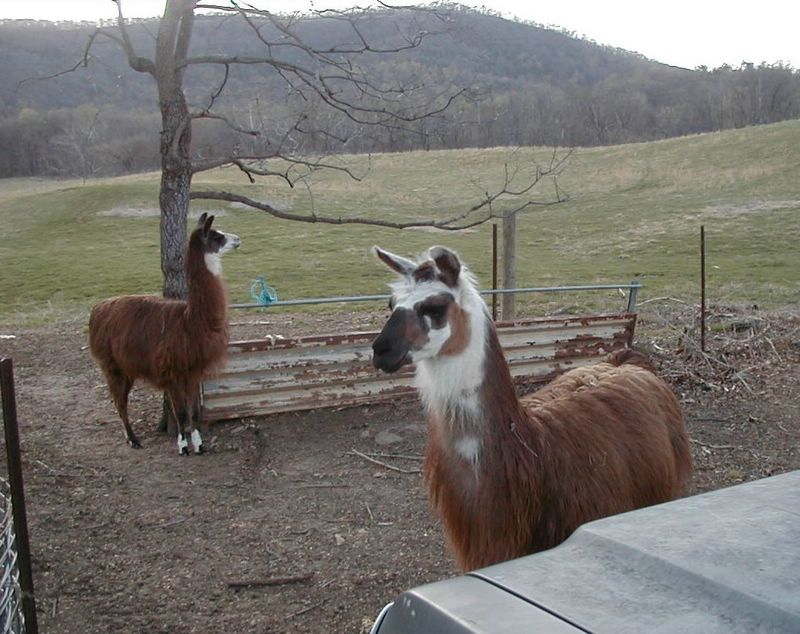
A pack of dogs came into the field yesterday morning, two adults and four half grown pups. The sheep and llamas were disturbed to say the least. I took the truck up the hill and encouraged them to move on. I am still on good terms with our animal wardens from my days as a prosecutor, so I passed the word on when I saw them in Court later that day. Roving dogs are one of the great challenges to the sheep farmer here in the east, even worse probably than the coyotes who have made themselves at home in our mountains. While heading back down to the barn I took this picture. As you can see, the pasture is getting green again, but it is still too early for the trees to leaf. Maybe another week or so.
Tuesday, April 12, 2005
Monday, April 11, 2005
Today's blog link is Mountainfarmstead. At the head of her site is a quotation I might be tempted to steal for myself:
“A journal always conceals vastly more than it reveals.
It’s a poor substitute for memory, and memory is what I would like to nourish.
But if I do give in, this is what I have in mind. I want to count the crows in the field every afternoon.
I want to record the temperatures, high and low, every day and measure the rain and snow…”
Verlyn Klinkenborg ( THE RURAL LIFE )
If I counted correctly, today's blogger is still shy thirty names for this year's crop of kids. (Those are baby goats for you suburbanites.) If you have suggestions that begin with the letter "T" she wants your input. So far there are a Tallulah, a Tully, a Tyler, a Tia, a Tya, a Tuppence and a Tommy. If the rest are anything like other goats I have known, they are probably being called things that begin with many other letters than T, so stop on by and save them from the ignomy. Stop by in any case for the goat pictures and a little taste of farm life.
“A journal always conceals vastly more than it reveals.
It’s a poor substitute for memory, and memory is what I would like to nourish.
But if I do give in, this is what I have in mind. I want to count the crows in the field every afternoon.
I want to record the temperatures, high and low, every day and measure the rain and snow…”
Verlyn Klinkenborg ( THE RURAL LIFE )
If I counted correctly, today's blogger is still shy thirty names for this year's crop of kids. (Those are baby goats for you suburbanites.) If you have suggestions that begin with the letter "T" she wants your input. So far there are a Tallulah, a Tully, a Tyler, a Tia, a Tya, a Tuppence and a Tommy. If the rest are anything like other goats I have known, they are probably being called things that begin with many other letters than T, so stop on by and save them from the ignomy. Stop by in any case for the goat pictures and a little taste of farm life.
Sunday, April 10, 2005
After a long Saturday down at the sheepbarn, I was moving a little slow Sunday morning and the time for leaving to liturgy came and went while I was still doing the morning chores. Our rams were a little slow off the mark last summer so we are still having lambs, which means the seasonal work has spread from winter into spring. I feel bad about missing Church, but take some comfort, that if I were Catholic, my absence would be deemed respectable. From Father Jim Tucker at Dappled things: A question that frequently comes up in the summertime is what constitutes an excuse from the Sunday Mass obligation. Because modern-day Catholics have become very lax in their Mass attendance, one sometimes encounters a rigorist approach to the precept, which errs on the opposite extreme. So, I thought I would post these excerpts from Moral and Pastoral Theology, vol. 2, by Fr Henry Davis, SJ, published in London in 1936. Since everyone asks about excuses, these are the parts I've chosen. (and here is the part I have selected out of his selection) "It is held that those are excused who would have to forgo -- occasionally, but not as a general rule -- a good stroke of business or considerable gain, such as would be the case with merchants, and during the lambing season with farmers...."
Saturday, April 09, 2005
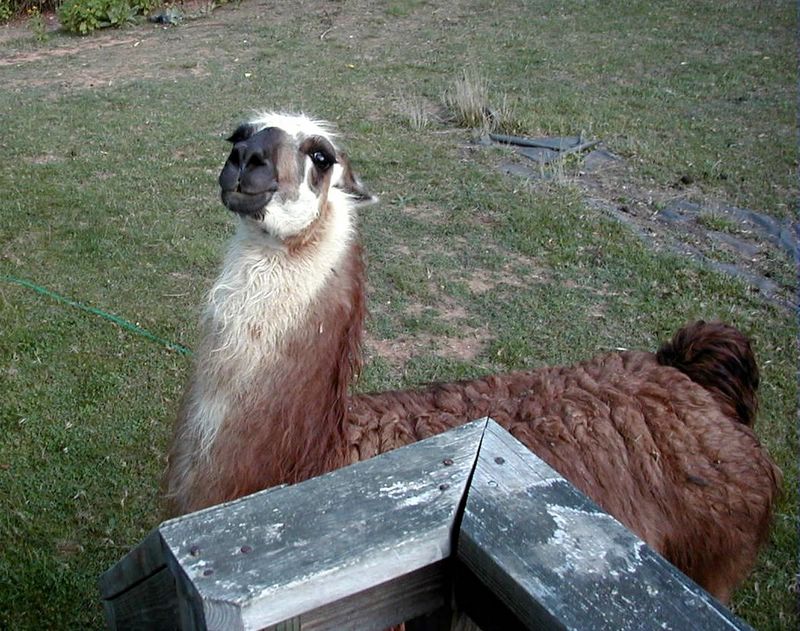
Been there, done that, though never in Grand Rapids. For our own tale of llamas on the loose, go here in the archives.
Friday, April 08, 2005
There are a number of fine blogs out there that have linked this one. Until I actually get around to reworking my links on the right hand side, I will be featuring one or more of them each couple of days, both out of thanks for the link, and because they are well worth a visit in their own right. Todays link is The Ink Spinnery, raiser of homing pigeons, eraser carver and future homesteader.
Thursday, April 07, 2005
Gideon Strauss has linked to my answers to his first three questions. This is both gratifying and embarrassing. Gratifying, because he has kind things to say about my responses. Embarrassing, because I still have yet to answer two of his questions. While both of the remaining questions are good, the last is particularly thought provoking: "What are the deepest connections between your Orthodoxy, farming, and lawyerly practice?" There is a refreshingly non post-modern assumption there, that a life is not a bricolage of unrelated fragments. To put it in literary terms, we are all writing novels, not short story collections. To put it musically, is your life like a Bach cantata where a coherent whole is created by interweaving and mutually enriching parts, or more like a group of unrelated concert pieces that happen to be performed by a single musician? Teasing out the underlying themes from the everyday racket of life requires more thought than I have had time to give it yet. Perhaps this weekend!
Wednesday, April 06, 2005
Tuesday, April 05, 2005
Post-modern literary adventurer Mark Woods offered a belated birthday greeting yesterday to one of my favorite poets, Irina Ratushinskaya. I wrote about her two years ago and suggested her as a suitable companion during Lent. In one of her poems written in a Soviet forced labor camp she labels the era we live in "Cainozoic", that is, the age in which we slay our brother. Her work can ring with anger and she is well acquainted with loss. Nonetheless, through it all there is hope, and even joy in her writing. Cornerstone Press has a recent collection of her poems for those who are interested in reading more.
Monday, April 04, 2005
One of my favorite stops of late has been Minor Clergy, the blog of a part time Orthodox seminarian and full time practicing attorney. Last week he posted a couple of entries on the tensions that arise when the journey to holiness meets the practice of law. The first one is here, with the follow up here.
Sunday, April 03, 2005
Early Spring weather is always changeable, but this weekend we ran the gammut. Torrential downpours, bright sun, high wind gusts and, this morning, the bright white of snow on Hogback. If we get tomorrow's promised sun, we can watch this weekend's rain turn into the light green of Spring pasture.
Today is the third Sunday in Lent in the Orthodox Calendar, the Sunday of the Life-Giving Cross:
Now the flaming sword no longer guards the gates of Eden;
it has mysteriously been quenched by the wood of the Cross!
The sting of death and the victory of hell have been vanquished;
for You, O my Savior, have come and cried to those in hell:
"Enter again into paradise."
Today is the third Sunday in Lent in the Orthodox Calendar, the Sunday of the Life-Giving Cross:
Now the flaming sword no longer guards the gates of Eden;
it has mysteriously been quenched by the wood of the Cross!
The sting of death and the victory of hell have been vanquished;
for You, O my Savior, have come and cried to those in hell:
"Enter again into paradise."
Saturday, April 02, 2005
I heard the announcement of the death of John Paul II this afternoon while heading over Chester Gap on the way to pick up sheep feed at the Rhappahanock Co-op. Driving home in the rain with the smell of molasses and rolled corn rising from a dozen feed sacks, I listened to outpourings of grief and heart-felt tributes from across the world. I will not attempt to summarize the legacy of this great man, but will instead simply quote some lines from his book Crossing the Threshold of Hope:
At the end of the second millennium, we need, perhaps more than ever, the words of the Risen Christ: "Be not afraid!" Man who, even after the fall of Communism, has not stopped being afraid and who truly has many reasons for feeling this way, needs to hear these words. Nations need to hear them, especially those nations that have been reborn after the fall of the Communist empire, as well as those that witnessed this event from the outside. Peoples and nations of the entire world need to hear these words. Their conscience needs to grow in the certainty that Someone exists who holds in His hands the destiny of this passing world; Someone who holds the keys to death and the netherworld (cf. Rev 1:18); Someone who is the Alpha and the Omega of human history (cf. Rev 22:13)-- be it the individual or collective history. And this Someone is Love (cf. 1 Jn 4:8, 16)-- Love that became man, Love crucified and risen, Love unceasingly present among men. It is Eucharistic Love. It is the infinite source of communion. He alone can give the ultimate assurance when He says "Be not afraid!"
Friday, April 01, 2005
My favorite contemporary Orthodox theologian is at it again. David Bentley Hart gives his perspective on the Terry Schiavo controversy in today's Wall Street Journal. In reading responses to one of Hart's pieces it is always interesting to see how many of the respondants miss his point entirely by not paying attention to what he is actually saying. Hart's prose style can be demanding, even when he is writing in a more "popular" vein. He assumes the reader is actually familiar with the meaning, or meanings, of words. Just one example; he states of those in Schiavo's condition: "Even among such ravages--for those with the eyes to see it--a terrible dignity still shines out." One reader responded: As for the theologian's suggestion that even in the ravages of a damaged brain, a "terrible dignity still shines out," I suggest he also missed the mark. Recently, I spent the last week of my brother Bill's life with him in a VA hospice as he died from both lung and brain cancer. He was paralyzed on his right side, unable to speak. Already frail, he stopped eating and drinking days before he died. He spent much of his last three days transitioning into the afterlife. But until Bill's last breath, his eyes and hand squeezes communicated the magnificent dignity and beauty--and life--of one of God's children. As I read Hart, he is using "terrible" in the sense of inciting dread or awe, surely an appropriate response to the human mystery in an extreme and painful situation. "Terrible" in the sense that we should know that we stand on holy ground, and should approach with reverence. A thought that Hart's correspondant actually affirms in his own moving story.
Hart's follow up to the controversy raised by his previous Wall Street Journal essay on theodicy and the South Asian Tsunami is now online at First Things. Here is an excerpt:
I do not believe we Christians are obliged—or even allowed—to look upon the devastation visited upon the coasts of the Indian Ocean and to console ourselves with vacuous cant about the mysterious course taken by God’s goodness in this world, or to assure others that some ultimate meaning or purpose resides in so much misery. Ours is, after all, a religion of salvation; our faith is in a God who has come to rescue His creation from the absurdity of sin and the emptiness of death, and so we are permitted to hate these things with a perfect hatred. For while Christ takes the suffering of his creatures up into his own, it is not because he or they had need of suffering, but because he would not abandon his creatures to the grave. And while we know that the victory over evil and death has been won, we know also that it is a victory yet to come, and that creation therefore, as Paul says, groans in expectation of the glory that will one day be revealed. Until then, the world remains a place of struggle between light and darkness, truth and falsehood, life and death; and, in such a world, our portion is charity.
Hart's follow up to the controversy raised by his previous Wall Street Journal essay on theodicy and the South Asian Tsunami is now online at First Things. Here is an excerpt:
I do not believe we Christians are obliged—or even allowed—to look upon the devastation visited upon the coasts of the Indian Ocean and to console ourselves with vacuous cant about the mysterious course taken by God’s goodness in this world, or to assure others that some ultimate meaning or purpose resides in so much misery. Ours is, after all, a religion of salvation; our faith is in a God who has come to rescue His creation from the absurdity of sin and the emptiness of death, and so we are permitted to hate these things with a perfect hatred. For while Christ takes the suffering of his creatures up into his own, it is not because he or they had need of suffering, but because he would not abandon his creatures to the grave. And while we know that the victory over evil and death has been won, we know also that it is a victory yet to come, and that creation therefore, as Paul says, groans in expectation of the glory that will one day be revealed. Until then, the world remains a place of struggle between light and darkness, truth and falsehood, life and death; and, in such a world, our portion is charity.
Thursday, March 31, 2005
Today is the third anniversary of this blog. The very first post went up on March 31, 2002:
Greetings on a rainy Easter morning. This site will contain periodic comments on things that interest me. I am a full-time prosecuting attorney in a small town in the Shenandoah valley of Virginia. I am also a part-time sheep farmer, living on property that has been in my wife's family for the past hundred years. The intersection of those two lives will provide most of the material for these posts. In addition to the weekly farm report, there will also be comments on books, music, movies, politics and religion. As to the last, I am a convert to Orthodox Christianity. Periodically I may try to share some of the wealth of that tradition. By doing this, I make no claims to special insight or sanctity. In describing my own spiritual condition, I can do no better than the little girl in Flannery O'Connor's story "Temple of the Holy Ghost"; "She could never be a saint, but she thought she could be a martyr if they killed her quick."
Most of that is still true, except that I am now an attorney in private practice, occasionally showing up on the other side of the Courtroom from my former colleagues in the Commonwealth's Attorney's office. And I would still put better odds on getting through a quick martyrdom than the slow slog to sainthood.
Greetings on a rainy Easter morning. This site will contain periodic comments on things that interest me. I am a full-time prosecuting attorney in a small town in the Shenandoah valley of Virginia. I am also a part-time sheep farmer, living on property that has been in my wife's family for the past hundred years. The intersection of those two lives will provide most of the material for these posts. In addition to the weekly farm report, there will also be comments on books, music, movies, politics and religion. As to the last, I am a convert to Orthodox Christianity. Periodically I may try to share some of the wealth of that tradition. By doing this, I make no claims to special insight or sanctity. In describing my own spiritual condition, I can do no better than the little girl in Flannery O'Connor's story "Temple of the Holy Ghost"; "She could never be a saint, but she thought she could be a martyr if they killed her quick."

Most of that is still true, except that I am now an attorney in private practice, occasionally showing up on the other side of the Courtroom from my former colleagues in the Commonwealth's Attorney's office. And I would still put better odds on getting through a quick martyrdom than the slow slog to sainthood.
Wednesday, March 30, 2005
In keeping with Monday's post about living in place, here are some interesting comments from fellow Ortho-blogger The Light Fraction. Page down to the entry for Saturday, March 5.
Tuesday, March 29, 2005
Monday, March 28, 2005
Between blogger and laptop problems, this week's posts are going up late.
Gideon's third question is "How has several generations of being farmed by the same family made your land a good place?" The most obvious answer is that the land is still here. It is easy to overlook the importance of that simple fact. Land, in our contemporary economy, has become another item of commerce. There is a tendency to treat it as something as fungible as iron ore, scrap metal, computer chips, soybeans or bananas. The only special quality it has in the marketplace is the quality of "location." Location does not mean some inherent geological or even geographic virtue. It refers to the land's relationship to other factors in the economy. Is this particular patch of ground close to an interstate highway? What is the average household income? Is there a school nearby? What are the tax and zoning policies of the local government? Is it located within commuting distance of employers and shopping? If a patch of ground has the proper virtues of location, then it has value. What kind of land it is is almost irrelevant. If it is hilly, we can flatten it out. If it is swampy, we can fill it in. Fertility of the soil is irrelevant, since dirt is simply what goes under asphalt and building foundations.
The importance of family ties to the land is that it makes values other than those of the marketplace part of the discussion. Farming our hillsides will never bring the return that selling the place in five acre subdivision parcels will. There is a certain ascetic quality to the life of any long time farm family within commuting distance of the the urban sprawl. You conciously agree to ignore the potential fortune under your feet in order to be a steward of something beautiful and irreplacable.
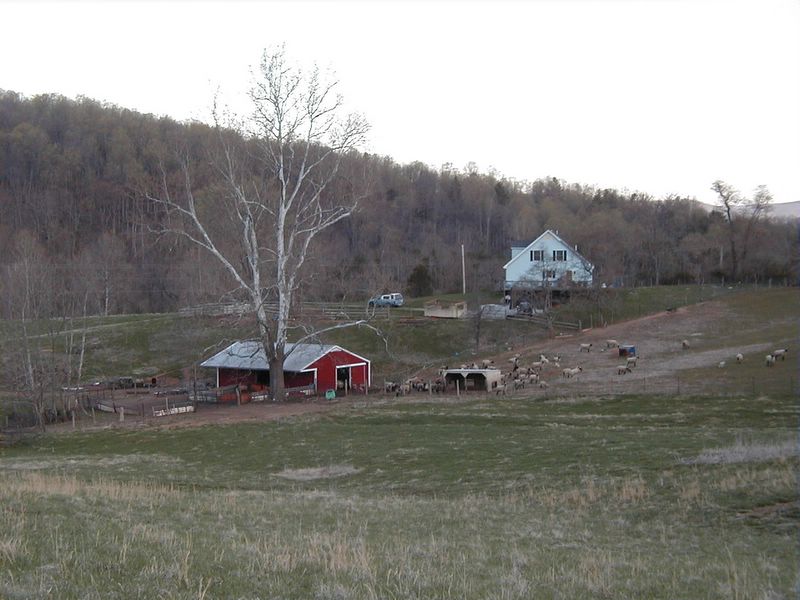
The sycamore tree that towers over our barn goes straight up and then branches out wildly. I know that it does this because when it was a sapling, and my wife's grandfather a boy, he knocked the top off it one day while walking along the fenceline. I do not know of any way of putting a price on that knowledge.
Gideon's third question is "How has several generations of being farmed by the same family made your land a good place?" The most obvious answer is that the land is still here. It is easy to overlook the importance of that simple fact. Land, in our contemporary economy, has become another item of commerce. There is a tendency to treat it as something as fungible as iron ore, scrap metal, computer chips, soybeans or bananas. The only special quality it has in the marketplace is the quality of "location." Location does not mean some inherent geological or even geographic virtue. It refers to the land's relationship to other factors in the economy. Is this particular patch of ground close to an interstate highway? What is the average household income? Is there a school nearby? What are the tax and zoning policies of the local government? Is it located within commuting distance of employers and shopping? If a patch of ground has the proper virtues of location, then it has value. What kind of land it is is almost irrelevant. If it is hilly, we can flatten it out. If it is swampy, we can fill it in. Fertility of the soil is irrelevant, since dirt is simply what goes under asphalt and building foundations.
The importance of family ties to the land is that it makes values other than those of the marketplace part of the discussion. Farming our hillsides will never bring the return that selling the place in five acre subdivision parcels will. There is a certain ascetic quality to the life of any long time farm family within commuting distance of the the urban sprawl. You conciously agree to ignore the potential fortune under your feet in order to be a steward of something beautiful and irreplacable.
The sycamore tree that towers over our barn goes straight up and then branches out wildly. I know that it does this because when it was a sapling, and my wife's grandfather a boy, he knocked the top off it one day while walking along the fenceline. I do not know of any way of putting a price on that knowledge.
Sunday, March 27, 2005
Today Western Christians celebrate Easter, the great feast of the Lord's Resurrection which, due to the complexities of competing church calendars, we Orthodox will celebrate on May 1st this year. For the Catholics and Protestants out there, I offer the following excerpt from an Easter homily by the great Serbian preacher (and recently canonized saint) Bishop Nikolai Velimirovich, which harks back to the sermon of Saint John Chrysostom read at each Paschal celebration.
Come then, all you my brethren who fear death. Come closer to Christ the Risen and the Raiser, and He will free you from death and the fear of death.
Come, all of you who live under the shame of your open and secret sins. Draw nearer to the living Fount that washes and cleanses, and that can make the blackest vessel whiter than snow.
Come, all of you who seek health, strength, beauty and joy. Lo, the risen Christ is the rich Source of them all. He awaits you with compassion and yearning, desiring that no-one be lost.
Bow down before Him, in body and soul. Unite yourself with Him with all your mind and thoughts. Embrace Him with all your heart. Do not worship the enslaver, but the Liberator; do not unit yourself to the destroyer but to the Saviour; do not embrace the stranger but your closest Kinsmen and your dearest Friend.
The risen Lord is the Wonder of wonders, but He is, while being the Wonder of wonders, of the same nature as you are - of real human nature, the primal nature that was Adam's in Paradise. True human nature was not created to be enslaved to the irrational nature that surrounds it, but to govern nature by its power. Neither does man's true nature consist in worthlessness, sickness, mortality and sinfulness, but in glory and health, in immortality and sinlessness.
The risen Lord has torn down the curtain that divided true Godhead from true humanity, and has shown us in Himself the greatness and beauty of the one and the other. No man can know the true God except through the risen Lord Jesus; neither can any man know true man except through Him alone.
Christ is Risen, my brethren!
By his Resurrection, Christ conquered sin and death, destroyed Satan's dark kingdom, freed the enslaved human race and broke the seal on the greatest mysteries of God and man. To Him be glory and praise, together with the Father and the Holy Spirit - the Trinity consubstantial and undivided, now and forever, through all time and all eternity. Amen.
Come then, all you my brethren who fear death. Come closer to Christ the Risen and the Raiser, and He will free you from death and the fear of death.
Come, all of you who live under the shame of your open and secret sins. Draw nearer to the living Fount that washes and cleanses, and that can make the blackest vessel whiter than snow.
Come, all of you who seek health, strength, beauty and joy. Lo, the risen Christ is the rich Source of them all. He awaits you with compassion and yearning, desiring that no-one be lost.
Bow down before Him, in body and soul. Unite yourself with Him with all your mind and thoughts. Embrace Him with all your heart. Do not worship the enslaver, but the Liberator; do not unit yourself to the destroyer but to the Saviour; do not embrace the stranger but your closest Kinsmen and your dearest Friend.
The risen Lord is the Wonder of wonders, but He is, while being the Wonder of wonders, of the same nature as you are - of real human nature, the primal nature that was Adam's in Paradise. True human nature was not created to be enslaved to the irrational nature that surrounds it, but to govern nature by its power. Neither does man's true nature consist in worthlessness, sickness, mortality and sinfulness, but in glory and health, in immortality and sinlessness.
The risen Lord has torn down the curtain that divided true Godhead from true humanity, and has shown us in Himself the greatness and beauty of the one and the other. No man can know the true God except through the risen Lord Jesus; neither can any man know true man except through Him alone.
Christ is Risen, my brethren!
By his Resurrection, Christ conquered sin and death, destroyed Satan's dark kingdom, freed the enslaved human race and broke the seal on the greatest mysteries of God and man. To Him be glory and praise, together with the Father and the Holy Spirit - the Trinity consubstantial and undivided, now and forever, through all time and all eternity. Amen.
Subscribe to:
Posts (Atom)