Friday, April 29, 2005


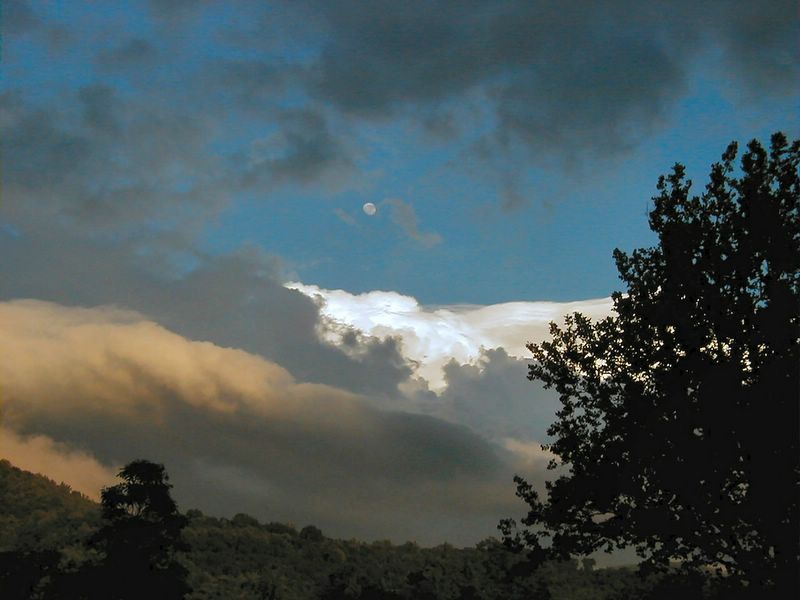
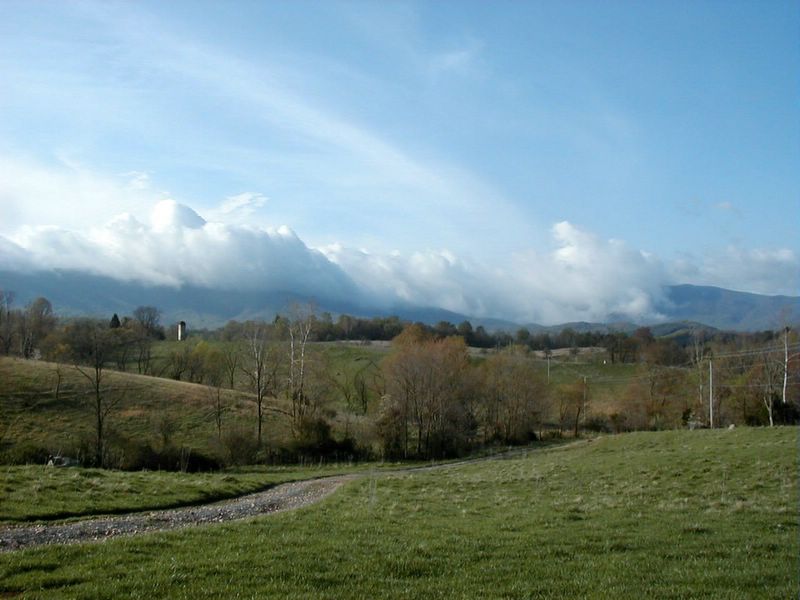
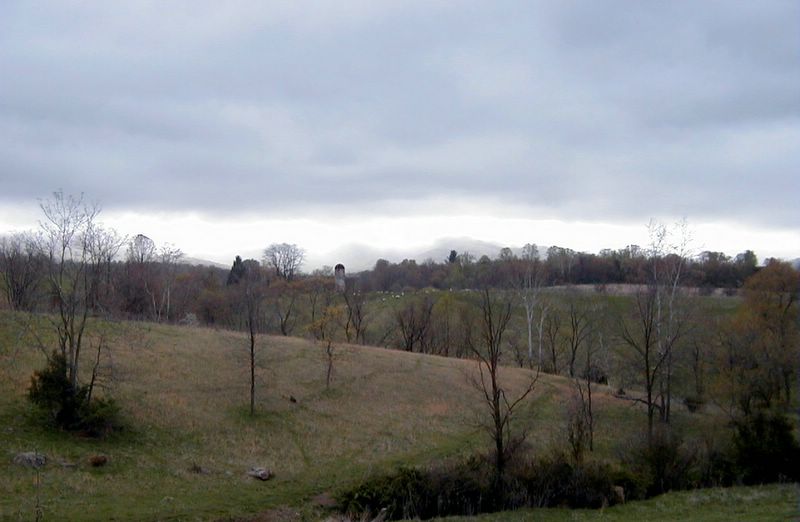
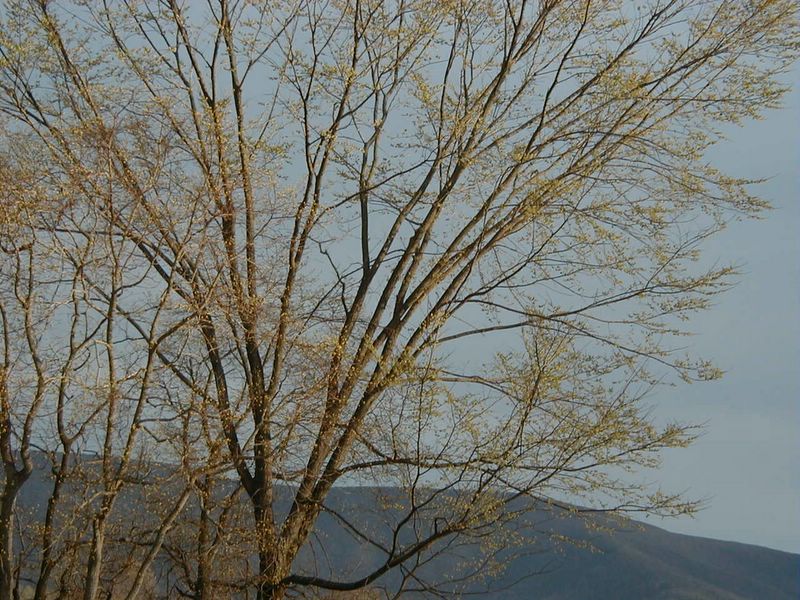
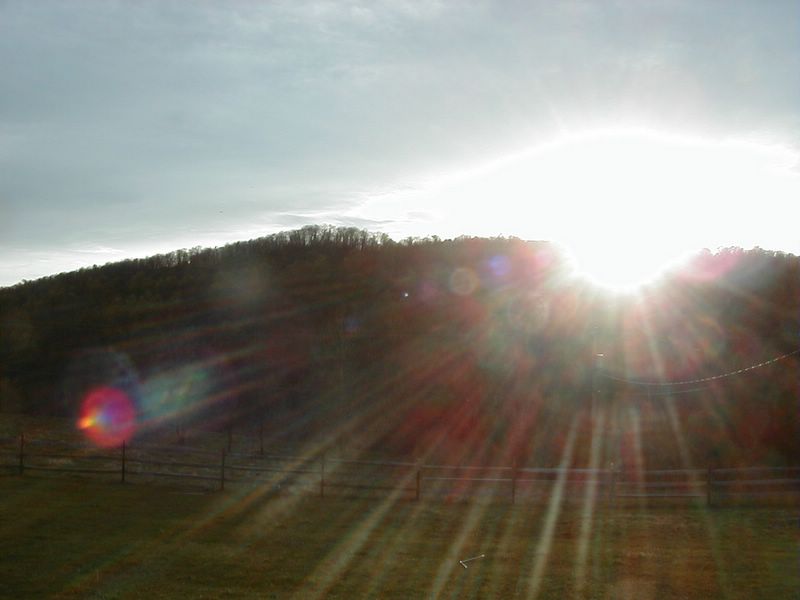
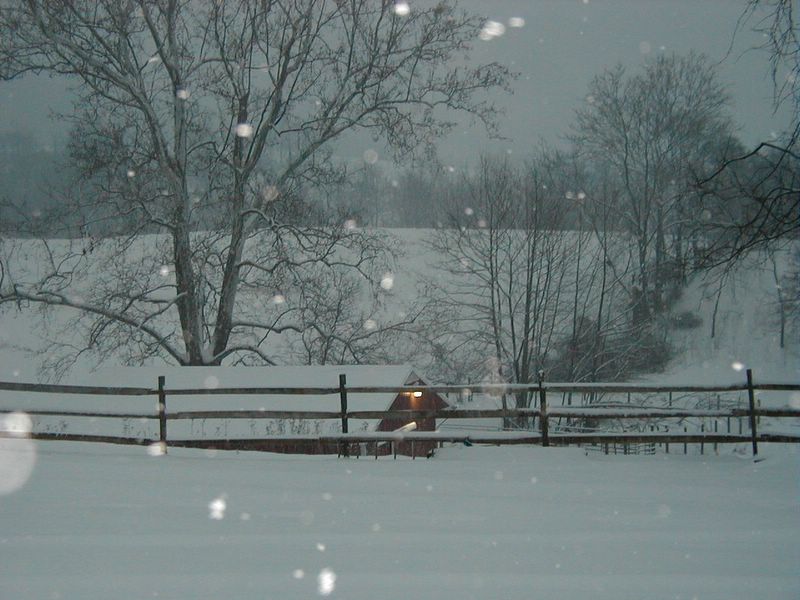
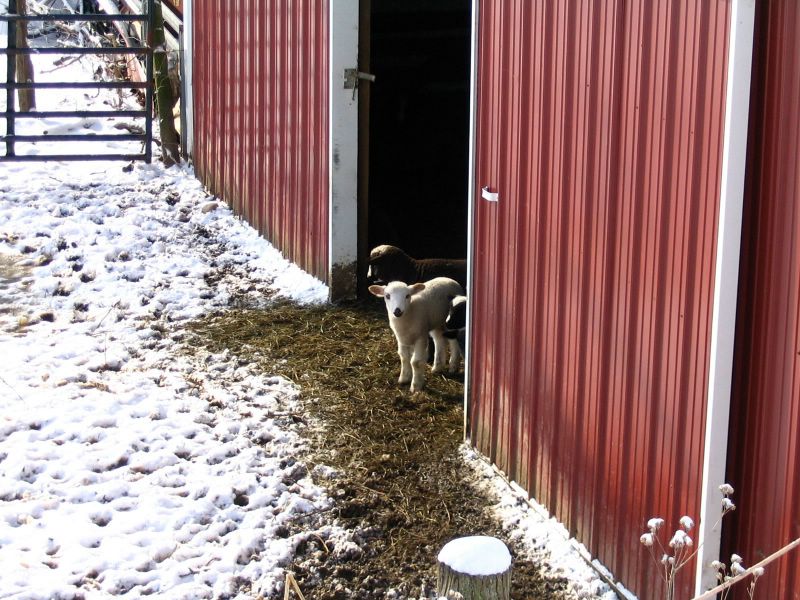
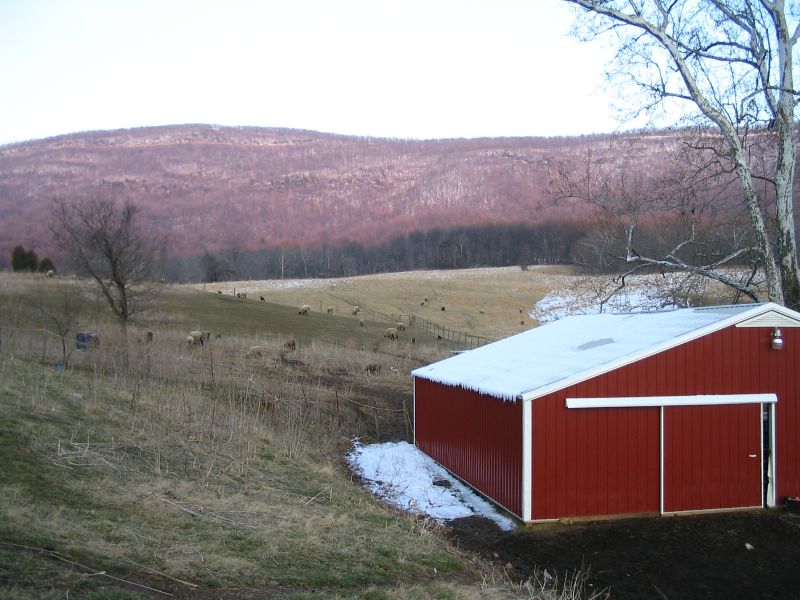
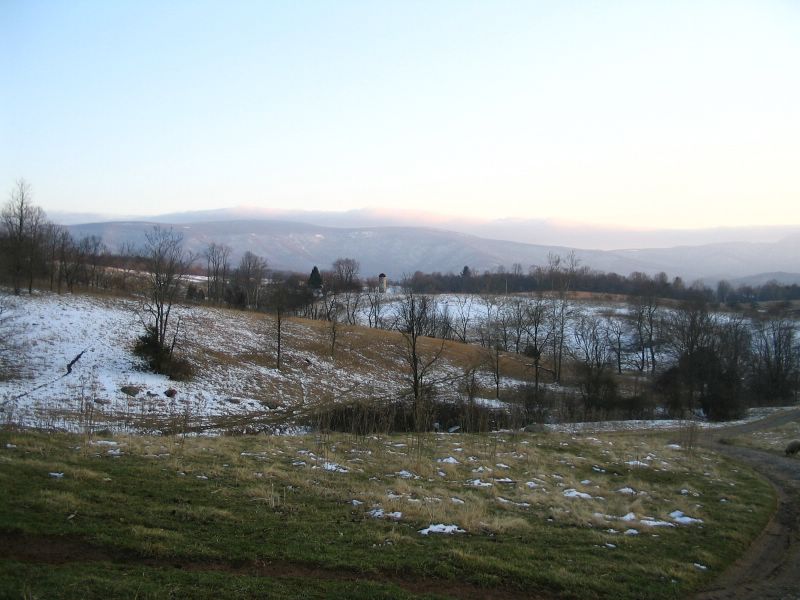
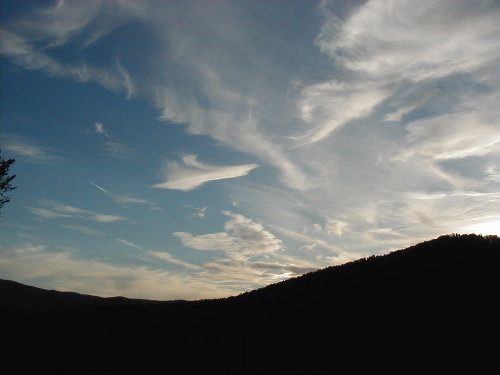
For this Good Friday, a photo from the archives; darkness and light at sunset.
The wounded surgeon plies the steel
That questions the distempered part;
Beneath the bleeding hands we feel
The sharp compassion of the healer's art
Resolving the enigma of the fever chart.

Our only health is the disease

If we obey the dying nurse
Whose constant care is not to please
But to remind of our, and Adam's curse,
And that, to be restored, our sickness must grow worse.

The whole earth is our hospital
Endowed by the ruined millionaire,
Wherein, if we do well, we shall
Die of the absolute paternal care
That will not leave us, but prevents us everywhere.

The chill ascends from feet to knees,

The fever sings in mental wires.
If to be warmed, then I must freeze
And quake in frigid purgatorial fires
Of which the flame is roses, and the smoke is briars.

The dripping blood our only drink,
The bloody flesh our only food:
In spite of which we like to think
That we are sound, substantial flesh and blood—
Again, in spite of that, we call this Friday good.

From "East Coker"; The Four Quartets

Thursday, April 28, 2005

Holy Thursday commemorates the Last Supper, the washing of the disciples feet, and the betrayal by Judas.

Of your mystical Supper, Son of God, receive me today as a communicant; for I will not tell of the Mystery to your enemies; I will not give you a kiss, like Judas; but like the Thief I confess you: Remember me, Lord, in your Kingdom.

Wednesday, April 27, 2005

Father Joseph at Orthodixie has posted a useful tour of Orthodox Holy Week for those who are curious.

Tuesday, April 26, 2005

We are now well into Holy Week, only days left before Good Friday and Pascha. As always, words fail. I commend to you the services for the week, which can be found at Archimandrite Ephraim's indispensable site. For myself, I turn again to Eliot:

So here I am, in the middle way, having had twenty years--
Twenty years largely wasted, the years of l'entre deux guerres
Trying to use words, and every attempt
Is a wholly new start, and a different kind of failure
Because one has only learnt to get the better of words
For the thing one no longer has to say, or the way in which
One is no longer disposed to say it. And so each venture
Is a new beginning, a raid on the inarticulate
With shabby equipment always deteriorating
In the general mess of imprecision of feeling,
Undisciplined squads of emotion. And what there is to conquer
By strength and submission, has already been discovered
Once or twice, or several times, by men whom one cannot hope
To emulate--but there is no competition--
There is only the fight to recover what has been lost
And found and lost again and again: and now, under conditions
That seem unpropitious. But perhaps neither gain nor loss.
For us, there is only the trying. The rest is not our business.

From "East Coker"; The Four Quartets

Monday, April 25, 2005


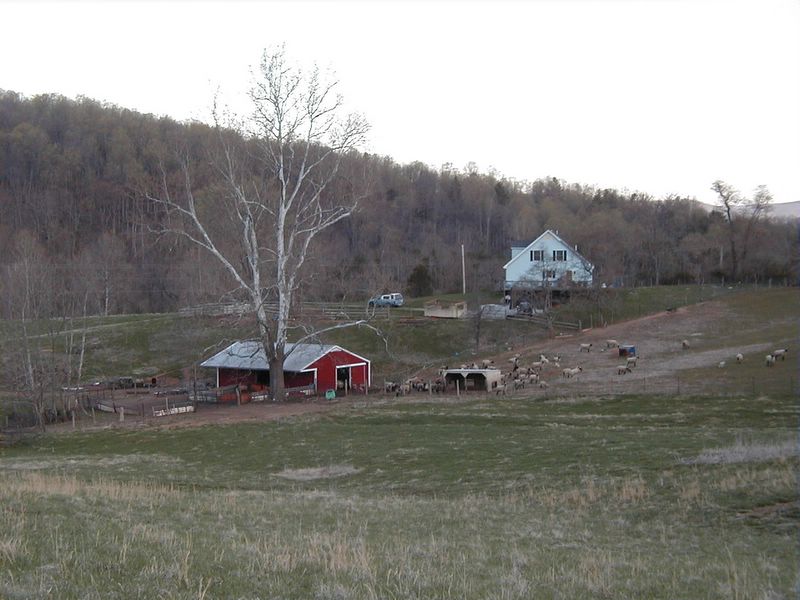
No, we did not have a sudden spring snow here. If you look over to the right, you will recognize this as the picture from my profile, seen full size for a change. My laptop is off for service, so I resurrected the old computer in my library and spent the evening browsing through and indexing images on the hard drive. I may put up a few other archive images over the next couple of weeks. If you have a favorite scene or subject, let me know and I will try and find the appropriate picture.

Sunday, April 24, 2005

With Palm Sunday we move from Lent into Holy Week. As usual, as I look back on Lent I find that my customary sins and failings have made it past the last few weeks of fasting and introspection and now go with me to Pascha. What then is the value of Lent? Perhaps for those of us struggling far from sainthood it is that we do not grow too comfortable with our faults. It is far too easy to cease from trying and settle down with our favorite sins, thinking that, after all, we are only human and our failings are not so bad now, are they? Why bother with all the drama of repentance when life is short and comfort precious? This is perhaps the kind of "wisdom" T. S. Eliot had in mind when he wrote:

. . . . Do not let me hear
Of the wisdom of old men, but rather of their folly,
Their fear of fear and frenzy, their fear of possession,
Of belonging to another, or to others, or to God.
The only wisdom we can hope to acquire
Is the wisdom of humility: humility is endless.

From "East Coker"; The Four Quartets

Saturday, April 23, 2005


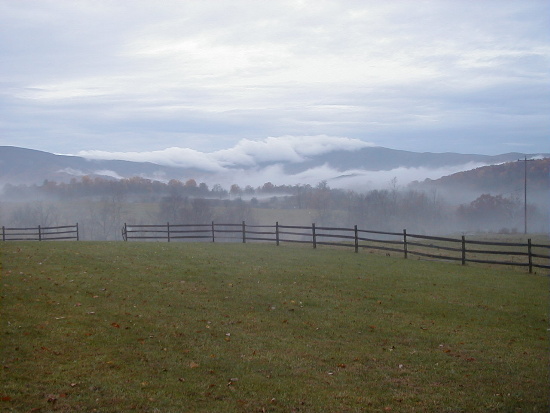
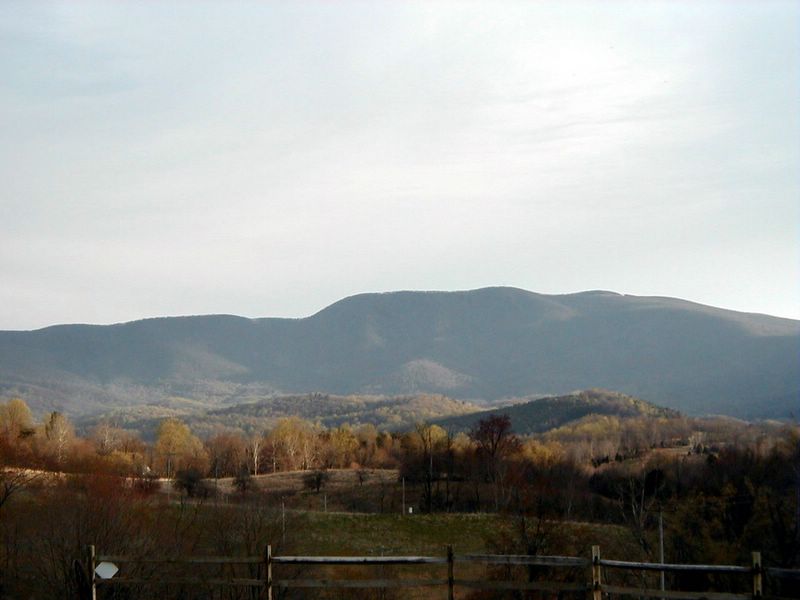
Saturday Morning; Clouds on the mountain.

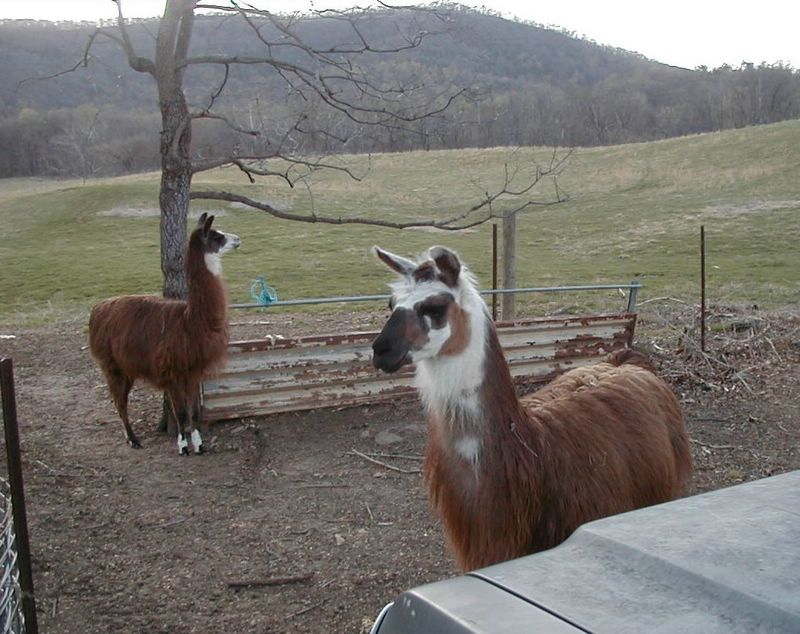
This morning I found a llama in the yard who was not at all pleased about last night's rain. (For Liz, who requested more llama pictures a while back.)

Friday, April 22, 2005


Rain coming on a spring afternoon.

Thursday, April 21, 2005


Silo in afternoon sunlight.

Wednesday, April 20, 2005


Looking toward home Wednesday evening.

Tuesday, April 19, 2005

I checked my site log today in a break between clients and court hearings and was pleasantly surprised by the deluge (by my standards) of visitors from Mere Comments, a weblog from the editors of Touchstone, a journal which describes itself as "a Christian journal, conservative in doctrine and eclectic in content, with editors and readers from each of the three great divisions of Christendom — Protestant, Catholic, and Orthodox." As you may imagine, they have been watching the news about the papal election with great interest and are very enthusiastic about Benedict the XVI, until yesterday know as Cardinal Joseph Ratzinger. I have two observations on the new Pope, one frivolous, the other more serious. First, has anyone else noticed how much he looks like an older Joe Pesci or is it just me?


The second, more serious observation is that commentators on the "left" and the "right" seem to be identifying Ratzinger almost entirely with his role as the head of the Congregation for the Doctrine of the Faith, a job he never wanted and undertook only at the request of John Paul II. It is often overlooked that Ratzinger is, in his own right, a subtle and occasionally adventurous theologian who several times asked for leave to return to academic life. There is no doubt that he has grave misgivings about the direction modern western society is heading in, but it would be a grave mistake to think of him as a man who can only say "no" or would want that to be his chief legacy to the Church. While my record as a prophet is dismal, I nonetheless make bold to predict that all of us, "left", "right", "center" , Protestant, Catholic or Orthodox, will find something to surprise us in the papacy of Benedict XVI.

Monday, April 18, 2005


Another picture from younger son, tree with the first hint of leaf.

Younger son viewing the sunset over Buck Mountain.

I handed younger son the digital camera just before sundown last night and asked him to take a few pictures. Here is his view of Hogback Mountain from the front yard.

Sunday, April 17, 2005


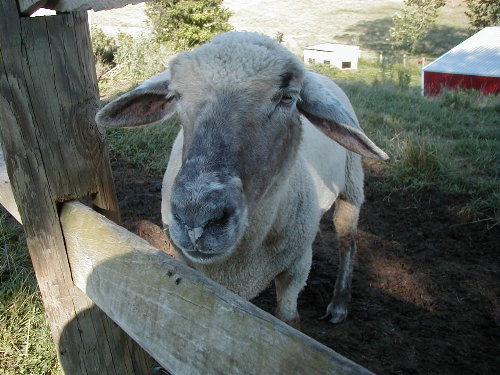
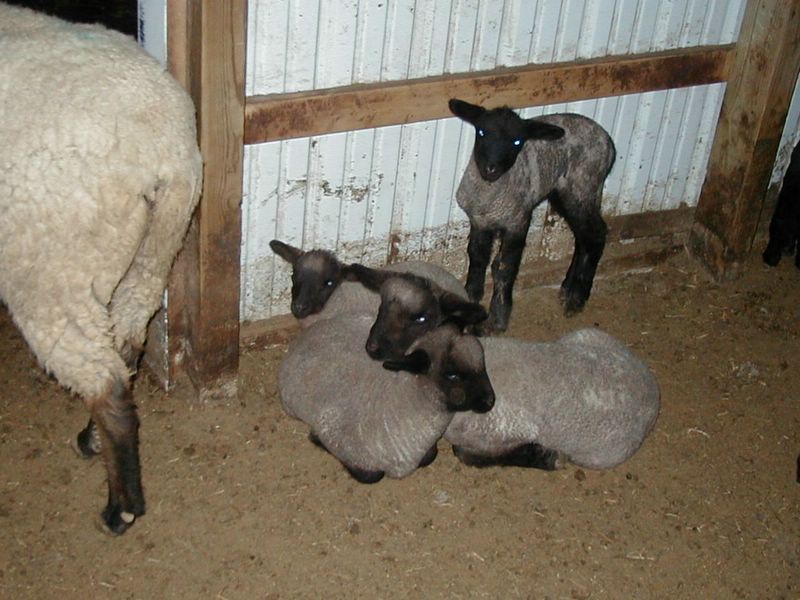
No, that is not a small cow. It is one of our harlequin lambs who is not happy to have his picture taken.

Saturday, April 16, 2005

The population of our county until very recently has been made up of blue collar tradesman, laborers and farmers. Now, those of us who farm even part time are an ever-decreasing minority as suburban sprawl invades our hillsides. We are still mostly blue-collar, but with the influx of commuters seeking cheaper housing, our working folk are beginning to be priced out of the houses they help build. Beside commuters we have would-be country gentry who come out to buy a big house with some acreage for their horse. Oddly enough, we do have a horsey set out here already. Some are part of the Gold Cup Race/fox hunting set more properly found in the counties east of us. Others are part of a group that is hard to find outside places like Warren County, the blue-collar horseman (or woman). Yes, we have folks who are rednecks with saddles and proud of it. I was behind a pick-up belonging to one member of that group yesterday; truck bed full of sweet feed from Southern States and a bumper sticker that said: "My horse bucked off your honor student."

Thursday, April 14, 2005

Today's link is Moonmeadow Farm, a blog from the mountains of North Carolina. (North Carolina is the quiet cousin stuck between South Carolina and Virginia; a "gentle valley between two towering mountains of conceit" as I heard one wag put it.) She raises goats on 85 rented acres and the family is searching for a more permanent place in the world. Our author also has a great quote on her site which is worth sharing here: "It is a rule of nature that taking a day off on a farm sets a person back at least a week. --Jane Hamilton in A Map of the World."

Wednesday, April 13, 2005


A pack of dogs came into the field yesterday morning, two adults and four half grown pups. The sheep and llamas were disturbed to say the least. I took the truck up the hill and encouraged them to move on. I am still on good terms with our animal wardens from my days as a prosecutor, so I passed the word on when I saw them in Court later that day. Roving dogs are one of the great challenges to the sheep farmer here in the east, even worse probably than the coyotes who have made themselves at home in our mountains. While heading back down to the barn I took this picture. As you can see, the pasture is getting green again, but it is still too early for the trees to leaf. Maybe another week or so.

Tuesday, April 12, 2005


Llamas in the barnyard.

Monday, April 11, 2005

Today's blog link is Mountainfarmstead. At the head of her site is a quotation I might be tempted to steal for myself:

“A journal always conceals vastly more than it reveals.

It’s a poor substitute for memory, and memory is what I would like to nourish.

But if I do give in, this is what I have in mind. I want to count the crows in the field every afternoon.

I want to record the temperatures, high and low, every day and measure the rain and snow…”

Verlyn Klinkenborg ( THE RURAL LIFE )


If I counted correctly, today's blogger is still shy thirty names for this year's crop of kids. (Those are baby goats for you suburbanites.) If you have suggestions that begin with the letter "T" she wants your input. So far there are a Tallulah, a Tully, a Tyler, a Tia, a Tya, a Tuppence and a Tommy. If the rest are anything like other goats I have known, they are probably being called things that begin with many other letters than T, so stop on by and save them from the ignomy. Stop by in any case for the goat pictures and a little taste of farm life.

Sunday, April 10, 2005

After a long Saturday down at the sheepbarn, I was moving a little slow Sunday morning and the time for leaving to liturgy came and went while I was still doing the morning chores. Our rams were a little slow off the mark last summer so we are still having lambs, which means the seasonal work has spread from winter into spring. I feel bad about missing Church, but take some comfort, that if I were Catholic, my absence would be deemed respectable. From Father Jim Tucker at Dappled things: A question that frequently comes up in the summertime is what constitutes an excuse from the Sunday Mass obligation. Because modern-day Catholics have become very lax in their Mass attendance, one sometimes encounters a rigorist approach to the precept, which errs on the opposite extreme. So, I thought I would post these excerpts from Moral and Pastoral Theology, vol. 2, by Fr Henry Davis, SJ, published in London in 1936. Since everyone asks about excuses, these are the parts I've chosen. (and here is the part I have selected out of his selection) "It is held that those are excused who would have to forgo -- occasionally, but not as a general rule -- a good stroke of business or considerable gain, such as would be the case with merchants, and during the lambing season with farmers...."

Saturday, April 09, 2005

Been there, done that, though never in Grand Rapids. For our own tale of llamas on the loose, go here in the archives.

Friday, April 08, 2005

There are a number of fine blogs out there that have linked this one. Until I actually get around to reworking my links on the right hand side, I will be featuring one or more of them each couple of days, both out of thanks for the link, and because they are well worth a visit in their own right. Todays link is The Ink Spinnery, raiser of homing pigeons, eraser carver and future homesteader.

Thursday, April 07, 2005

Gideon Strauss has linked to my answers to his first three questions. This is both gratifying and embarrassing. Gratifying, because he has kind things to say about my responses. Embarrassing, because I still have yet to answer two of his questions. While both of the remaining questions are good, the last is particularly thought provoking: "What are the deepest connections between your Orthodoxy, farming, and lawyerly practice?" There is a refreshingly non post-modern assumption there, that a life is not a bricolage of unrelated fragments. To put it in literary terms, we are all writing novels, not short story collections. To put it musically, is your life like a Bach cantata where a coherent whole is created by interweaving and mutually enriching parts, or more like a group of unrelated concert pieces that happen to be performed by a single musician? Teasing out the underlying themes from the everyday racket of life requires more thought than I have had time to give it yet. Perhaps this weekend!

Wednesday, April 06, 2005


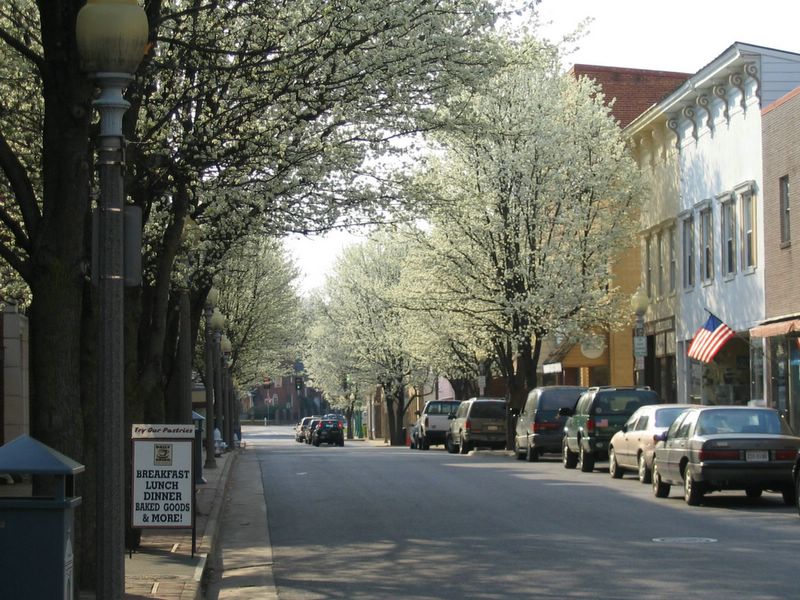
Pear trees in bloom.

Walking west towards the Courthouse.

Looking back east.

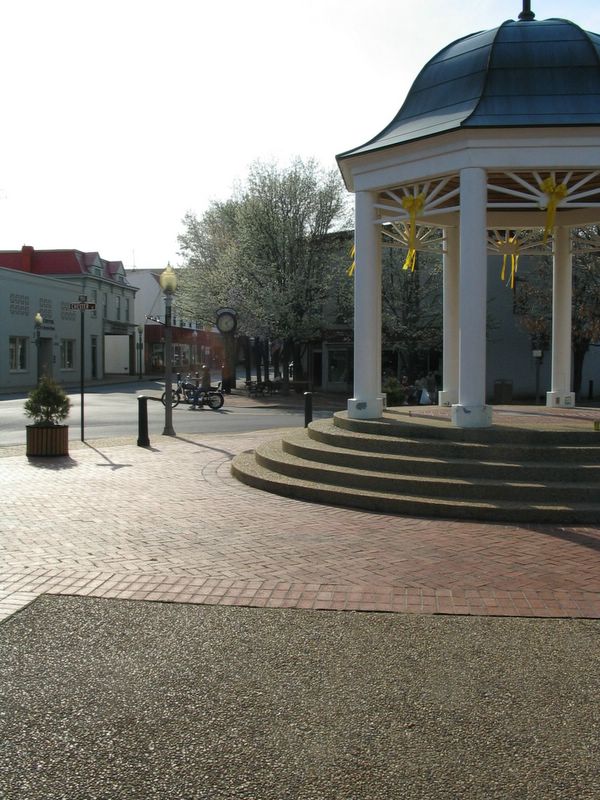
After work, I stopped and took a few pictures on Main Street. The warm weather of the last two days brought the bradford pears to bloom. Here is the view looking west past the Gazebo up Main.

Tuesday, April 05, 2005

Post-modern literary adventurer Mark Woods offered a belated birthday greeting yesterday to one of my favorite poets, Irina Ratushinskaya. I wrote about her two years ago and suggested her as a suitable companion during Lent. In one of her poems written in a Soviet forced labor camp she labels the era we live in "Cainozoic", that is, the age in which we slay our brother. Her work can ring with anger and she is well acquainted with loss. Nonetheless, through it all there is hope, and even joy in her writing. Cornerstone Press has a recent collection of her poems for those who are interested in reading more.

Monday, April 04, 2005

One of my favorite stops of late has been Minor Clergy, the blog of a part time Orthodox seminarian and full time practicing attorney. Last week he posted a couple of entries on the tensions that arise when the journey to holiness meets the practice of law. The first one is here, with the follow up here.

Sunday, April 03, 2005

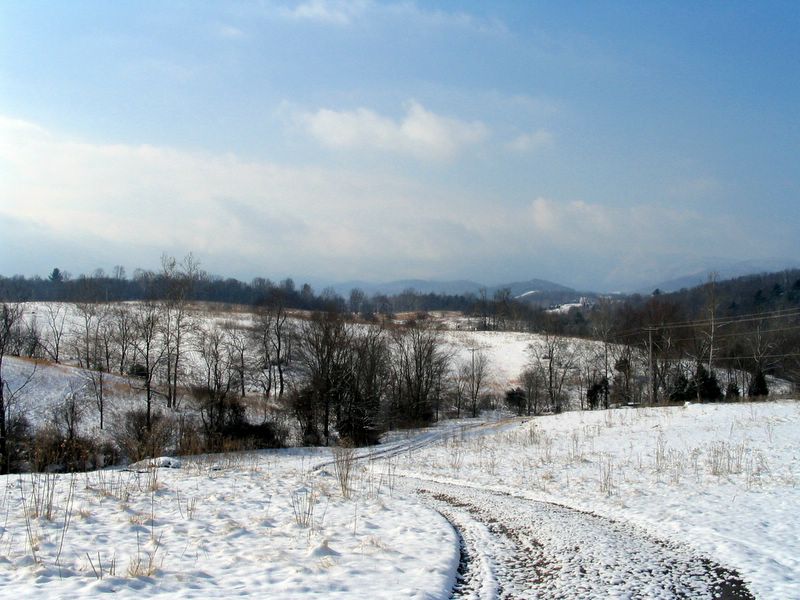
Early Spring weather is always changeable, but this weekend we ran the gammut. Torrential downpours, bright sun, high wind gusts and, this morning, the bright white of snow on Hogback. If we get tomorrow's promised sun, we can watch this weekend's rain turn into the light green of Spring pasture.

Today is the third Sunday in Lent in the Orthodox Calendar, the Sunday of the Life-Giving Cross:

Now the flaming sword no longer guards the gates of Eden;
it has mysteriously been quenched by the wood of the Cross!
The sting of death and the victory of hell have been vanquished;
for You, O my Savior, have come and cried to those in hell:
"Enter again into paradise."

Saturday, April 02, 2005

I heard the announcement of the death of John Paul II this afternoon while heading over Chester Gap on the way to pick up sheep feed at the Rhappahanock Co-op. Driving home in the rain with the smell of molasses and rolled corn rising from a dozen feed sacks, I listened to outpourings of grief and heart-felt tributes from across the world. I will not attempt to summarize the legacy of this great man, but will instead simply quote some lines from his book Crossing the Threshold of Hope:

At the end of the second millennium, we need, perhaps more than ever, the words of the Risen Christ: "Be not afraid!" Man who, even after the fall of Communism, has not stopped being afraid and who truly has many reasons for feeling this way, needs to hear these words. Nations need to hear them, especially those nations that have been reborn after the fall of the Communist empire, as well as those that witnessed this event from the outside. Peoples and nations of the entire world need to hear these words. Their conscience needs to grow in the certainty that Someone exists who holds in His hands the destiny of this passing world; Someone who holds the keys to death and the netherworld (cf. Rev 1:18); Someone who is the Alpha and the Omega of human history (cf. Rev 22:13)-- be it the individual or collective history. And this Someone is Love (cf. 1 Jn 4:8, 16)-- Love that became man, Love crucified and risen, Love unceasingly present among men. It is Eucharistic Love. It is the infinite source of communion. He alone can give the ultimate assurance when He says "Be not afraid!"

Rainy morning

Friday, April 01, 2005

My favorite contemporary Orthodox theologian is at it again. David Bentley Hart gives his perspective on the Terry Schiavo controversy in today's Wall Street Journal. In reading responses to one of Hart's pieces it is always interesting to see how many of the respondants miss his point entirely by not paying attention to what he is actually saying. Hart's prose style can be demanding, even when he is writing in a more "popular" vein. He assumes the reader is actually familiar with the meaning, or meanings, of words. Just one example; he states of those in Schiavo's condition: "Even among such ravages--for those with the eyes to see it--a terrible dignity still shines out." One reader responded: As for the theologian's suggestion that even in the ravages of a damaged brain, a "terrible dignity still shines out," I suggest he also missed the mark. Recently, I spent the last week of my brother Bill's life with him in a VA hospice as he died from both lung and brain cancer. He was paralyzed on his right side, unable to speak. Already frail, he stopped eating and drinking days before he died. He spent much of his last three days transitioning into the afterlife. But until Bill's last breath, his eyes and hand squeezes communicated the magnificent dignity and beauty--and life--of one of God's children. As I read Hart, he is using "terrible" in the sense of inciting dread or awe, surely an appropriate response to the human mystery in an extreme and painful situation. "Terrible" in the sense that we should know that we stand on holy ground, and should approach with reverence. A thought that Hart's correspondant actually affirms in his own moving story.

Hart's follow up to the controversy raised by his previous Wall Street Journal essay on theodicy and the South Asian Tsunami is now online at First Things. Here is an excerpt:

I do not believe we Christians are obliged—or even allowed—to look upon the devastation visited upon the coasts of the Indian Ocean and to console ourselves with vacuous cant about the mysterious course taken by God’s goodness in this world, or to assure others that some ultimate meaning or purpose resides in so much misery. Ours is, after all, a religion of salvation; our faith is in a God who has come to rescue His creation from the absurdity of sin and the emptiness of death, and so we are permitted to hate these things with a perfect hatred. For while Christ takes the suffering of his creatures up into his own, it is not because he or they had need of suffering, but because he would not abandon his creatures to the grave. And while we know that the victory over evil and death has been won, we know also that it is a victory yet to come, and that creation therefore, as Paul says, groans in expectation of the glory that will one day be revealed. Until then, the world remains a place of struggle between light and darkness, truth and falsehood, life and death; and, in such a world, our portion is charity.

Thursday, March 31, 2005

Today is the third anniversary of this blog. The very first post went up on March 31, 2002:

Greetings on a rainy Easter morning. This site will contain periodic comments on things that interest me. I am a full-time prosecuting attorney in a small town in the Shenandoah valley of Virginia. I am also a part-time sheep farmer, living on property that has been in my wife's family for the past hundred years. The intersection of those two lives will provide most of the material for these posts. In addition to the weekly farm report, there will also be comments on books, music, movies, politics and religion. As to the last, I am a convert to Orthodox Christianity. Periodically I may try to share some of the wealth of that tradition. By doing this, I make no claims to special insight or sanctity. In describing my own spiritual condition, I can do no better than the little girl in Flannery O'Connor's story "Temple of the Holy Ghost"; "She could never be a saint, but she thought she could be a martyr if they killed her quick."

Most of that is still true, except that I am now an attorney in private practice, occasionally showing up on the other side of the Courtroom from my former colleagues in the Commonwealth's Attorney's office. And I would still put better odds on getting through a quick martyrdom than the slow slog to sainthood.

Wednesday, March 30, 2005

In keeping with Monday's post about living in place, here are some interesting comments from fellow Ortho-blogger The Light Fraction. Page down to the entry for Saturday, March 5.

Tuesday, March 29, 2005


While searching through the archives for my "top five" selections, Susan suggested this as her favorite, which was originally posted with the caption "A Narrow View of the World."

Monday, March 28, 2005

Between blogger and laptop problems, this week's posts are going up late.

Gideon's third question is "How has several generations of being farmed by the same family made your land a good place?" The most obvious answer is that the land is still here. It is easy to overlook the importance of that simple fact. Land, in our contemporary economy, has become another item of commerce. There is a tendency to treat it as something as fungible as iron ore, scrap metal, computer chips, soybeans or bananas. The only special quality it has in the marketplace is the quality of "location." Location does not mean some inherent geological or even geographic virtue. It refers to the land's relationship to other factors in the economy. Is this particular patch of ground close to an interstate highway? What is the average household income? Is there a school nearby? What are the tax and zoning policies of the local government? Is it located within commuting distance of employers and shopping? If a patch of ground has the proper virtues of location, then it has value. What kind of land it is is almost irrelevant. If it is hilly, we can flatten it out. If it is swampy, we can fill it in. Fertility of the soil is irrelevant, since dirt is simply what goes under asphalt and building foundations.

The importance of family ties to the land is that it makes values other than those of the marketplace part of the discussion. Farming our hillsides will never bring the return that selling the place in five acre subdivision parcels will. There is a certain ascetic quality to the life of any long time farm family within commuting distance of the the urban sprawl. You conciously agree to ignore the potential fortune under your feet in order to be a steward of something beautiful and irreplacable.

The sycamore tree that towers over our barn goes straight up and then branches out wildly. I know that it does this because when it was a sapling, and my wife's grandfather a boy, he knocked the top off it one day while walking along the fenceline. I do not know of any way of putting a price on that knowledge.

Sunday, March 27, 2005

Today Western Christians celebrate Easter, the great feast of the Lord's Resurrection which, due to the complexities of competing church calendars, we Orthodox will celebrate on May 1st this year. For the Catholics and Protestants out there, I offer the following excerpt from an Easter homily by the great Serbian preacher (and recently canonized saint) Bishop Nikolai Velimirovich, which harks back to the sermon of Saint John Chrysostom read at each Paschal celebration.

Come then, all you my brethren who fear death. Come closer to Christ the Risen and the Raiser, and He will free you from death and the fear of death.

Come, all of you who live under the shame of your open and secret sins. Draw nearer to the living Fount that washes and cleanses, and that can make the blackest vessel whiter than snow.

Come, all of you who seek health, strength, beauty and joy. Lo, the risen Christ is the rich Source of them all. He awaits you with compassion and yearning, desiring that no-one be lost.
Bow down before Him, in body and soul. Unite yourself with Him with all your mind and thoughts. Embrace Him with all your heart. Do not worship the enslaver, but the Liberator; do not unit yourself to the destroyer but to the Saviour; do not embrace the stranger but your closest Kinsmen and your dearest Friend.

The risen Lord is the Wonder of wonders, but He is, while being the Wonder of wonders, of the same nature as you are - of real human nature, the primal nature that was Adam's in Paradise. True human nature was not created to be enslaved to the irrational nature that surrounds it, but to govern nature by its power. Neither does man's true nature consist in worthlessness, sickness, mortality and sinfulness, but in glory and health, in immortality and sinlessness.

The risen Lord has torn down the curtain that divided true Godhead from true humanity, and has shown us in Himself the greatness and beauty of the one and the other. No man can know the true God except through the risen Lord Jesus; neither can any man know true man except through Him alone.

Christ is Risen, my brethren!

By his Resurrection, Christ conquered sin and death, destroyed Satan's dark kingdom, freed the enslaved human race and broke the seal on the greatest mysteries of God and man. To Him be glory and praise, together with the Father and the Holy Spirit - the Trinity consubstantial and undivided, now and forever, through all time and all eternity. Amen.

Saturday, March 26, 2005

Gideon's" second question, "what is your favorite very short poem?" is a particularly tough one. My favorite very short poems come from classical Chinese and Japanese literature. I like them because they capture something, a scene, a season, a feeling, a truth about the transience of life in the fewest lines possible. They have the immediacy of a joke with the depth of a telling anecdote from a wise friend. As much as I love them, my very favorite poems do more, offering a glimpse of something eternal within the fragments of created being. These are by and large are longer works, and not quite what the question asked for. I would have to say that my favorite very short poem is the one that speaks to the view in front of me at the present moment, an ever changing criterion. To demonstrate what I mean, here are the two first "very short" poems I posted on this site one April morning three years ago when I looked out on an unexpected spring snowfall. I have copied the posts for context:

Snow this morning! Only a dusting, and that disappearing quickly, but more on the mountain. Susan's car is covered, and the front porch is frosted over, snow between the boards. Here is a haiku by the Japanese poet Issa (translation by Stephen Addiss):

Stickily stickily
clinging to everything---
spring snow


This is the second month of the Chinese Lunar Calendar. The following by the Japanese poet Kodojin (1864-1944) seems particularly appropriate this morning:

Things Seen

Second month, and still spring chill:
only the plum blossoms open their faces.
This morning, I'll just try opening the door--
light snow falling over green mountains.


(translation by Jonathan Chaves)

There it is; a moment, a mood, captured in just a few words by poets who lived in different centuries half a world away describing perfectly the view out my front door one spring morning in the Shenandoah Valley.

Friday, March 25, 2005

Today is Good Friday for Western Christians. Over at Pontifications you can find a series of well chosen excerpts and images for fruitful Holy Week meditation.

The Japanese artist Hokusai created a series of prints showing different views of Mt. Fuji, the great dormant volcano that is the most identifiable image in Japan. The artist said once "It struck me that it would be good to take one thing in life and regard it from many viewpoints, as a focus for my being, and perhaps as a penance for alternatives missed. " I once thought of titling this blog "365 Views of Hogback Mountain" for the same reason. In this, the fifth photo in answer to Gideon's question, Hogback sits cloud-covered with the hint of the mysterious found in all mountains.

Thursday, March 24, 2005


Our life is lived in the company of other creatures. This is Redsox, once a near lifeless lamb revived by my wife and raised on a bottle. She is now a ewe of mature years with many lambs of her own, but I still remember her as a lamb herself, nibbling on the remnants of the back yard roses. This picture was from an early summer afternoon a couple of years ago. I was out in the yard and she ambled over to say hello. She adapted to life with the other ewes quite well, but still thinks of us as her first flock. I found this shot while reviewing the blog archives and thought I would add it to the list as number four in answer to Gideon's question.

Wednesday, March 23, 2005

There are quite a few people out there who engage in an activity I refer to as "blogging in place." In the long delayed revision to the links on the right, I will list some of my favorites, many of whom are gracious enough to link this site. North Ontario blogger JoJo's Jelly has a list that includes this site for a blog from a place as far away from our farm as you can get without actually leaving the planet. Love the penguin pictures.

Tuesday, March 22, 2005


It is hard to read the Old Testament without running accross the concepts of blessing and abundance. We tend to think of abundance as a piling up of manufactured goods. As they say, "The one who dies with the most toys wins." Since moving out to the farm, I have broadened my definition. Clean skies, lush grass, trees in full leaf. Here are blessing and abundance illustrated in the third picture for Gideon's top five.

Monday, March 21, 2005

The latter part of the twentieth century was remarkable for the new flowering of Orthodox monasticism. As much as I appreciate the restoration of the great monasteries on Athos and the introduction of traditional monasticism to America and around the world, I have a special affection for those in the monastic life who follow a less conventional path, usually alone, without great fame or prestige. One such person was Mother Gavrilia, or to more properly anglicize the name, Mother Gabriel. I will not attempt to summarize her life, but instead will refer you to an excellent article at the Orthodox Peace Fellowship web site. There is also a good page at the web site of St. Gregory Palamas Monastery. For a selection of her sayings, go here. Since I still owe Gideon Strauss an answer to his questions, I will quote one that he may appreciate:

Someone said that a Christian is he who purifies love and sanctifies work.

Sunday, March 20, 2005


The sky over our farm is a source of endless fascination. Here is picture number two, taken at sunset with a rising moon. Rain clouds were clearing off and the quality of light was something beyond the ability of my little camera to capture. Someone linked to this photo when it was first posted, captioning it "God showing off."

Saturday, March 19, 2005


The answers to Gideon's questions will have to trickle in as the week goes on. With sick family members and a busy week at the office, blogging will get wedged into spare moments over the next few days. I have been browsing through the archives, looking at photos posted over the past three years to answer Question One. Here is my first candidate for the top five. Go here for the original post with the story behind the picture.

Friday, March 18, 2005

The on-line world is a peculiar mixture of the personal and the superficial. I now have long-standing acquaintances that I would consider good friends except for the simple fact that we have never actually met. I don't chat or engage in instant messaging, so my on-line interactions are limited to reading the works of others and exchanging a few quick notes. Rather like swapping post-cards with the author of an article you liked. Gideon Strauss recently invited his readers to answer five questions in an interview format, a way of finding out a little more about the man or woman hiding behind the blog. Self-reflection being one way of observing Lent, I sent in my request to participate, and Gideon forwarded the very good questions you see below. I will be reflecting on them over the weekend and will post answers as I get the chance. In the meantime, if any regular readers have a favorite photograph from the archives, or if you have a favorite very short poem, leave a note in the comment section or drop me a line at john.bell@gmail.com .

1. What four or five farm photographs on your blog would first want to show to new friends?
2. What is your favourite very short poem?
3. How has several generations of being farmed by the same family made your land a good place?
4. What is the most significant influence of the liturgical year on the life of your family?
5. What are the deepest connections between your Orthodoxy, farming, and lawyerly practice?

Thursday, March 17, 2005


Farm life from the ground up.

Wednesday, March 16, 2005

For those of you who check daily, yes posts have been going up a day late. My home laptop and Blogger have both been having difficulties, hence the late postings. Blogger's troubles seem to have made the comments feature almost unusable. If you want to leave a note, send it on to me here. I will be happy to post any comments you would like to share with the rest of the readership. Just let me know if it is for public consumption or not.

Tuesday, March 15, 2005


Interrupting his dinner.

Monday, March 14, 2005

The fellow attorney and Orthodox seminarian who blogs as Minor Clergy has a fine post on Forgiveness Sunday in his parish. Recommended reading on this first day of Lent.

Sunday, March 13, 2005


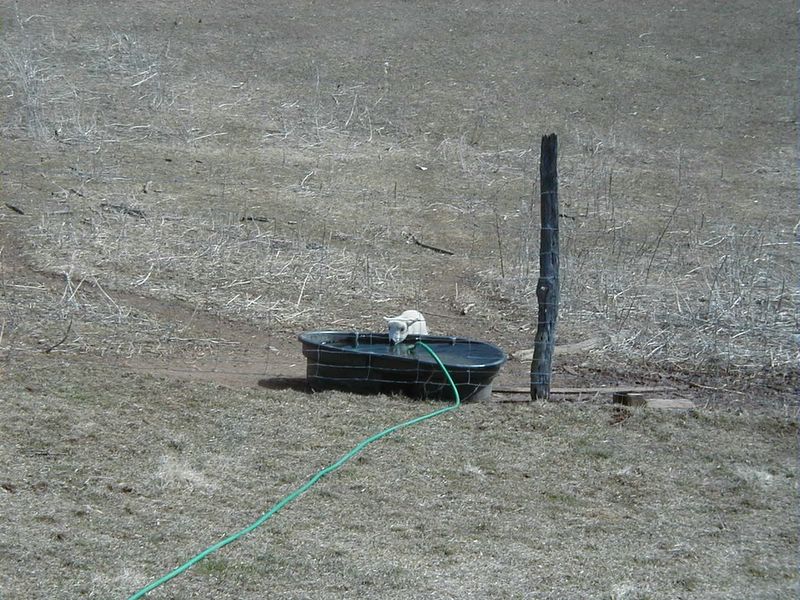
A small sheep takes a big drink of water.
Today is Forgiveness Sunday in the Orthodox calendar, the last stop before Lent begins tomorrow. I drove into the city this morning to St. Mary's, my "home" parish where I was introduced to Orthodoxy, to join the congregation in asking each other for forgiveness, beginning our repentance with reconciliation. Here is an excerpt from Alexander Schmemann's Great Lent on the meaning of this Sunday:

Lent is the liberation of our enslavement to sin, from the prison of "this world." And the Gospel lesson of this last Sunday (Matt. 6:14-21) sets the conditions for that liberation. The first one is fasting -- the refusal to accept the desires and urges of our fallen nature as normal, the effort to free ourselves from the dictatorship of flesh and matter over the spirit. . . . The second condition is forgiveness-- "If you forgive men their trespasses, your Heavenly Father will also forgive you." The triumph of sin, the main sign of its rule over the world is division, opposition, separation, hatred. Therefore the first break through this fortress of sin is forgiveness: the return to unity, solidarity, love. To forgive is to put between me and my "enemy" the radiant forgiveness of God Himself. To forgive is to reject the hopeless "dead-ends" of human relations and to refer them to Christ. Forgiveness is truly a "breakthrough" of the Kingdom into this sinful and fallen world.

We begin our fast with an act of reconciliation, a return to unity with those around us. The fast itself teaches us another lesson as we struggle. It should be simple enough; eat this, not that. No real sacrifice, just a demand for a little effort and a modicum of attention to the daily routine. Soon enough, I know, I will start looking for excuses, exceptions, exemptions. Worse still, I will simply forget and have that cheeseburger half eaten before I give a second thought to what I am doing, or why. As the Apostle Paul said in his letter to the Romans, "I do not understand my own actions. For I do not do what I want, but I do the very thing I hate." The fast makes me realize that, not only am I divided from those around me, I am divided within myself, walking about in a kind of daydream constructed of appetite and ingrained habit. Again in the words of the Apostle, "Wretched man that I am! Who will deliver me from this body of death?"

So, is Lent simply an annual run into the brick wall of your own failures and finitude, a reminder that one is, in fact, a sinner? No, or, if there is some truth there, it is only a half truth. The final word of Lent is spoken not in Lent itself, but just after midnight as Holy Saturday turns into Easter Sunday. Who will deliver me from this body of death? The answer comes as we sing triumphantly, "Christ is risen from the dead, trampling down death by death, and upon those in the tombs bestowing life." Despite all appearances, there are no "dead-ends" in ourselves, our lives, our relationships. At any moment the Kingdom is poised to break in and our Lenten disciplines teach us to wait with hope, and with great expectations.
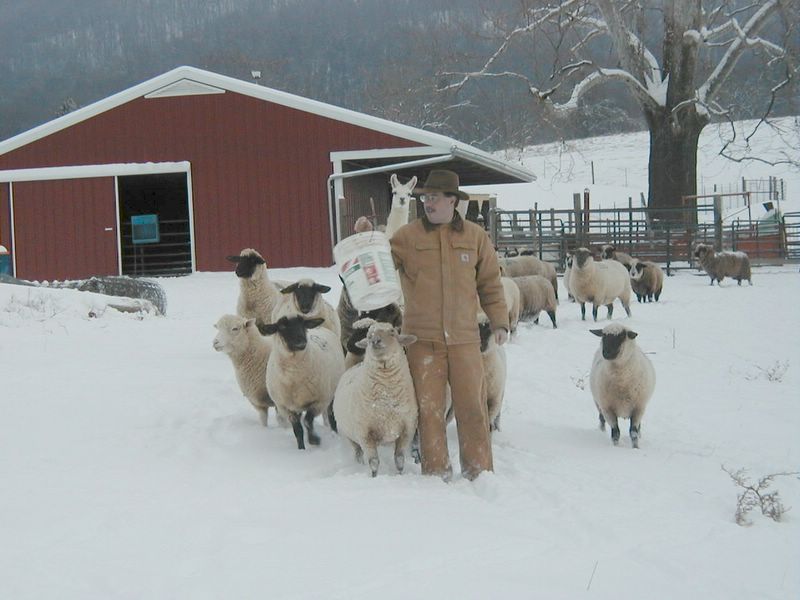
Saturday, March 12, 2005

Today we got the whole family down to the barn for one of my least favorite parts of the shepherd's job; tail docking and castrations. If you go down the page to some lamb pictures, you will notice they are born equipped each with a nice long tail, quite unlike the small appendages on their mothers. So, why take them off? Unfortunately those cute little tails become muddy manure clotted messes as sheep get older, a path for disease and fly infestations. So, off they go. I will not describe the process for the faint of heart except to say that the the little critters are all fine and properly docked. About the castrations of the ram lambs not destined for breeding, the less said the better. Susan does it quickly and efficiently with utter disdain for the squeamish males surrounding her, wincing in shared horror and sympathy.

Here is a the classic nursery rhyme, on the subject of lambs and their tails and the travails of a young shepherdess who needs to get with the program:

Little Bo Peep has lost her sheep
And doesn't know where to find them.
Leave them alone, and they'll come home,
Bringing their tails behind them.

Little Bo peep fell fast asleep
And dreamt she heard them bleating;
But when she awoke, she found it a joke,
For they were still a-fleeting.

Then up she took her little crook,
Determined her to find them;
She found them indeed,
but it made her heart bleed,
For they'd left their tales behind them.

It happened one day, as Bo peep did stray
Into a meadow hard by,
There she espied their tales side by side,
All hung on a tree to dry.

She heaved a sigh and wiped her eye,
And over the hillocks went rambling,
And tried what she could, as a shepherdess should,
To tack each again to its lambkin.

Friday, March 11, 2005


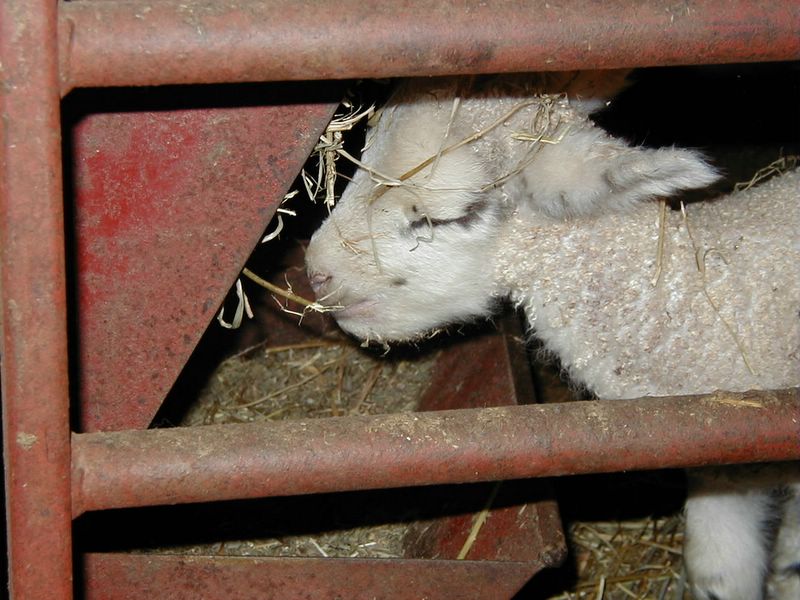
Having a little of mom's hay.

Thursday, March 10, 2005

Our weather has taken a turn back into Winter lately; snow showers with unseasonable cold driven even further down the scale by brisk winds. Bishop Seraphim, who lives several hours north of our supposedly Southern latitude has coined a new phrase, "Indian Winter," to capture our current climactic variation. On the road just outside of town, frozen daffodils wilt in the median, relics of the warm breezes that came through just a short time ago.

Midwinter spring is its own season
Sempiternal though sodden towards sundown,
Suspended in time, between pole and tropic.
When the short day is brightest, with frost and fire,
The brief sun flames the ice, on pond and ditches,
In windless cold that is the heart's heat,
Reflecting in a watery mirror
A glare that is blindness in the early afternoon.
And glow more intense than blaze of branch, or brazier,
Stirs the dumb spirit: no wind, but pentecostal fire
In the dark time of the year. Between melting and freezing
The soul's sap quivers. There is no earth smell
Or smell of living thing. This is the spring time
But not in time's covenant. Now the hedgerow
Is blanched for an hour with transitory blossom
Of snow, a bloom more sudden
Than that of summer, neither budding nor fading,
Not in the scheme of generation.
Where is the summer, the unimaginable
Zero summer?

From "Little Gidding" Four Quartets by T. S. Eliot

Wednesday, March 09, 2005

The "eclectic but orthodox" folks at Eighth Day Books have put together a series of excellent suggestions for Lenten reading. As useful as Amazon may be, we shouldn't forget about those wonderful independents like Eighth Day who operate as much for love as for profit. Owner Warren Farha reflects on his vocation here.

Tuesday, March 08, 2005


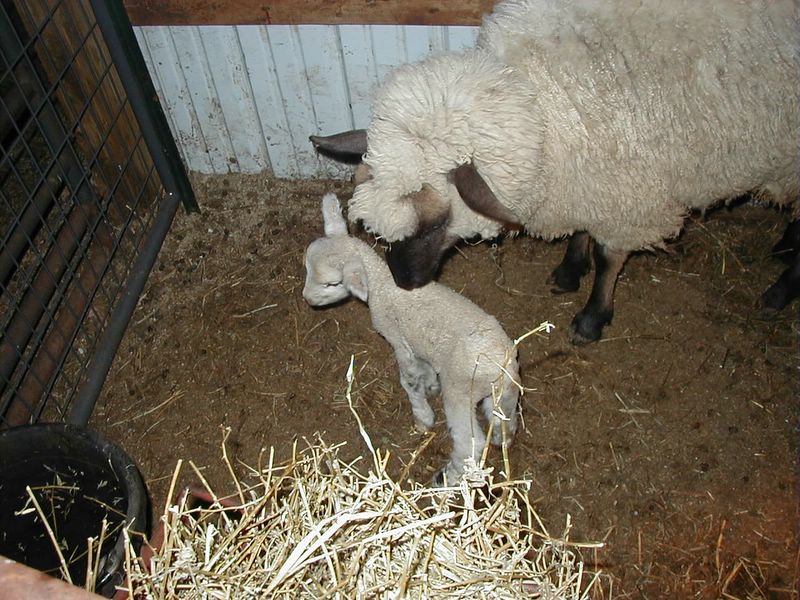
The lamb in yesterday's picture, together with her mother.

Monday, March 07, 2005


In a reversal of the proverb, March comes in like a lamb.

Sunday, March 06, 2005

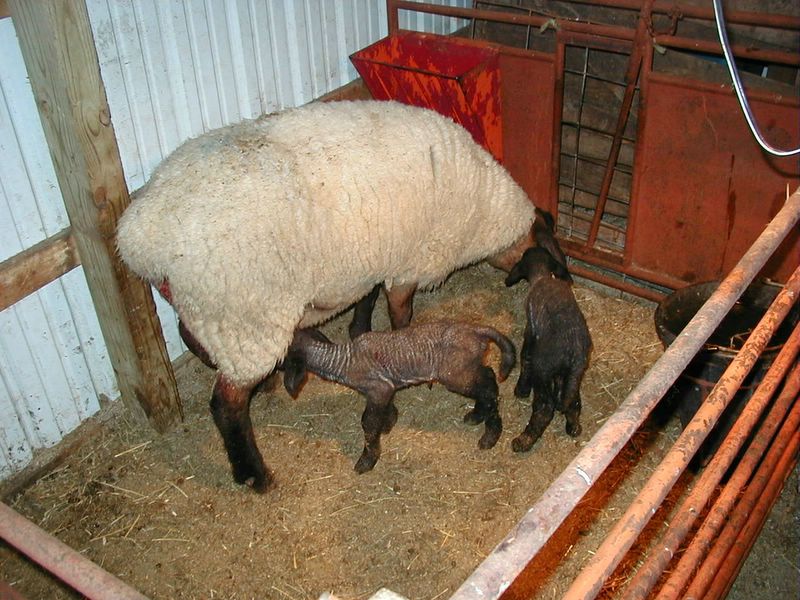
Two new lambs this weekend. I was surprised that they came now, in the relatively nice weather instead of the last snow, but I am certainly grateful. The boys have the new arrivals in pens with their mothers. If I have time, I will post pictures tomorrow.

Today is "Meatfare" Sunday on the Orthodox calendar, marking the last week of preparation before Lent. This week the observant begin abstaining from meat until Easter, followed by dairy products next Sunday. I usually try and post some appropriate Lenten reading suggestions during this season. In keeping with past custom, I will list some books throughout the week, and I will also attempt something I haven't tried before. As part of my own observance I will be re-reading Alexander Schmemann's Great Lent and will try, beginning next Sunday, to post excerpts from and reflections inspired this and other of Schmemann's works as we journey towards Pascha.

Saturday, March 05, 2005


Here is a picture from a few days ago during the snow. As you can see, sheep are very serious about eating.

Friday, March 04, 2005

Another backdated entry; our cable connection has been acting up causing posts to vanish into whatever quasi-metaphysical space there is that houses thoughts attached to electrons gone astray.

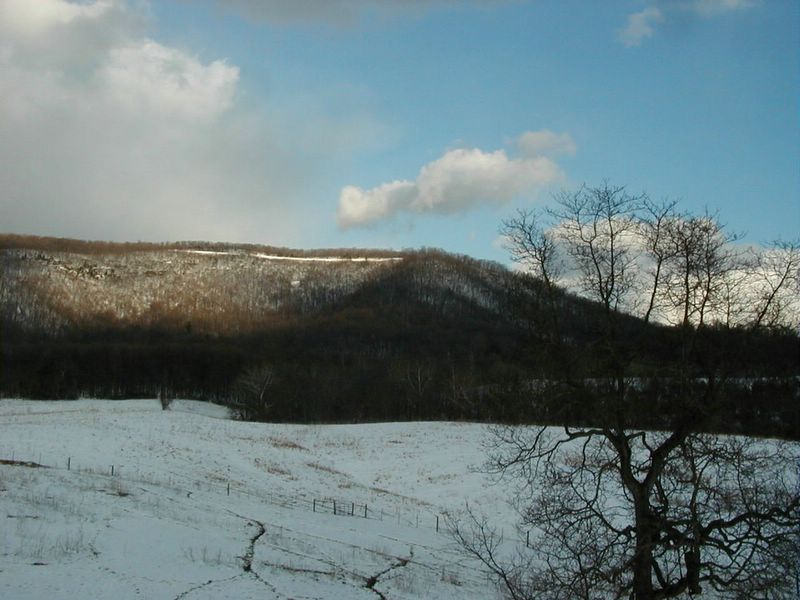
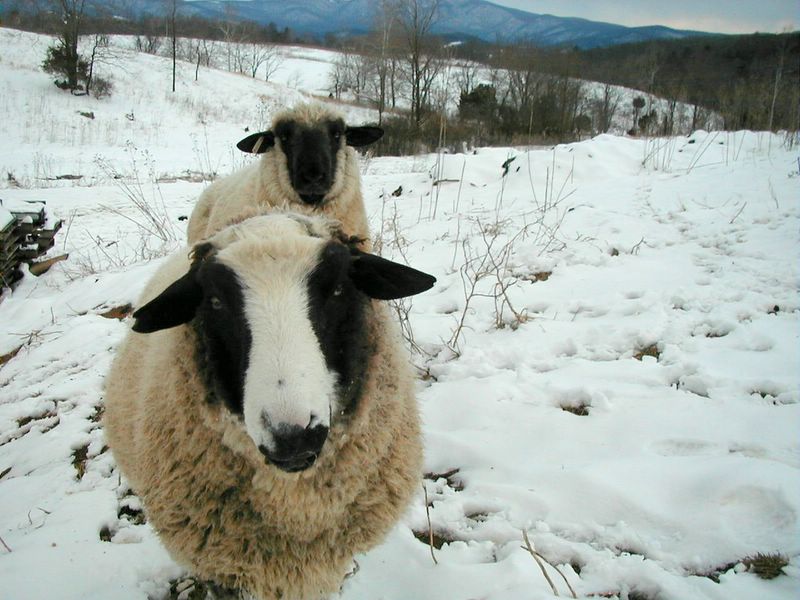
I am writing this after rummaging through dresser drawers in search of old glasses. I keep a spare at the office, but here at home I find only one relic from the early nineties, tortoise rimmed and goggle-sized. I wore them about two prescriptions and several turns of fashion ago. What, you may ask, happened to my gold-rimmed bifocals, appropriately styled for the new millennium? Sheep happened. Our barn, like Caesar's Gaul, is divided into three parts. One is our working area together with the four lambing pens. The second part opens into the paddock where the ewes with lambs stay. The third opens to the barnyard and larger pasture where the ewes still expecting come in for the evening feeding. This evening feeding was later than usual as Susan and I had met for dinner at the South Street Grill in town. (Nice place, classic diner food, cheap by big city standards.) So there I was after dark down in the barn. I had put out the feed for the ewes with lambs and let them in. They were in a bit of a rush, as they did not appreciate the delay in dinner. I was putting out grain on the other side of the barn when I noticed a lamb had gotten caught in the press and was upside down under a feed trough. I knelt down and reached through the gate panel dividing the barn, head pressed against the metal tubing as I stretched towards the lamb. Behind me was the gate to the barnyard, the gate chain stretched to the maximum as hungry ewes pressed against it. One ewe was convinced that, if only she could get my attention, food would be forthcoming. She put her head between the bars of the gate and lunged. In a classic illustration of the continuing effectiveness of Newtonian physics on a macro level, her head struck my head which in turn struck the gate in front of me. The vision in my right eye blurred. Disoriented, I started feeling for the incipient lump that signaled an oncoming concussion, and found instead that there was no longer a lens in the right eye of my glasses. Picture a man on his hands and knees in a darkened, dirt floor barn, right eye closed, peering through a left bifocal, trying to find a small oval of glass while sheep hooves are stamping around him. Not much luck there. I did get the lamb upright and out of the crush before walking back to house, squinting like Popeye as I picked my way up the dark hillside.
Thursday, March 03, 2005

I have been reading in the poems and essays of Joseph Brodsky lately. One surprise, at least for me, was the discovery that Brodsky considered himself a disciple of W. H. Auden. While I cannot match Brodsky's devotion, nonetheless I am also an admirer of Auden's. Here are the opening lines of an early poem of his which have always moved me.

Lay your sleeping head, my love,
Human on my faithless arm;
Time and fevers burn away
Individual beauty from
Thoughtful children, and the grave
Proves the child ephemeral:
But in my arms till break of day
Let the living creature lie,
Mortal, guilty, but to me
The entirely beautiful.

For the rest of the poem, go here.

Wednesday, March 02, 2005


The white line just below the ridge is the snowpack on Skyline Drive. The view from home, looking east a little before sundown.

Tuesday, March 01, 2005


Waiting for dinner.

Tuesday afternoon, just before sunset.

Monday, February 28, 2005


Snowfall at sunset.

We have had a few false alarms this season. Today appears to be the real thing. A scene from a snowy afternoon, looking toward Buck Mountain.

Sunday, February 27, 2005

Another snowfall predicted for tonight. The track of the storm is still uncertain, but it looks to be a big one. I had the boys carry the bags for tomorrow's feedings down tonight and have the barn open for the sheep to take shelter. It looks like Monday will be a good day to stay close to home. Unfortunately, I have trials in traffic court up in Winchester at 9:00 a.m and 2:00 p.m.. If you are travelling between Front Royal and Winchester tomorrow, I'll be the guy in the dark suit with the white knuckles gripping the wheel of a gray farm truck.

Saturday, February 26, 2005


Another shot from yesterday, before the snow melted away. More winter weather predicted for Sunday night. The lambing pens are empty for the first time in weeks. Perhaps the next wave will come with the snow.

Friday, February 25, 2005


Sheep barn, pasture, Skyline Drive and the last of the snow.

But it didn't stay long.

Snow last night.

Thursday, February 24, 2005

Our internet connection has been having problems, so here is last night's post, backdated appropriately.

If you have been following this blog for a while, you know that we use llamas to guard our sheep from roaming dogs and coyotes. Most llamas are pleasant sorts, but there are exceptions to every rule. We have one of those exceptions, aptly named "Spitfire." He and I had an encounter during feeding time tonight, which resulted in the following conversation:

Susan: He spit in your face?
Me: Look at my glasses. Do you see the green flecks and slime?
Susan: Really, he spit right in your face?
Me: Yes, right in the face and trust me, the smell is simply enchanting.
Susan: You should take a bath.
Me: I don't want a bath. If I take a bath I will be sitting there in floating llama spit. I'm taking a shower.

Wednesday, February 23, 2005


Most photo software these days comes with a red-eye reduction feature. I'm still looking for the special edition for sheep with the "blue-eye" correction button.

Settling down in the shed for the night.

Tuesday, February 22, 2005

Blogger appears to have eaten yesterday evening's post, so I give to you again today, re-created and backdated. More lamb pictures this evening, if I can get anyone to stand still long enough!

Orthodox liturgy is both fixed and variable, rather like the stars. They are always in their appointed place, but that place moves according to time and season. Likewise, each season of the Church year has its special additions and variations to the fixed services of morning and evening prayer and Sunday liturgy. Beginning this past Sunday we turn to a volume called the Lenten Triodian for services until Holy Week at the end of the Fast. Archimandrite Ephrem has made available his translations of the services at his web page, Anastasis.

The nuns at Holy Myrrhbearers Monastery also offer translations from the Triodian at their site. I have always had a particular fondness for the sisters at Holy Myrrhbearers because they are fellow shepherds. If you go to their site, check out the page for Zoar farm and visit with Maude, their photogenic sheep. The sisters have an on-line store where they sell their own products plus a few other items. If you are so inclined, I'm sure they would be grateful if you stopped by and browsed. (By the way, they sell spun wool from their flock for you knitters out there.)

Monday, February 21, 2005

Western Lent began on February 9 (Ash Wednesday) this year. We Orthodox are just beginning our preparations for Lent, which does not properly begin until March 13. Until then, we gradually begin readying ourselves for a 40 day fast when the observant will abstain from all meat and dairy products and, on most days, wine and oil as well. The purpose of this is not an annual orgy of masochism but rather, part of our preparation for the great feast of Pascha (Easter, as we Americans would say it.) Lent is a season of preparation and repentance. Not bad things generally for their own sake, but now we examine ourselves and struggle with our sins in preparation for the great shout of triumph and deliverance that is the Paschal service.

Years ago, while still a protestant, I heard a Greek Orthodox priest on the radio speaking about Pascha. I don't remember his name, or even what the show was. What I do remember is the joy in his voice when he spoke. It was the kind of joy that shakes the soul. Not the enthusiasm of crowds, or even the religious emotion of charismatic worship (what the Brits so cruelly, but accurately refer to as "happy-clappy") that I had known. It was the kind of joy you get when the doctor says the tumor is gone, or the child will live. That is the real goal of Lent; to learn more deeply the truth about ourselves, to know that it is in many ways a painful truth, so that when the great news of the resurrection comes to us again, we hear it as salvation and deliverance, life out of death, light out of darkness.

Sunday, February 20, 2005


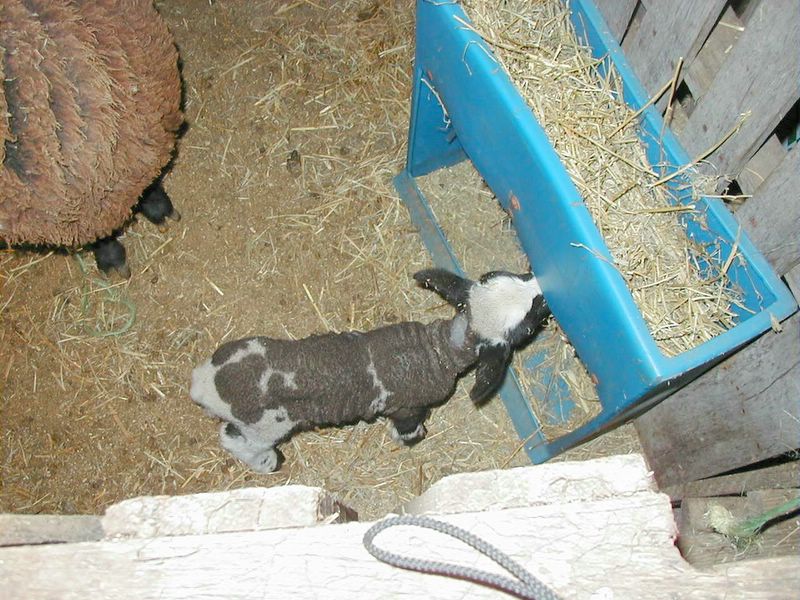
Despite all appearances, these lambs are twins, one a little ram, the other a ewe. For a picture of what the gentleman on the left with the white face and black nose looked like as a newborn, click here.

Saturday, February 19, 2005


Sundown Saturday evening.

Friday, February 18, 2005

We are being swamped with new lambs. The boys found two new sets of twins yesterday at feeding time and now the pens are overflowing with five sets of twins and one single. Tomorrow we will have to kick out the older ones into the field with the rest of the new lambs. It may be time to rearrange the barn, as the number of expecting ewes is dropping below the number of ewes with lambs.

Thursday, February 17, 2005

Another backdated post. Thursday afternoon I had an appointment down in Northern Virginia to do a home visit on a custody case where I have been appointed as guardian ad litem. As it happened, one of my favorite musicians, Bill Mallonee, was playing at Jammin Java in Vienna, Virginia, not too far from where I would be. Susan had already planned to spend the night in town to get a head start on some early morning appointments, so we decided to make an evening of it. Of course, an evening away from the farm usually results in a series of phone calls back home to make sure all the chores are covered. "Did you get water to the ewes in the pens? Any new lambs? Did your grandmother get the possum out of the cat feeder?" You know, just the usual exercise in rural crisis management. It was a nice to break out of the routine for a little bit, and the music was great.

Wednesday, February 16, 2005

Tuesday, February 15, 2005

I was happy to see a comment below from Daniel Ballard, who is pioneering a project in urban agriculture as part of his ministry teaching in an inner-city New Orleans private school. Great work, and worthy of more attention. Now if we could only get him blogging again. . .

Here at home we have added five more lambs in the last two days. Two sets of twins and a single. (The first set is pictured below.)

Monday, February 14, 2005


Ansel Adams I'm not, but here is a digital black and white rendition of the view from home before evening chores. As always, you can click on the picture for a larger version.

Another set of twins this evening, Valentine's lambs just in time for Susan's birthday.

Sunday, February 13, 2005

I quoted some lines by Joseph Brodsky in Thursday's post. I was first introduced to his work by some Russian friends, Mark and Elena Khaisman, who lived in Front Royal for a few years. As fellow expatriates, they resonated to his exploration of a life lived in exile. At the time, I was busily settling down and making a home on the farm, so Brodsky didn't speak much to me. A decade and a half further down the road, I find myself returning to his work as I discover that time works as well as distance to make exiles of us all. Here is a link to resources on Brodsky at Nobelprize.org.

Thanks to Erich for his comment on the Brodsky post below. It makes one think of the old canard about there being no more than "six degrees of separation" between any two otherwise unrelated people.

Saturday, February 12, 2005

We took advantage of an unseasonably warm afternoon to catch up on a few chores. A new truckload of alfalfa hay stacked in the barn, a sizeable stack of old feed bags off to the dump, several months accumulation of debris around the barnyard straightened up. As usual, I forgot to bring gloves to handle to the stalky alfalfa bales and grimaced in the shower when the hot water hit the dozen or so tiny puncture wounds left from tossing bales on and off the truck. Looking down, I would have to say that I have halfway hands. They are not farmer's hands; not rough or hard enough. Nonetheless very few other lawyers have the array of cuts, scrapes and calluses that you find at the end of my coat sleeves. I am afraid I would never make it as a metrosexual. Something about working with livestock permanently alters your sense of what constitutes high fashion. After a while, you get to thinking that Carhart coveralls and insulated rubber boots look pretty darn snappy on a fine Winter's day.

Friday, February 11, 2005

We didn't get to feeding tonight until sunset. Walking up the hill afterward, there was a sliver of a moon over Buck Mountain. For some reason, it brought to mind a few lines from a song written by Susanna Clark and Carlene Routh I first heard on an EmmyLou Harris album some twenty-seven years ago:

It's a quarter moon in a ten cent town
Time for me to lay my heartaches down
Saturday night gonna make myself a name
Take a month of Sundays to try and explain


If you want love, loss and small town craziness all packed into four rhyming lines, you just can't beat country music.


Update: Blogger was acting up yesterday, so my apologies to anyone on an RSS feed who got multiple copies of this post. What was three is now one. (No theological point intended.)

Thursday, February 10, 2005


I never tire of the changing patterns of sky and cloud that our spot between the mountains gives us. Here is a picture from last month and a few lines from the poet Joseph Brodsky that explain as well as any why I am a cloud watcher:

It's you who let
me with your nimbus
trust not in numbers
but in the complete

spurning of weights
and measures in favor
--once and forever--
of phantoms and grace.

From "Clouds" Collected Poems in English